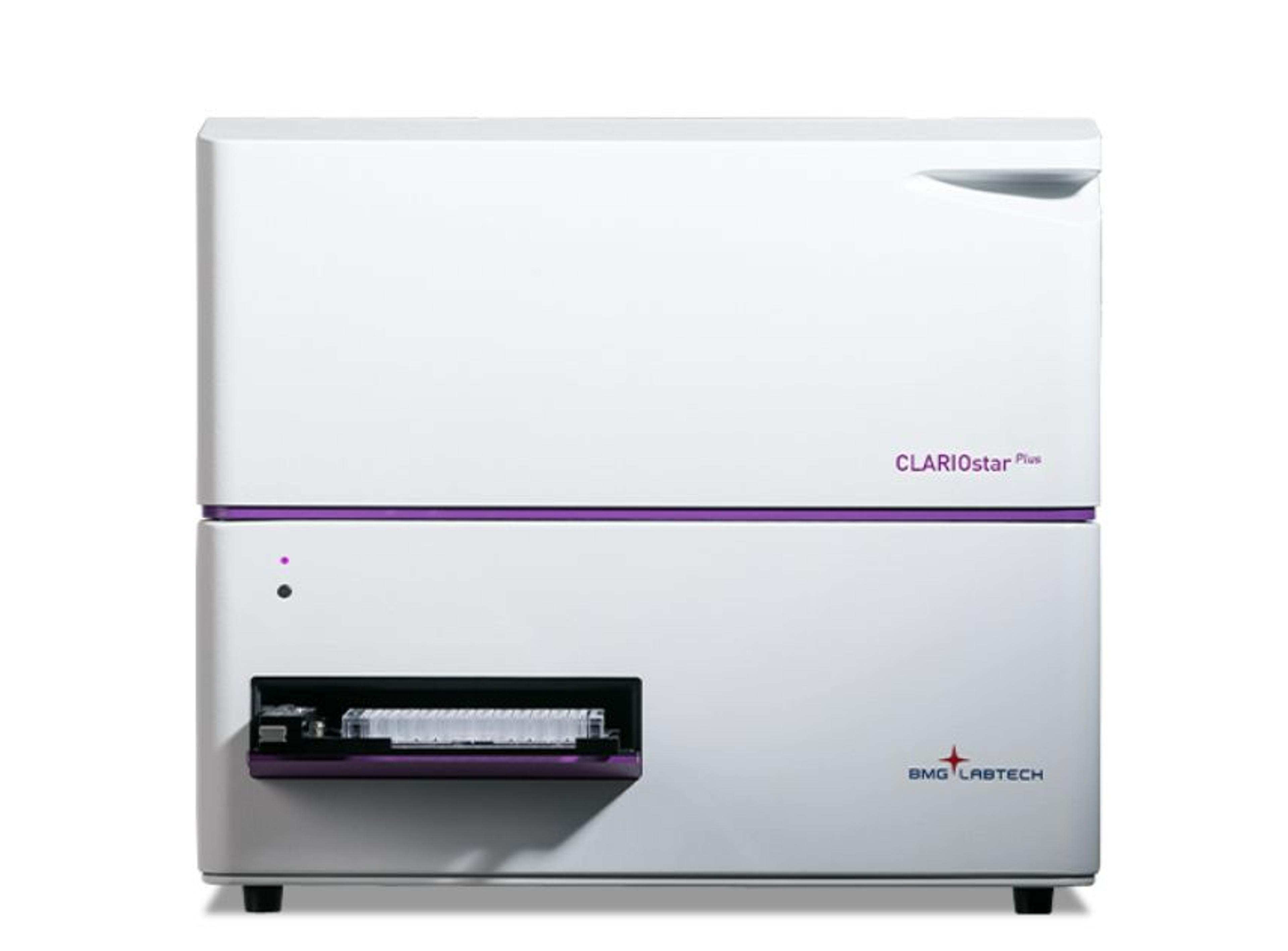
New Atmospheric Control Unit Enhances Cell-Based Microplate Assays

10 Sept 2014

Kerry Parker
CEO

Product news

BMG LABTECH now offers an Atmospheric Control Unit (ACU) for its latest microplate reader, the CLARIOstar®, providing an ideal “walk away” solution for any cell-based assay.


BMG LABTECH has developed a new generation of its Atmospheric Control Unit - a complete solution to fully regulate and independently control both O2 and CO2 within the microplate reader chamber. From standard cell growth to hypoxic or cytotoxicity assays, the ACU provides the optimal environment for any live cell assay.

The microprocessor-controlled unit can regulate CO2 (0.1 - 20%) and O2 (0.1 – 20 %) independently, making it unnecessary to change gas cylinders or piped gas supplies to reproduce the specific physiological conditions needed for cell-based assays. In combination with CLARIOstar’s extended temperature control and three different shaking options (orbital, double orbital, and linear), the ACU is able to provide the physiological environment for any cell type, making cell-based assays more biologically relevant.

Within the German-engineered ACU, integrated gas pressure regulators allow for easy setup and independence of gas supply pressure, and eliminate the need of further pressure regulators between the ACU and the gas supply. Furthermore, integrated pressure sensors combined with an acoustic alarm allow for easy control of both gas supplies while superior valve gas control ensures minimal gas consumption. Accurate gas regulation is further guaranteed by the incorporated altitude correction feature.

The user interface is intuitive with a backlit LCD touchscreen and the possibility to define up to 10 user-presets and the display of gas concentration curves over time.

CLARIOstar’s detection modes include: Fluorescence Intensity and FRET, Time-Resolved Fluorescence (TRF) and TR-FRET, Fluorescence Polarization/Anisotropy, AlphaScreen®/AlphaLISA®, Luminescence (flash and glow) and BRET, and spectrometer-based UV/Vis absorbance. The multi-mode capabilities, together with the Atmospheric Control Unit, are especially advantageous for a variety of applications including cell viability and proliferation assays, migration and invasion studies, hypoxia, angiogenesis, ischemia/reperfusion, cytotoxicity studies, intracellular pH analysis, and viral uptake.

Links

Tags

Microplate Readers / DetectorsMicroplate readers are used to automate the detection and analysis of labeled or label-free components in microplates during assays or live-cell monitoring. Microplate readers are generally distinguished by their mode of detection. Types include absorbance, luminescence, fluorescence intensity, fluorescence polarization, TRF / FRET and multimode microplate readers. Microplate readers deliver a high throughput of samples by reading multiple wells simultaneously, with the 96-well format the most commonly used. As a result, microplate readers are often used in the drug discovery, bioassays, research and pharmaceutical industries for screening applications. Microplate loading can also be automated, with robotic microplate stackers to increase throughput. Find the best microplate readers in our peer-reviewed product directory: compare products, check customer reviews and receive pricing direct from manufacturers.ADME-ToxicologyADME-toxicology (ADME-Tox) studies are used in pharmacology and pharmacokinetics to assess the activity/toxicity of drugs <i>in vivo</i> or <i>in vitro</i>. Find bioassays for absorption, distribution, metabolism, and excretion of drug molecules including cytotoxicity, transporter/permeability, metabolism and activity assays as well as hepatocytes and cell lines for ADME. Find the best ADME-toxicology products in our peer-reviewed product directory: compare products, check customer reviews and receive pricing direct from manufacturers.Cell-Based AssaysCell-based assays are used to monitor the presence, quantity and activities of a desired cellular analyte including drug molecules or biomarkers. This can reveal information on cell health (apoptosis, cytotoxicity, viability and proliferation assays), cell metabolism, cell migration and cell signaling mechanisms. Find the best cell-based assay products, kits and equipment with our peer reviewed product directory: compare products, check customer reviews and receiving pricing direct from manufacturers.CytotoxicityCytotoxicity assays measure the toxic effects of substances on cells, often used in drug testing and environmental studies. These tests are crucial in determining the safety of chemicals and pharmaceutical compounds. Explore cytotoxicity testing tools in our peer-reviewed product directory; compare products, check reviews, and get pricing directly from manufacturers.Assay DevelopmentThe process of proving an assay to be sensitive with respect to the target is known as assay development. The assay should be able to characterize novel compounds and measure the potency of these compounds against a validated biological target.
New Atmospheric Control Unit Enhances Cell-Based Microplate Assays