NanoSight Announces the Launch of the NS300, Providing a Platform for Enhanced Fluorescence Applications

4 Mar 2013

Product news

NanoSight reports on the new NS300 system based on their world-leading Nanoparticle Tracking Analysis technology.

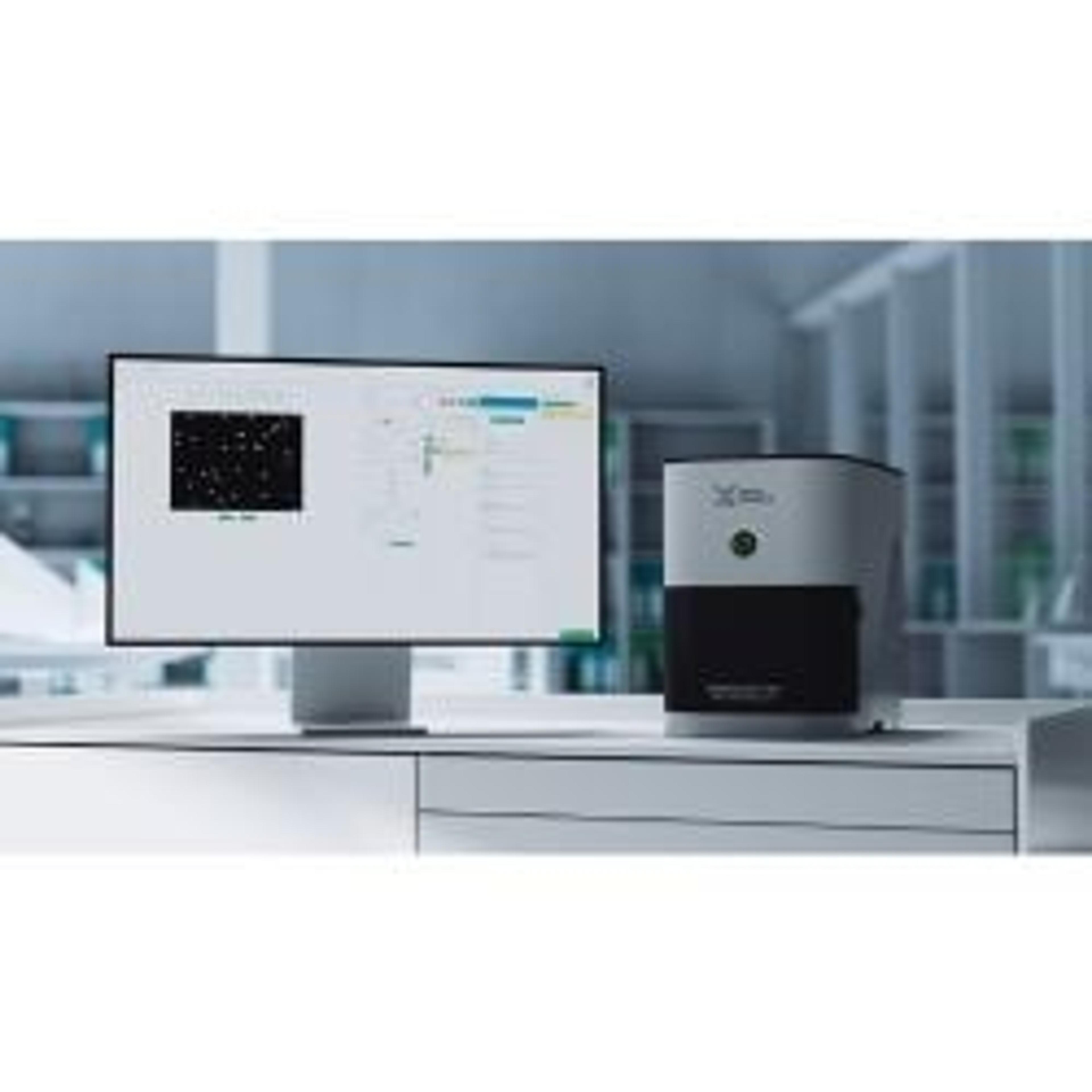
The NS300 utilizes the latest version of NanoSight’s particle characterization technology, Nanoparticle Tracking Analysis (NTA). This elegant new instrument offers the unique benefits scientists have come to expect from NanoSight in a compact format, with a major benefit of enhanced fluorescence capability.

The NS300 can visualize and measure particles in suspension in the size range of 10-1000 nm (material dependent), and addresses the needs of a wide variety of applications including protein aggregation, exosome and microvesicle research, and drug delivery systems. It contributes to characterization under the new EU Definition of Nanomaterials, and is particularly suited to the analysis of particles labeled with fluorescent quantum dots.

The NS300 instrument provides simultaneous analysis through several filters to give multi-wavelength detection of different fluorophores excited by a single laser.

Dr Patrick Hole, NanoSight’s head of product development, says of the new instrument “The NS300 is the natural progression from the NS500 and LM10. It takes the most popular features of these instruments and combines them into an easy to use, compact format. We then added in the high capacity motorized fluorescence disc. This disc, capable of being programmed from within the software to present up to six different fluorescent filters, will facilitate a more detailed assessment of fluorophores. It will give users the possibility to analyze each fluorescence population in terms of size and concentration; this ability to identify co-localized fluorophores will greatly enhance specificity and the ability to Phenotype”.

Additionally, the software’s new rheology feature can measure viscosity in the range 0-5 centipoise, using probe particles to inform on non-Newtonian liquids in a shear-free manner, so being specifically applicable to the formation processes of hydrogels.

With a footprint measuring just 40 cm by 25 cm, the NS300 comes complete with a high sensitivity sCMOS camera, temperature control and a choice of laser wavelength. The sample chamber and laser block are designed to be readily removed, to enable easy cleaning and high throughput. The NS300 complements the NanoSight family of instruments by providing an answer to researchers whose laboratory space is at a premium, without compromising on quality or functionality.

Links

Tags

NanotechnologyNanotechnology, or nanotech, is an engineering technique using molecular scale functional systems. Applications of nanotechnology include medicine and medical devices, electronics, air and water purification, food science and energy production.RheometryRheometers are used to measure the rheology of fluids, which is the flow of fluids in response to an applied force. The most common types of rheometer include shear rheometers (capillary, cone and plate and rotational cylinder) and extensional rheometers. Viscometers are similar to rheometers however viscometers only measure the viscosity of a fluid.Particle CharacterizationParticle characterization instruments are used to determine particle size distribution, shape, surface area, zeta potential, density and porosity of particles and materials. Multiple tecchniques are available for determining particle size, shape and count including dynamic light scattering (DLS), laser diffraction, electrozone (Coulter technique), imaging particle analysis and single particle optical sensing. Determine the density of your material with a gas pycnometer or examine its surface area and porosity with gas adsorption analyzers and mercury porosimeters. Find the best particle characterization instruments in our peer-reviewed product directory: compare products, check customer reviews and receive pricing direct from manufacturers.Light MicroscopyLight microscopes or optical microscopes are used to visualize microscale objects under magnification, including cells, clinical specimens and materials. Lab equipment for light microscopy includes confocal microscopes, fluorescence microscopes, zoom and stereo microscopes. Microscope slides and imaging reagents are available for visualizing samples, as well as various microscope stages and incubators for large or temperature-sensitive samples. Find the best light microscopes in our peer-reviewed product directory: compare products, check customer reviews and receive pricing direct from manufacturers.Astm MethodsAggregationsCMOS CameraPittconPittcon is one of the largest conferences and exhibitions dedicated to laboratory science. It brings together professionals and innovators in analytical chemistry, physics, and biology, offering a platform to explore the latest scientific tools and technologies. From cutting-edge laboratory instruments to emerging research trends, Pittcon is a must-attend event for professionals in research and development. VesiclesExosomesNanomaterialsNanomaterials such as carbon nanotubes, fullerenes and nanoparticles are a group of materials that measure between 1-1000nm for a single unit. Analysis techniques include AFM, electron microscopy and super resolution microscopy.NanoparticlesNanoparticles are between 1-100nm in size. Nanoparticles can be used for a wide variety of applications including biomedical, catalysis and electronics.
NanoSight Announces the Launch of the NS300, Providing a Platform for Enhanced Fluorescence Applications