
Molecular Devices expands operations in Europe to meet growing demand for 3D biology research
21 Jan 2022
Industry news
Molecular Devices, a leading provider of high-performance life science solutions, is expanding its R&D facility in Austria, and increasing service and applications personnel to expand best-in-class customer support in Italy, Spain, and Portugal. As the European life science market continues to grow, these investments will provide direct access to state-of-the-art 3D biology innovations from in-country sales account managers, field application scientists, and field service engineers.
“Meeting the growing demand in Europe has driven regional, double-digit growth for our business, and we are thrilled to commit more resources in support of our increasing customer base,” said Susan Murphy, President of Molecular Devices. “Our Salzburg location is one of our global R&D hubs. This facility expansion will allow for even more innovation and more space to partner with collaborators and customers who want to advance their discovery in cell and gene therapy as they evolve in their drug discovery journey.”
Molecular Devices opened its Austrian Research & Development Center in 2019 and expects to expand its total footprint there by about 30 percent in early 2022. Similar to the Organoid Innovation Center located in San Jose, Calif., the new area will offer a space for in-house scientists, customers, and innovative 3D biology companies to collaborate on organoid development and screening to achieve both scalability and reproducibility. The Austrian Research Promotion Agency (FFG), awarded Molecular Devices an €800,000 grant to support the company’s 3D biology product roadmap.
Across Europe, Molecular Devices provides direct customer support in Austria, Benelux, Denmark, Finland, France, Germany, Iceland, Ireland, Sweden, Switzerland, and the United Kingdom. To further serve scientists in the region with direct consultation to best meet their needs, Molecular Devices is expanding its local, native-speaking support staff in Italy, Spain, and Portugal.
“Our scientific and technical solutions empower customers to excel long term by addressing immediate application requirements, yet they can easily adapt as research goals evolve over time,” Murphy continued. “Having our technical experts in close proximity to a rapidly-expanding European customer base is a priority. Molecular Devices will be better equipped to offer custom 3D biology solutions with integrated automation capabilities that can only be delivered with a more consultative application approach.”
Want the latest science news straight to your inbox? Become a SelectScience member for free today>>
Related products
Request Quote for All Products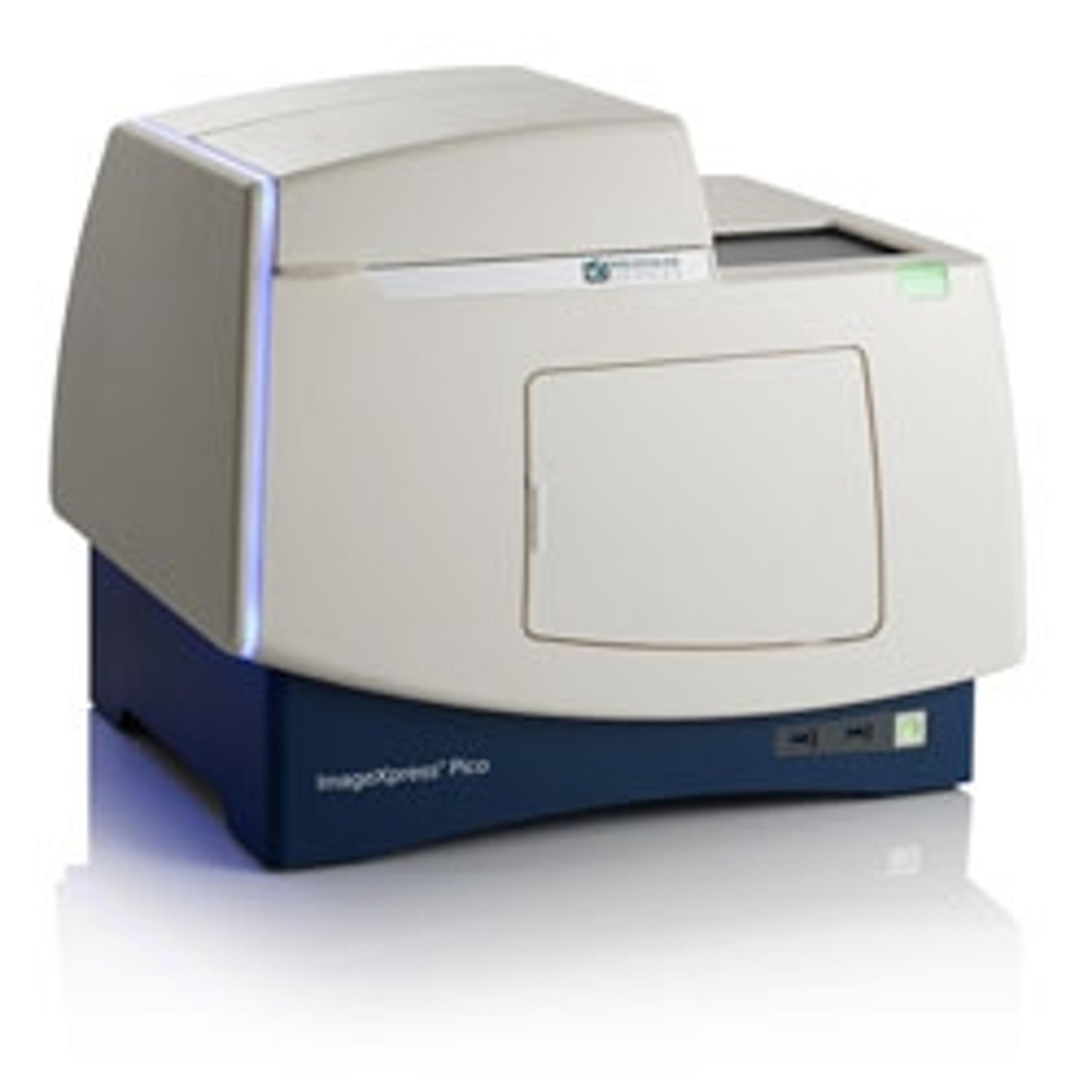
ImageXpress Pico Automated Cell Imaging System
Molecular Devices®Affordable cellular imaging and analysis system for individual biology labs - go from sample to results in minutes