
Meet William, Protein Crystallization Expert and SelectScience® Reviewer of the Month for May
William Wittbold describes his average day, hopes for science in the future and favorite piece of laboratory equipment
22 May 2017Editorial article
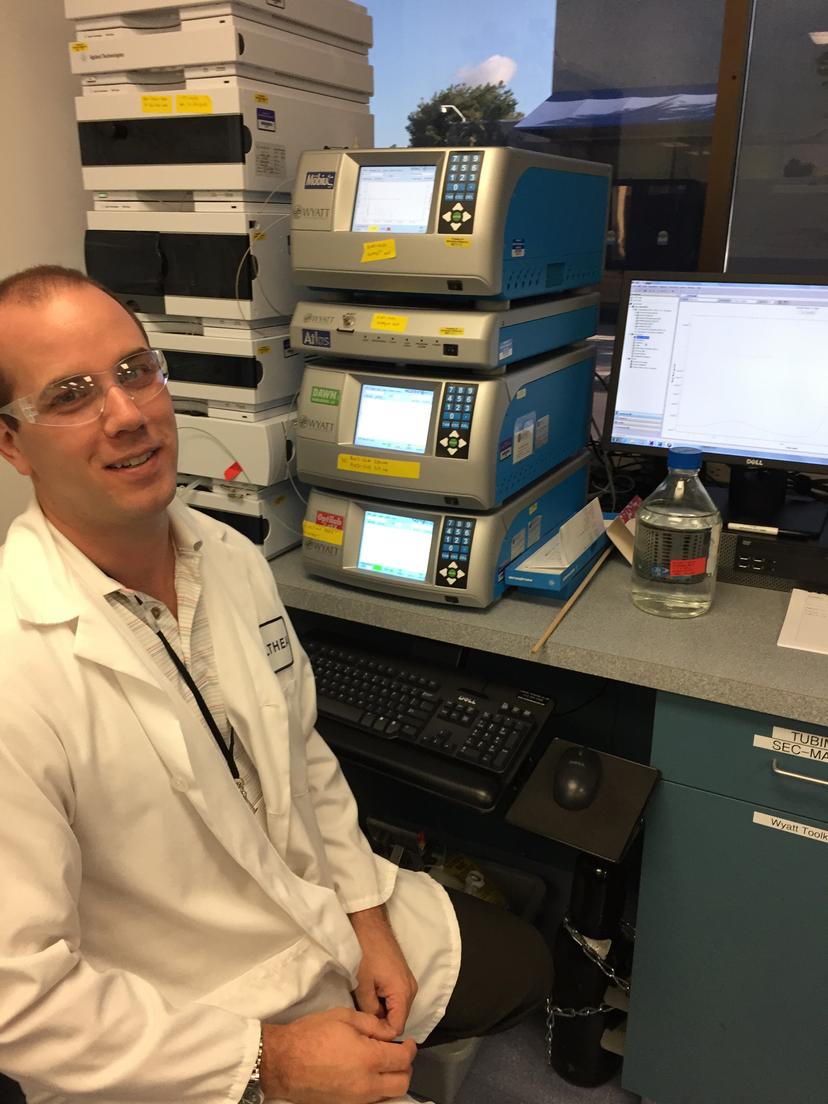
William Wittbold is Sr. Manager of Crystalomics at Ajinomoto Althea and an Expert Reviewer with 23 reviews on SelectScience.

What are you working on?
Our group develops high concentration, low viscosity protein crystal suspensions for subcutaneous injections. We have partnerships with numerous large and small biopharmaceutical companies who are looking to our Crystalomics formulation technology as a solution for their needs. We transform traditional IV therapies into low volume subcutaneous injections, maximizing patient comfort. The Crystalomics team oversees the entire development of an API during our processes: from initial screening discovery, to reaction volume scale-up, formulation, and supporting analytics. They keep the client updated regularly as to their progress and strive to deliver a feasibility test article in about a year.
Tell us what a typical day looks like for you…
It would be nice if there were a “typical day”. I oversee our external client collaborations, along with several internal projects that are under development. I also work to expand our business collaborations and services that the Crystalomics team can offer, along with administering our company wide electronic lab notebook system. Occasionally I’ll have the opportunity to get in the lab and assist with biophysical characterization assays, which helps keep my bench skills sharp.
What inspired you to get into the world science?
Mostly it was my parents: my dad was a physicist and my mom was a nurse - growing up, they taught us it was always important to help people. In elementary school we also had a live chemistry demonstration that made science come alive. This guy had two colorless solutions which turned yellow when mixed, and also started fire with water. It seemed magical at the time, and I’ve been hooked ever since.
How did you get into your specific field of work?
The Crystalomics technology has been around since the early 2000s, and I used to work at Altus Pharmaceuticals where it was originally developed. I was only there for a few years before pursuing an opportunity with Wyatt Technology, and about 10 years into that position, I received a call from Althea about re-joining the Crystalomics team. Althea had acquired the Crystalomics IP from Altus in 2010, and was building a team to further develop the technology. At the time my family and I were in the Boston area, but I had promised my wife who is from Southern California that we’d move there one day. With Althea’s opportunity, and keeping my promise, we moved to San Diego in April 2015.
Why are reviews important?
Reviews allow decision makers and end users to get honest and real feedback on how well a piece of equipment actually works. It’s no different than buying the latest electronic gadget - you get the best information from actual users. When speaking to colleagues about an instrument, I make it a point to ask “would you buy it again?” Their answer is always very telling.
Why is communication in science key?
Great data is only great if it is effectively communicated to one’s peers. Moreover, documenting and letting others know about experiments or findings where you’ve learned what not to do can be huge timesavers for others.

What’s the most innovative piece of lab equipment you use?
Our Hamilton STAR with twister channels and de-cappers has exponentially increased our crystallization and formulation screening process. It allows us to use volatile solvents in our experiments, along with providing adequate mixing of larger volume solutions.
What’s your favorite piece of lab equipment?
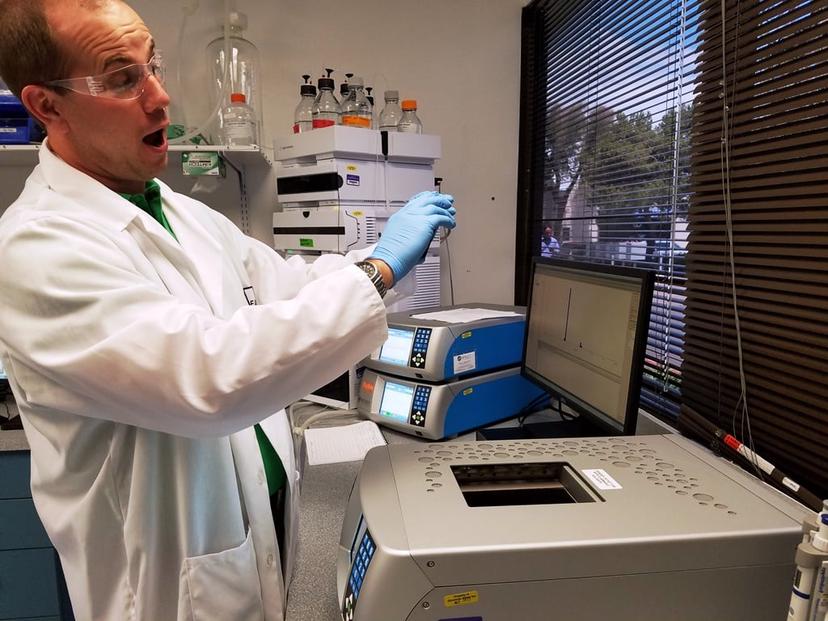
Easily my μDAWN light scattering detector from Wyatt Technology. We do quite a bit of SEC-MALS/QELS assays in our lab, and the μDAWN has tripled our throughput, reducing run times from 30 minutes to 10 minutes. Having wonderful MALS and QELS data to complement our UHPLC-SEC separations gives us a very clear picture of what’s in our sample.

Who is your hero in science and why?
Steve Kolvek was one of my undergraduate teaching assistants - he took extra time to answer all my questions. He showed me how to think critically as a scientist, and how to break down seemingly impossible tasks into smaller, more manageable ones. His smile, enthusiasm, and sense of humor were infectious, and he helped shape many students and elevate their success. I wouldn’t be where I am now without his guidance. Thank you, Steve.
What’s the biggest story in science right now?
Probably the “ransomware” attack that is going on, which highlights the need for constant data security.
Complete this sentence: In my lifetime, I’d like science to achieve...
Continued advances in personalized cancer care, such as at the MD Anderson Cancer Center and UCSD Moores Cancer Center, so that every patient has a specific solution to their specific ailment.
Would you like to be a Reviewer of the Month?
Write your review here to be in with a chance.
DynaPro Plate Reader II Dynamic Light Scattering Detector by Wyatt Technology Corp.
Related products
Request Quote for All Products
microDAWN™
Waters | Wyatt TechnologyThe microDAWN™ determines absolute molecular weight and size of proteins, polymers and other macromolecules in conjunction with UHPLC.