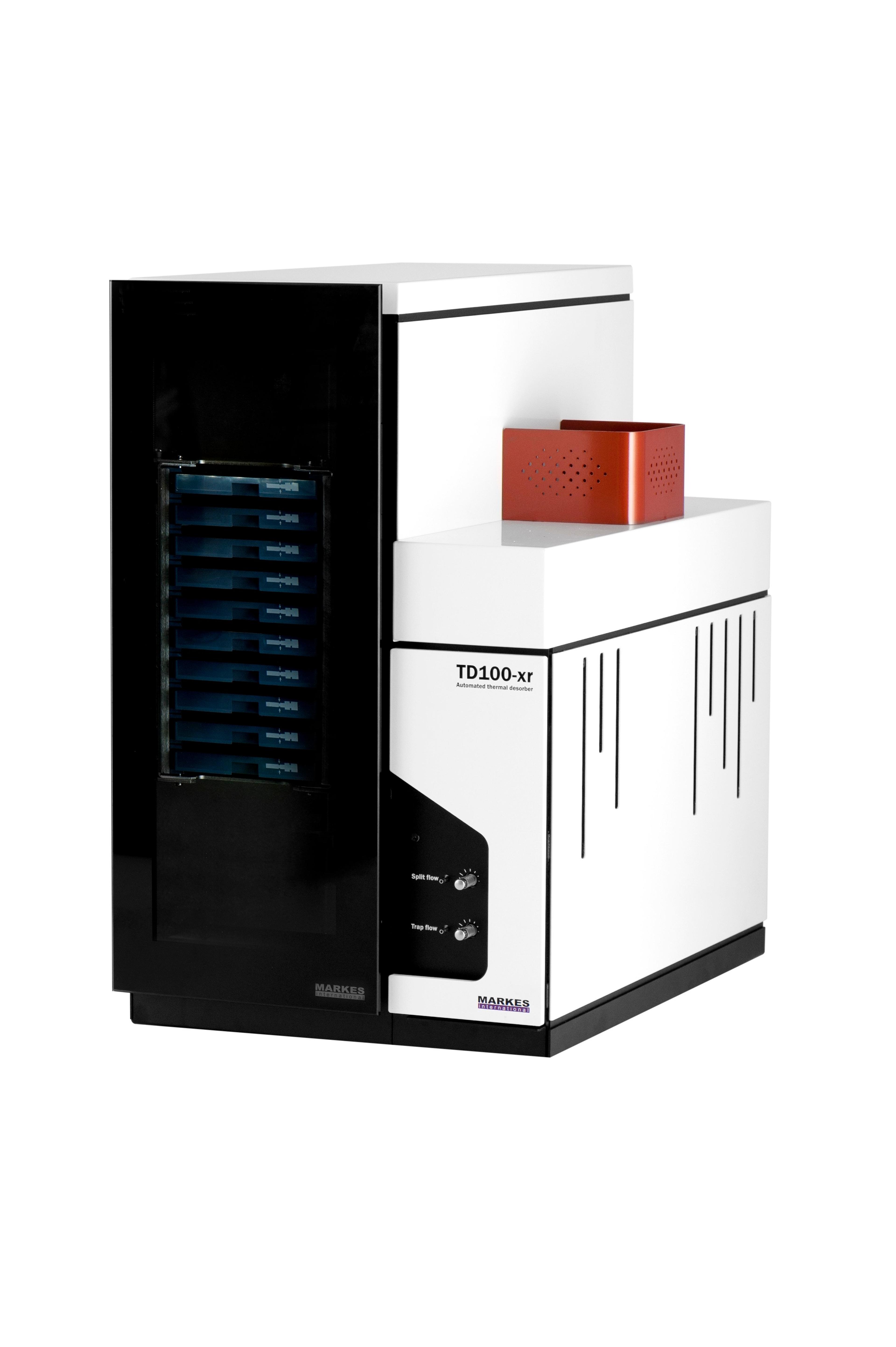
Markes Launches New ‘xr’ Series of Thermal Desorption Instruments

9 May 2016
Alex Waite
Editorial Assistant

Product news

Markes International has announced the launch of a new family of thermal desorption instruments for GC–MS at the analytica 2016 tradeshow in Munich, Germany.

The new products, which form the ‘xr’ series, pre-concentrate organic vapours sampled using sorbent tubes, canisters and on-line air streams, and as well as options for automation, incorporate powerful new advances that extend the capabilities of analytical laboratories analysing volatile and semi-volatile organic compounds (VOCs and SVOCs) in air and materials.

Dr Massimo Santoro, Technical Marketing Director at Markes International, says “A key advantage of the new ‘xr’ series is the extended capability for automated sample splitting and re-collection – a technology pioneered by Markes that allows valuable samples to be re-analysed for method development and compliance with standard methods”.

Other key advances are the ability to quantitatively recover compounds from C2 to C44, a new water-management module for on-line monitoring of humid air streams, and redesigned instrument control software.

Santoro says “The new features of the ‘xr’ series have been developed in response to emerging trends in analytical chemistry, which include the need to analyse more compound types in a single run and the requirement for improved laboratory efficiency. These new products demonstrate that at Markes we’re always listening to our customers and developing innovative ways to help them improve performance and productivity at every point in the process of sampling, thermal desorption analysis and data processing”.

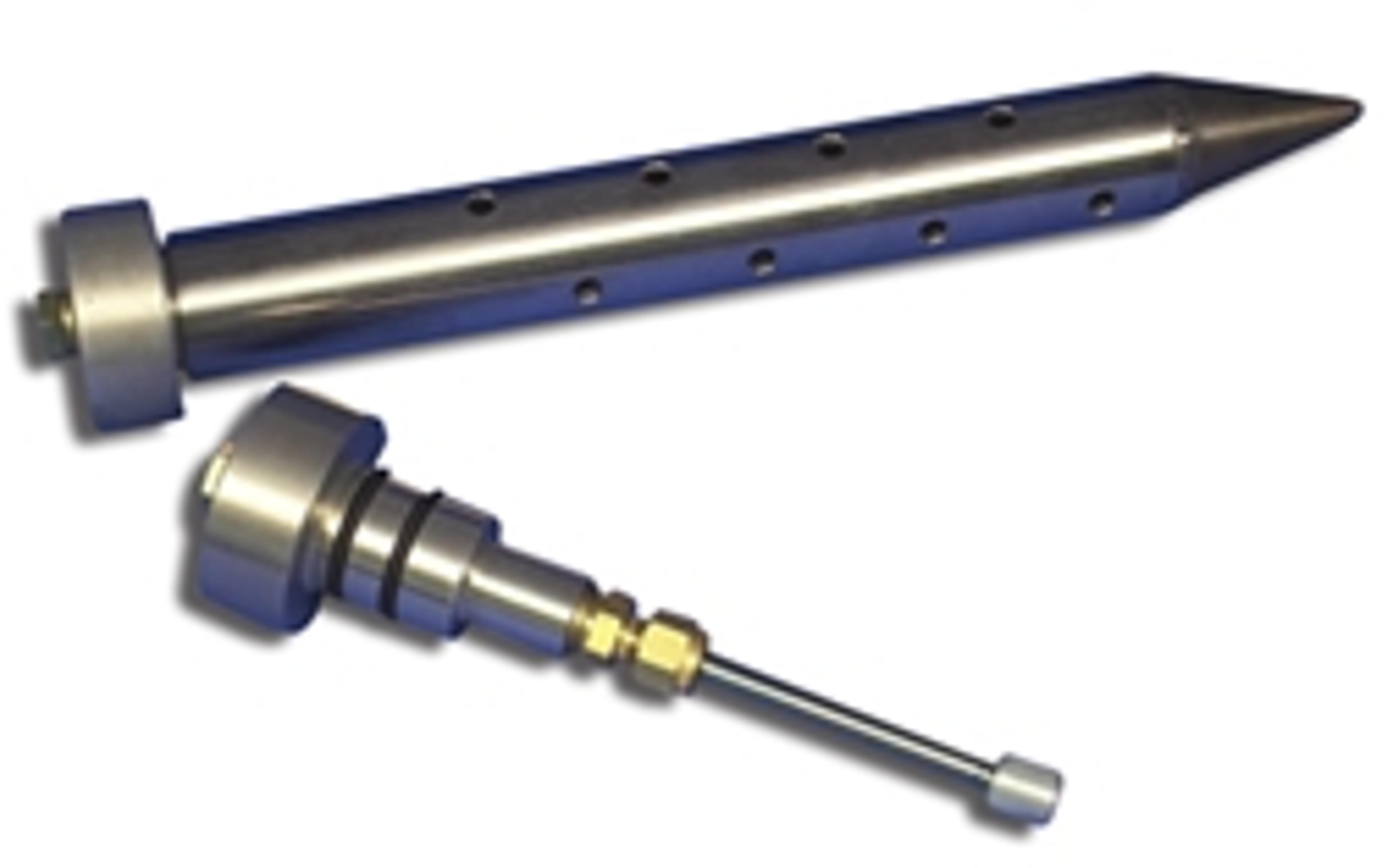
VOC-Mole soil probe

Markes International Ltd

Robust and easy-to-use soil gas sampler. The VOC-Mole is a stainless steel assembly that is inserted into the ground, allowing soil gas to be sampled onto a sorbent tube, for analysis by thermal desorption (TD)–GC–MS.The VOC-Mole is simple to use and easy to transport, and perfect for any analyst wishing to monitor levels of volatile organic compounds in soil.Features: Organic pollutants pass through holes in the hollow tube and are collected on a sorbent tube. Probe can be left in ground for long periods. Compatible with diffusive and pumped sampling. Use of multiple VOC-Moles in a grid arrangement allows the creation of VOC maps. Special cap prevents ingress of water, wildlife and soil debris. Various pack sizes and probe lengths available. Applications: Surveys of industrial, waste and brownfield sites. Screening of organic pollutants over large areas. Pinpointing of leaks from pipelines and industrial facilities.

(0)

Links

Tags

Combinatorial ChemistryCombinatorial chemistry, also known as combichem, is a technique used in drug discovery to create libraries of structurally related compounds. A library is generated by synthesis with a chemical reactor system or by computer-based modeling of compound combinations. When undertaking combinatorial chemistry consider reagents, buffers, resins and standards.Data AnalysisData analysis hardware and software is available to make data processing straight-forward yet powerful. Data software can be used for math and stats, technical graphing and image analysis. In addition, software is available for specific data analysis of electrophoresis, densitometry, ELISA and DNA sequencing.Gas Generators and AnalyzersGas generators are used for supplying or monitoring a regular flow of a high purity gas such as nitrogen, hydrogen or zero air for applications such as gas chromatography. Gas analyzers can be used in supply chain processes and laboratory experiments with portable analyzers for monitoring CO<sub>2</sub> and O<sub>2</sub> levels as well as trace gases. Regular flow can be produced with gas control modules and flow meters. Find the best gas generators and analyzers in our peer-reviewed product directory: compare products, check customer reviews and receive pricing direct from manufacturers.Chem / BioinformaticsCheminformatics and bioinformatics are computational techniques used in chemistry and biology, respectively, for data acquisition, processing and storage. Cheminformatics focuses on compound information, whereas bioinformatics is mainly applied to analysis and modeling of genomics, genetic and sequencing information. Hardware and software is available for data acquisition, analysis, management and storage.Sample ManagementSample management systems include sample storage devices such as freezers and plate storers, sample environment enclosures and sample organization, retrieval and sorter systems. Useful system features include high-throughput, automation, robotic arms, automated liquid handling and associated database systems. Accessories in sample management include barcode scanners, heat sealers and tubes.Process ChemistryProcess chemistry is an important stage of drug development for scaling-up drug production or chemical synthesis reactions. It is useful for optimizing economical and efficient drug production. Process chemistry uses reactors and pump systems as well as reagents, standards and buffers.Robotic InstrumentsRobotic instruments can be used for high-throughput automation of many lab processes. Such processes use instruments for assays like cell based assays and ELISA, for sample preparation like shakers, centrifuges and incubators, and for analysis such as sequencing and western blot analyzers. Useful features of robotic instruments include speed, reproducibility, barcode readers, software and automation.Robotic WorkstationsRobotic workstations are automated platforms enabling the user to perform high-throughput, multi-application processes, from sample preparation tasks such as PCR set-up, DNA purification and NGS library preparation, to integrated sample prep and analysis workstations. Automation makes processes consistent, fast, precise and fully walk-away. Find the best robotic workstations in our peer-reviewed product directory: compare products, check customer reviews and receive pricing direct from manufacturers.Automation Supplies / AccessoriesAutomated accessories and consumables make lab processes fast, efficient and reliable. Useful automation accessories include microplate sealers, label printers and reagent reservoirs.Particle CharacterizationParticle characterization instruments are used to determine particle size distribution, shape, surface area, zeta potential, density and porosity of particles and materials. Multiple tecchniques are available for determining particle size, shape and count including dynamic light scattering (DLS), laser diffraction, electrozone (Coulter technique), imaging particle analysis and single particle optical sensing. Determine the density of your material with a gas pycnometer or examine its surface area and porosity with gas adsorption analyzers and mercury porosimeters. Find the best particle characterization instruments in our peer-reviewed product directory: compare products, check customer reviews and receive pricing direct from manufacturers.Thermal Analysis EquipmentThermal analysis equipment is used for measuring heat flow, weight loss, dimension changes or thermomechanical properties and is important for analyzing a material’s performance and stability. Thermal analysis equipment includes differential scanning calorimeters (DSC), thermogravimetric analyzers (TGA), thermomechanical analyzers (TMA), dilatometers, thermometers, vapor sorption analyzers, boiling and melting point apparatus. Thermal analyzers can reveal properties such as melting, crystallization and glass transitions or other processes such as oxidation, decomposition, volatilization, as well as coefficients of thermal expansion and modulus. Find the best thermal analysis equipment in our peer-reviewed product directory: compare products, check customer reviews and receive pricing direct from manufacturers.Software PlatformsSoftware platforms are useful for various stages of laboratory experiments from data collection to data storage and processing. For instance lab software is available for system control, data management, data analysis and qualification / validation.Laboratory ManagementLaboratory management involves overseeing the operations of a lab, ensuring compliance with safety regulations, optimizing workflows, and maintaining equipment. Efficient lab management is key to ensuring accurate results and minimizing downtime. Technologies like laboratory information management systems (LIMS) and automated lab equipment are helping labs streamline operations. Browse our peer-reviewed product directory to find the best laboratory management tools, compare products, read reviews, and get pricing directly from manufacturers.Thermal ProcessesVolatile Organic Compounds (VOCs)Volatile organic compounds (VOCs) are chemicals that have a low boiling point. Some VOCs are harmful to human health, whereas others can be used to determine the shelf-life of foods samples.