
Markes International Launches Analytical Chemistry Awareness Campaign
Markes International Launches Analytical Chemistry Awareness Campaign
29 Jun 2015
Industry news
Markes International, in association with Exterion Media (UK) Ltd, is launching a major digital poster campaign to highlight the value of the analytical chemistry industry to society.
Delivered via digital posters on railway platforms in the UK between London Paddington and Swansea, the campaign will run for 10 days from 29 June, and is part of a drive by Markes to explain to the wider public how its field of science brings substantial benefits to public safety and health.
Markes’ Marketing Manager, Dr Gavin Davies, explains the concept in more detail: “Basically, very few people outside of our highly technical sphere really appreciate the positive role that chemical analysis plays in the world today. Our aim with this campaign is to try to ‘join-the dots’ between what we do in our business and where it fits in the real world.” Dr Davies went on to say: “We’re doing this by dispensing with the usual scientific jargon, and instead conveying the importance of what we’re doing by creating awareness with these digital posters, and through the medium of a plain-English e-book”.
It is believed that this is the first time a laboratory instrument company, such as Markes, has embarked on such an out-of-house campaign, and the opportunity arose as a result of Markes winning “best of best” at the recent Chartered Institute of Marketing’s Canmol: Wales Marketing Awards – a prize sponsored by Exterion Media (UK) Ltd.
Paul Cranwell, Business Director at Exterion Media, said: “Markes International, as a highly technical B2B company, was a worthy prize winner at the Canmol awards and an interesting opportunity for us to bring this company and their science to a wider audience”. He added: “We were delighted to award Markes with this prize, and are even more delighted to be working with them on this ground-breaking campaign.”
The campaign features a rolling set of digital poster displays, prominently displayed at all the major railway stations between London Paddington and Swansea. Images of a strawberry, paint and a child’s dummy are used to grab the attention and direct readers to the company’s webpage, where a downloadable easy-to-understand e-book explains the positive role that analytical science – and Markes’ instrumentation in particular – plays in the world.
Dr Davies said: “Our concept with using a digital campaign on railway platforms is to encourage those who travel by train to think about the role of chemistry in our lives, and of course to raise awareness of Markes as a company, from London right across to south Wales where we're based. We’re really looking forward to seeing this campaign come to fruition, and to developing this whole concept further in the future.”
Related products
Request Quote for All Products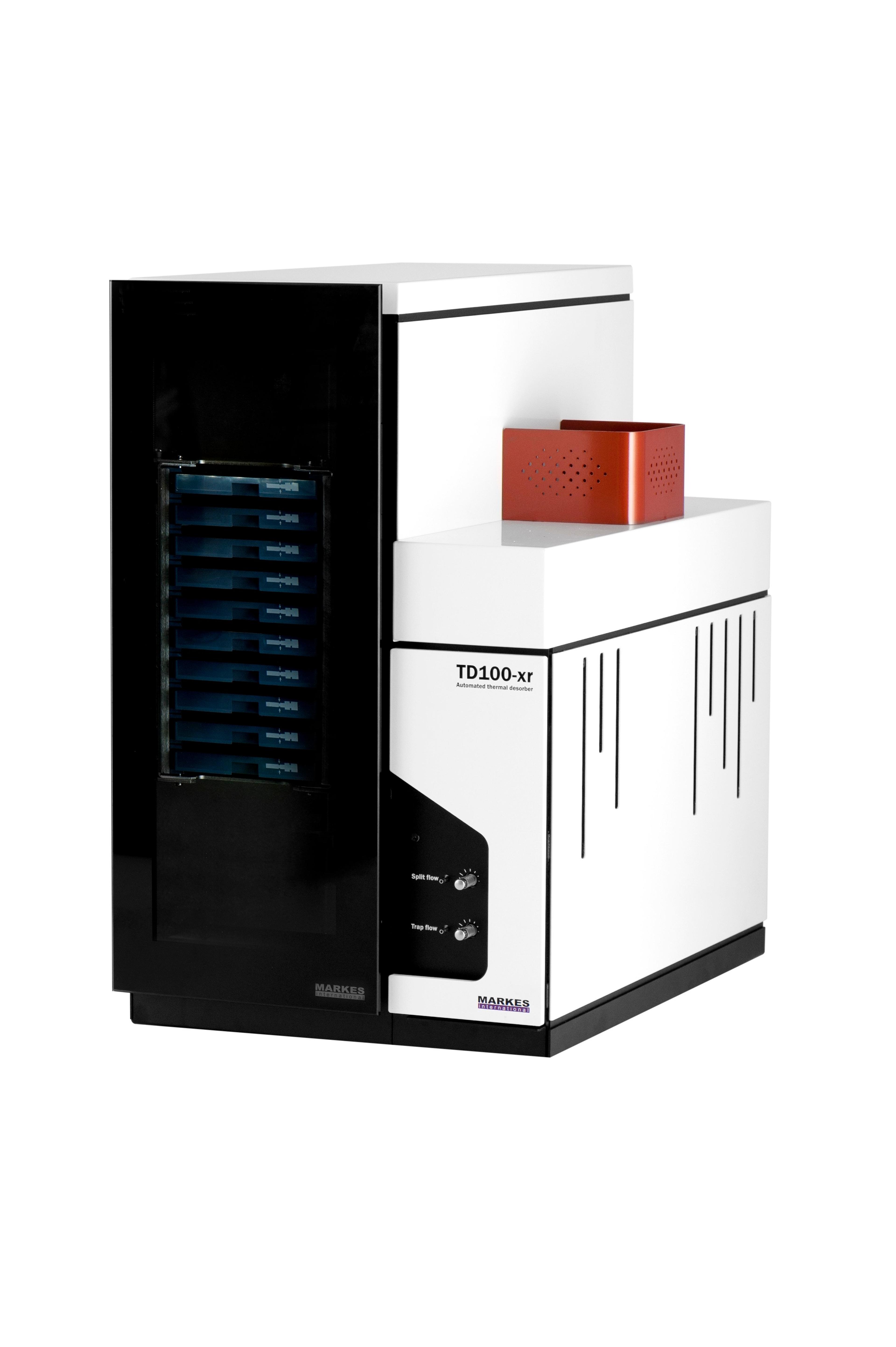
TD100-xr
Markes International LtdFully-automated analytical thermal desorption instrument for GC or GC–MS
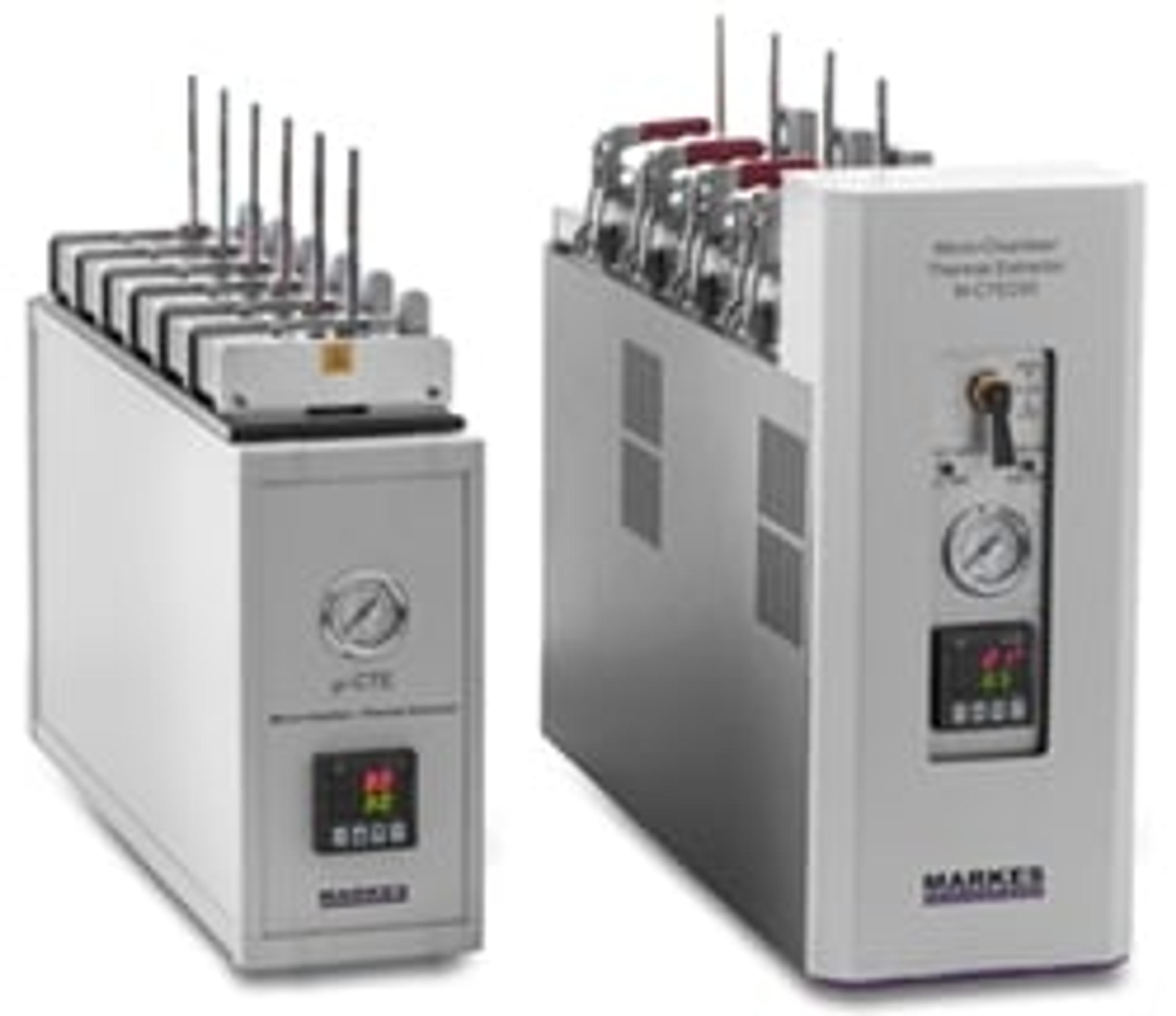
Micro-Chamber/Thermal Extractor
Markes International LtdFast sampling of emissions from products and materials. The Micro-Chamber/Thermal Extractor™ (µ-CTE™) is a versatile and compact unit with up to six small cylindrical chambers that enables the sampling of chemicals released from products or materials. Released volatile and semi-volatile organic compounds (VOCs and SVOCs) are collected onto sorbent tubes for analysis by TD–GC–MS. The capability of the Micro-Chamber/Thermal Extractor has been further extended by the release of the Humidifier Accessory, which supplies the Micro-Chamber/Thermal Extractor with air or gas at up to 50% relative humidity. Features: The four-chamber model has a chamber volume of 114 mL and a maximum temperature of 250°C The six-chamber model has a chamber volume of 44 mL and a maximum temperature of 120°C Volatiles are collected on sorbent tubes for analysis by TD–GC–MS; also compatible with DNPH cartridges for formaldehyde monitoring No sample preparation needed – simply place the material in the chamber A constant flow of heated air or gas ensures rapid production of a representative VOC/SVOC profile Results can be correlated with longer-term reference methods Construction from inert-coated stainless steel – compatibility with reactive or thermally labile chemicals Accessories allow surface-only sampling or permeation testing An optional humidifier accessory (available for both models of microchamber) supplies air/gas at up to 50% relative humidity to allow closer simulation of conditions used in reference tests and to enhance the recovery of some less-volatile polar compounds Benefits: Save time and money by minimising the need for third-party reference tests Convienient and fast – test multiple samples in minutes, not days, for efficient quality control Confidence in results – Data from the Micro-Chamber/Thermal Extractor has been shown to correlate with longer-term reference-test results Avoid tedious and time-consuming sample preparation – simply place your sample in the microchamber Complies with international standard methods ISO 12219-3 (interior air of road vehicles) and ASTM D7706 (rapid screening of VOC emissions from products) Peace-of-mind – you are buying a quality product from the recognised leader in thermal desorption instrumentation Applications: RMicro-Chamber/Thermal Extractor analysing Rapid emissions screening of materials used indoors and in vehicles, especially to aid compliance with regulations and safety labels Product R&D and formulation of lower-emitting products Testing of raw materials and production-line quality control Comparison with competitors’ products Testing permeation of vapours through materials Aroma profiling of foods or fragranced materials