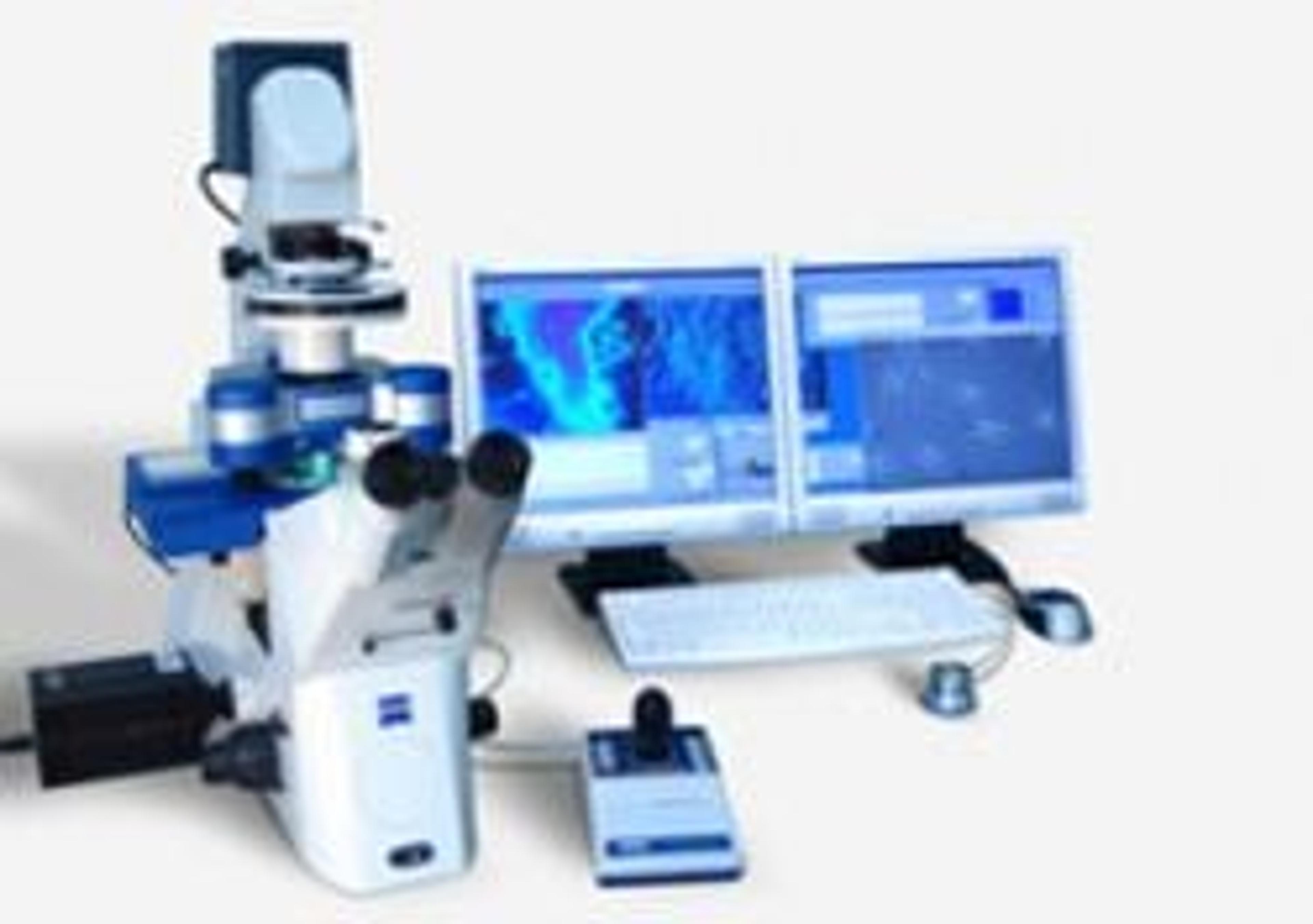
JPK’s NanoWizard® ULTRA Speed AFM System at the University of Liverpool

JPK’s NanoWizard® ULTRA Speed AFM system is being applied to study biological membrane structures and protein dynamics at the University of Liverpool.

22 Mar 2016
Alex Waite
Editorial Assistant

Product news

JPK Instruments, a world-leading manufacturer of nanoanalytic instrumentation for research in life sciences and soft matter, reports on the use of their NanoWizard® ULTRA Speed AFM system at the University of Liverpool in the group of Dr Luning Liu of the Institute of Integrative Biology to study biological membrane structures and protein dynamics.

Dr Luning Liu leads a research group at the Institute of Integrative Biology at the University of Liverpool. Using interdisciplinary approaches, the Liu Lab aims to explore the molecular mechanism underlying the self-assembly, dynamics and regulation of biological membranes and macromolecular protein complexes. The long-term goal of the group is to understand the physiological adaptation of cellular metabolisms in cells towards environmental stress, and harness the fundamental knowledge to build artificial systems, using synthetic biology techniques, to underpin the development of bioenergy research and metabolic engineering.

The Group applies the JPK ULTRA Speed AFM to study biological membrane structures and protein dynamics. AFM has been used to investigate the supramolecular architecture of photosynthetic membranes in bacteria and algae, revealing how photosynthetic proteins are organized and interact with each other and how the membranes are synthesized to optimize the photosynthetic efficiency in nature. In addition, the AFM (located in the Centre for Cell Imaging) is used to explore the assembly dynamics of bacterial microcompartment shell proteins and the formation process of shell facets. This paves the way for unravelling more details of bacterial organelle structure and synthesis, and provides new clues to control the construction of the shell in artificial processes.

Dr Liu describes his use of microscopy: “We use different microscopy techniques, including confocal microscopy, TIRF, electron microscopy and AFM. We pick specific tools depending on our research needs. Thus we have integrated the JPK NanoWizard® system with confocal and TIRF for simultaneous fluorescence and AFM imaging on biological samples.”

NanoWizard II

JPK Instruments

New standards for soft matter and life science AFM Most stable platform for highest resolution in imaging and force measurements Stand-alone tip scanning design for flexibility in the applications Fits to all standard inverted research microscopes from Zeiss, Leica, Olympus and Nikon Integrates with advanced optical imaging (DIC, CLSM, TIRF, FRET ...) Patented DirectOverlay™ software feature for combining AFM and optical images distortion free In-situ imaging in biological/chemical fluids or in air Measurements at variable temperatures with perfusion possibilities Large scan field of 100×100×15 µm3 with highest closed loop performance through capacitive sensors

(1)

Links

Tags

GlycobiologyGlycobiology encompasses research into the biological functions, synthesis and structures of glycans, including glycoproteins, glycolipids, proteoglycans and free oligosaccharides. Mass spectrometers and their software are commonly used in the study of glycobiology, along with structure predicting tools, chromatography and NMR.ProteomicsProteomics is the systemic bioinformatics study of proteins and amino acids, including their structure, size, function and identification. Tools used in proteomics include chromatography, blotting and gels, protein arrays, mass spectrometry and ELISA and associated analysis software. Analyzers and proteomic systems should be sensitive, high resolution, fast and may be automated for high-throughput.MicrobiologyMicrobiology is the study of microorganisms including protists, prokaryotes, fungi, and, often, viruses. Microorganisms are a useful research tool as genetic vectors and, in immunology, for antibiotic susceptibility testing, cellular biology and genetics. Microorganisms commonly grow readily in incubators with microbial culture media; this can contain chromogenic supplements to differentiate between cell lines. Estimate your culture’s density of microorganisms with colony counters, or screen and select colonies for desirable clones with automated colony pickers. Additionally, equipment is available to monitor environments for the presence of microbes and identify with microbial identification instruments. Find the best microbiology products in our peer-reviewed product directory: compare products, check customer reviews and receive pricing direct from manufacturers.Sample ManagementSample management systems include sample storage devices such as freezers and plate storers, sample environment enclosures and sample organization, retrieval and sorter systems. Useful system features include high-throughput, automation, robotic arms, automated liquid handling and associated database systems. Accessories in sample management include barcode scanners, heat sealers and tubes.Protein PurificationProtein purification is a vital step in drug discovery, therapeutics, biotech and life science research. The purification process typically involves subcellular or membrane protein extraction with cell lysis kits, separation of proteins from cell debris by filtration or spin columns, and the isolation of proteins of interest from other proteins and impurities with affinity purification (including fusion protein tags and antibody binding proteins A, G and L), immunoprecipitation or chromatographic methods, such as ion exchange, size exclusion and immobilized metal affinity chromatography. All purification methods come in multiple formats for your laboratory needs, including agarose or magnetic beads, resins, columns and filter plates. Find the best protein purification equipment in our peer-reviewed product directory: compare products, check customer reviews and receive pricing direct from manufacturers.NanotechnologyNanotechnology, or nanotech, is an engineering technique using molecular scale functional systems. Applications of nanotechnology include medicine and medical devices, electronics, air and water purification, food science and energy production.Robotic InstrumentsRobotic instruments can be used for high-throughput automation of many lab processes. Such processes use instruments for assays like cell based assays and ELISA, for sample preparation like shakers, centrifuges and incubators, and for analysis such as sequencing and western blot analyzers. Useful features of robotic instruments include speed, reproducibility, barcode readers, software and automation.Light MicroscopyLight microscopes or optical microscopes are used to visualize microscale objects under magnification, including cells, clinical specimens and materials. Lab equipment for light microscopy includes confocal microscopes, fluorescence microscopes, zoom and stereo microscopes. Microscope slides and imaging reagents are available for visualizing samples, as well as various microscope stages and incubators for large or temperature-sensitive samples. Find the best light microscopes in our peer-reviewed product directory: compare products, check customer reviews and receive pricing direct from manufacturers.Membrane ProteinsStructural BiologyNanostructuresProtein InteractionsProtein interactions are essential for understanding cellular processes, as proteins work together to carry out biological functions. Studying protein interactions can provide insights into disease mechanisms, drug development, and cell signaling pathways. Explore the best tools for protein interaction research in our peer-reviewed product directory; compare products, check reviews, and get pricing directly from manufacturers.ConfocalTIRF MicroscopyFluorescenceThe emission of fluorescence occurs when a photon of energy is supplied to a fluorescent chemical compound by an external source, causing it to become excited. Fluorescence can be detected and measured for different purposes using microplate readers, fluorescence microscopes, fluorescence scanners, and flow cytometers.