
JPK’s Nanowizard® AFM is Used to Evaluate the Risk of Cardiovascular Disease in Patients at iMM, University of Lisbon
4 Sept 2016
Product news
JPK Instruments, a world-leading manufacturer of nanoanalytic instrumentation for research in life sciences and soft matter, reports on the use of their NanoWizard® AFM system at the Instituto de Medicina Molecular at the University of Lisbon.
Dr Nuno C Santos leads the Biomembranes and Nanomedicine group at the Institute of Molecular Medicine (iMM) at the University of Lisbon, Portugal. Driven by the fact that cardiovascular diseases are the leading cause of mortality worldwide, accounting for about one third of all deaths and that biomarkers for assessing cardiovascular risk still have a limited applicability, there is much potential for research into new solutions. High levels of fibrinogen, a protein essential for the blood clotting process, have been identified as a potential risk factor for these diseases and it is this topic that the group has applied atomic force microscopy (AFM) to study.
Applying a NanoWizard® AFM system from JPK Instruments, the group has evaluated the interaction between fibrinogen and erythrocytes from patients with chronic heart failure, understanding how fibrinogen influences the aggregation of these cells. Dr Santos takes up the story to date: “We showed that the force required to break the bond between fibrinogen and erythrocyte is higher in patients with chronic heart failure than in healthy donors. Erythrocytes from these patients also showed changes in their elasticity and behavior while in the blood stream. Subsequently, during a one-year clinical follow-up, it was found that patients, where a higher force was initially required to release the binding between fibrinogen and erythrocytes, were more likely to be hospitalized due to cardiovascular complications in the following 12 months. We have been able to demonstrate a connection between nanotechnology and the identification of cardiovascular problems.”
In this study, AFM-based methodology proved to be a promising nanotool to evaluate changes in the interaction between fibrinogen and human blood cells, pinpointing patients with increased cardiovascular risk. Fibrinogen-erythrocyte binding forces, measured at the single molecule level, are thus a potential biomarker for chronic heart failure severity and may eventually be used also for the clinical prognostic assessment of other cardiovascular diseases.
Describing why he chose the NanoWizard®, Dr Santos continued: “Atomic force microscopy-based force spectroscopy using the NanoWizard® II from JPK instruments was our first choice to study the interaction between fibrinogen and red blood cells and evaluated the cell elasticity in chronic heart failure disease. This has provided us with a robust and user-friendly system for this research.”
Lastly, the group has recently had a publication in Nature Nanotechnology, entitled Atomic Force Microscopy as a Tool to Evaluate the Risk of Cardiovascular Diseases in Patients, the paper follows the work described here and reaches the conclusion that AFM is a promising tool to identify patients with increased risk for cardiovascular diseases.
Related products
Request Quote for All Products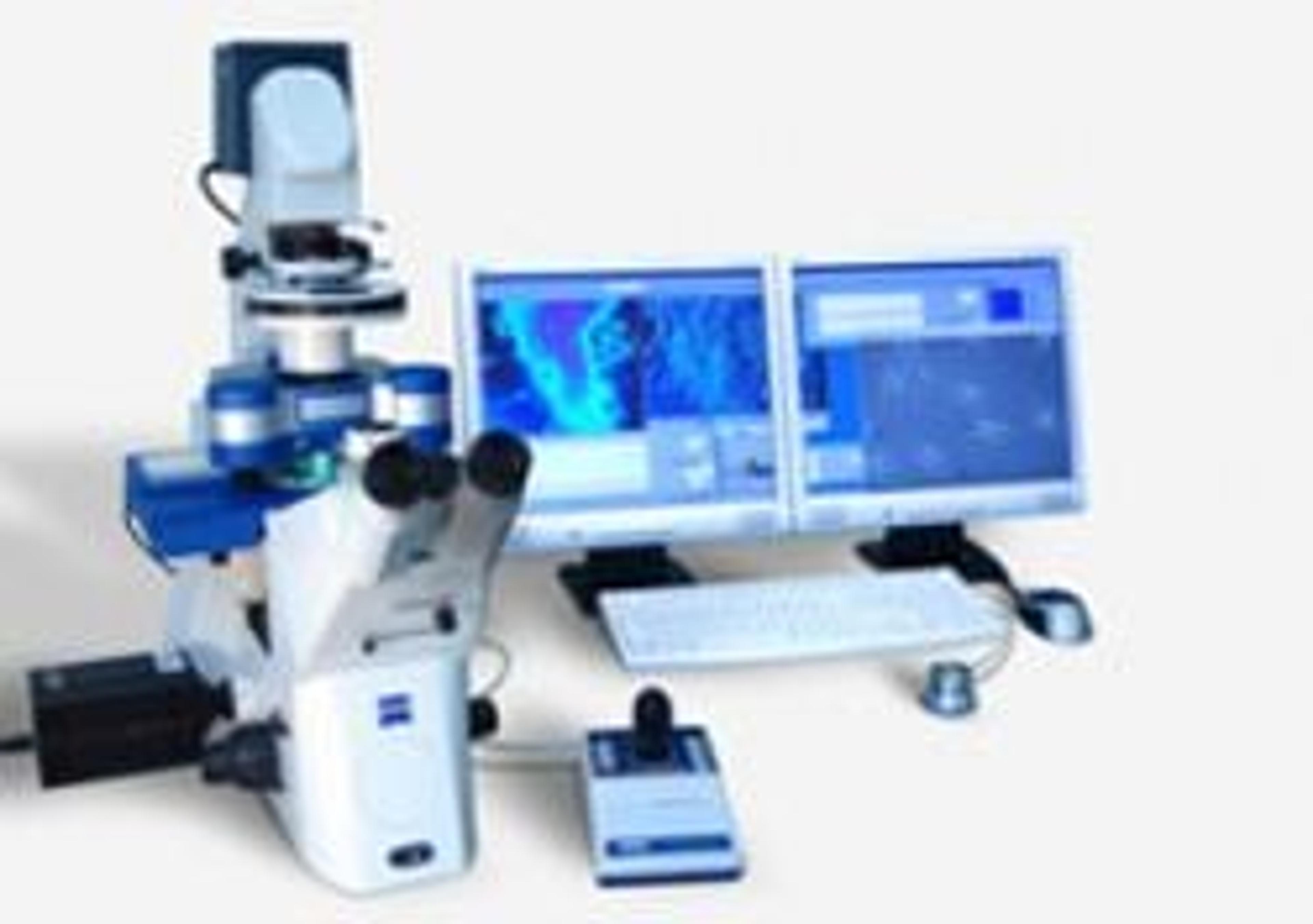
NanoWizard II
JPK InstrumentsNew standards for soft matter and life science AFM Most stable platform for highest resolution in imaging and force measurements Stand-alone tip scanning design for flexibility in the applications Fits to all standard inverted research microscopes from Zeiss, Leica, Olympus and Nikon Integrates with advanced optical imaging (DIC, CLSM, TIRF, FRET ...) Patented DirectOverlay™ software feature for combining AFM and optical images distortion free In-situ imaging in biological/chemical fluids or in air Measurements at variable temperatures with perfusion possibilities Large scan field of 100×100×15 µm3 with highest closed loop performance through capacitive sensors