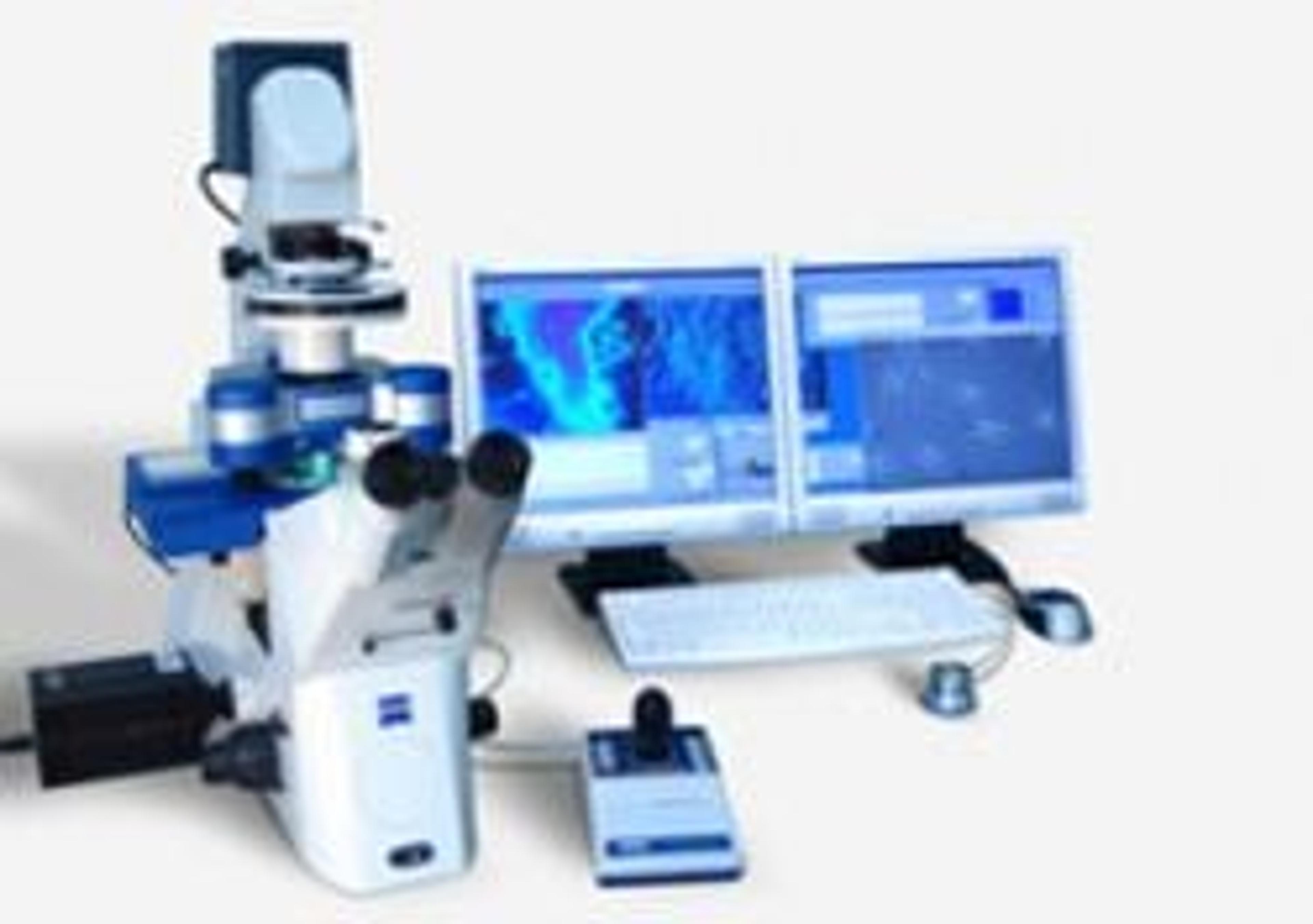
JPK’s NanoWizard® AFM and ForceRobot® Systems used at the POSTECH Supersensitive Molecular Layer Laboratory, Korea, for Medical Diagnostics

Professor Joon Won Park is head of the lab at POSTECH aims to utilize the high sensitivity of AFM for applications in medical diagnostics

20 Jun 2016
Weylan Kiam-Laine
Microbiologist

Product news

JPK Instruments, a world-leading manufacturer of nanoanalytic instrumentation for research in life sciences and soft matter, reports on the use of their NanoWizard® AFM and ForceRobot® systems at the Pohang University of Science and Technology (POSTECH) in Korea. They are being applied to the field of medical diagnostics.

Professor Joon Won Park is head of the Supersensitive Molecular Laboratory at Korea's Pohang University of Science & Technology. His group's research goal is to bring AFM into the field of medical diagnostics. It is their belief that AFM is the most sensitive tool for detecting various biomarkers without amplification or labeling. Reliability and speed have been past hurdles of AFM, but Professor Park's team has demonstrated that the application of a finely controlled surface coating to AFM probes and substrates overcomes this barrier. Furthermore, recent advances of microscopy technology (in terms of speed) make it more suitable for cost-effective bioanalysis. With a capture spot* fabricated with conventional microarrayers, the limit of detection (LOD) is about 10 fM. This is better than that of most of the current typical bioanalyses such as microarray and ELISA (1 pM). With a capture spot as small as a few microns, the LOD is 10 aM and this can be pushed further with a capture spot as small as 1 micron. The approach has been demonstrated to be good for various biomarkers including protein, DNA, mRNA and microRNA from a single cell. The group believes that AFM can open up a new window for life sciences and medical diagnostics.

The laboratory has used AFM systems from multiple vendors over a period of several years. However, now with their second NanoWizard® AFM operating alongside their ForceRobot® system, they believe in JPK's systems. User, Dr Youngkyu Kim, describes his thoughts on the instrumentation. “JPK's AFMs fit well with our objective. They are user-friendly and robust. We have used NanoWizard® I and ForceRobot® for many years without much trouble. We have now added a NanoWizard® 3. Also important to us is JPK's attitude towards customers. I am very happy with their kind and close support. They understand our goals and work with us to help reach them. Whenever we encountered any issues with their AFMs in my laboratory, they fixed the problems quickly. Even when I requested new programs to handle our tasks, JPK generated new software routines for us. Over time, I met several of their key staff at conferences like ISPM and used these meetings to discuss pending issues and to get advice as to how to get around difficulties and challenges.”

The group publishes quite prolifically. For example, the use of JPK's ForceRobot® 300 is highlighted in a paper recently published in Nature Communications: “Cytosolic targeting factor AKR2A captures chloroplast outer membrane-localized client proteins at the ribosome during translation.” An example of their work using the NanoWizard® is shown in a paper published in Journal of the American Chemical Society (JACS) entitled “Quantification of fewer than ten copies of a DNA biomarker without amplification or labeling.”

*A capture spot is the area where the target chemistry is deposited for analysis.

NanoWizard II

JPK Instruments

New standards for soft matter and life science AFM Most stable platform for highest resolution in imaging and force measurements Stand-alone tip scanning design for flexibility in the applications Fits to all standard inverted research microscopes from Zeiss, Leica, Olympus and Nikon Integrates with advanced optical imaging (DIC, CLSM, TIRF, FRET ...) Patented DirectOverlay™ software feature for combining AFM and optical images distortion free In-situ imaging in biological/chemical fluids or in air Measurements at variable temperatures with perfusion possibilities Large scan field of 100×100×15 µm3 with highest closed loop performance through capacitive sensors

(1)

Links

Tags

ELISAEnzyme-linked immunosorbent assays (ELISA), also known as enzyme immunoassays (EIA), are used for the detection and quantification of proteins, peptides and antibodies in a sample. ELISA often comes in kit format, with pre-selected antibody pairs to detect specific proteins or biomarkers of diseases such as diabetes and obesity, or cardiovascular and neurological disorders. Detection is made possible with chemiluminescent, fluorescent or colorimetric substrates and detection instruments such as microplate / ELISA readers. Other kits available include: Enzyme-linked immunospot (ELISPOT) assays for the quantification of protein-producing cells and chemiluminescent immunoassays (CLIA) kits. Find the best ELISA kits and products in our peer-reviewed product directory: compare products, check customer reviews and receive pricing direct from manufacturers.Microarray AnalysisMicroarrays, also known as biochips, are used for the detection and analysis of multiple genes, proteins, antibodies, or biomarkers on a single microchip. This can reveal information on protein or gene expression, single nucleotide polymorphism (SNP), copy number variation (CNV), epigenetics and patient health in clinical diagnostic tests. Discover a range of microarray scanners and prefabricated antibody, protein, RNA and DNA microarrays for your analysis or consider creating your own custom microarrays with a microarray printer. Find the best microarray products in our peer-reviewed product directory: compare products, check customer reviews and receive pricing direct from manufacturers.BiomarkersBiomarkers are biological markers which can be measured and evaluated to indicate a biological state. The use of biomarkers in research and diagnosis can indicate a normal or disease state or drug response of cells / tissues. Biomarkers include genetic markers, cell surface markers such as antigens, antibodies or receptors and secreted molecules such as cytokines. An assay system is required for identification of biomarkers. :Clinical ChemistryBiochemistry (or clinical chemistry) involves the analysis of bodily fluids using chemical tests. Techniques used include HPLC, chromatography, spectroscopy, mass spectrometry, immunochemical, electrophoresis, turbidometric / spectrophotometric assay, MRI and ISE analysis. Tests are often carried out on plasma or serum but urine (urinalysis) and fecal specimens are also processed.Atomic Force Microscopy / Scanning Tunneling MicroscopyAtomic force microscopes (AFM) and scanning tunneling microscopes (STM) are high-resolution forms of scanning probe microscope (SPM) used to generate topological information of a sample down to the atomic scale. Instruments can generate an image of the surface topology, manipulate objects and reveal information on localized properties such as Young’s modulus, conductivity, and magnetism. High-quality STM and AFM probes optimized for your application are available, as well as other SPM-based instruments such as scanning ion conductance microscopes (SICM) & near-field scanning optical microscopes (NSOM). Find the best AFM and STM equipment in our peer-reviewed product directory: compare products, check customer reviews and receive pricing direct from manufacturers.NanotechnologyNanotechnology, or nanotech, is an engineering technique using molecular scale functional systems. Applications of nanotechnology include medicine and medical devices, electronics, air and water purification, food science and energy production.MicroscopyMicroscopy is a technique used to observe small objects in detail, from cells to materials, using light or electron microscopes. It enables researchers to examine structures with high resolution, aiding in fields such as biology, medicine, and materials science. With advanced microscopy techniques, scientists can gain insights into cellular processes, tissue structures, and material properties. Explore the best microscopy solutions in our peer-reviewed product directory, compare products, read customer reviews, and get pricing directly from manufacturers.MicroanalysisAFMELISAMicroarray AnalysisBiomarker DiscoveryClinical biomarkers refer to substances related to known medical conditions that can be accurately measured <i>in vitro</i>. Biomarkers can be used to diagnose presence of a disease and indicate disease severity. The discovery of new biomarkers is incredibly valuable in the field of diagnostics.