
JPK Reports on the Applied Research of Ioan Notingher at the University of Nottingham using AFM and the Tip Assisted Optics Module to Study Individual Nanotubes and Fibrils
27 Feb 2013
Product news
JPK Instruments, a world-leading manufacturer of nanoanalytic instrumentation for research in life sciences and soft matter, reports on the research studies of Dr Ioan Notingher, associate professor in the faculty of science at the University of Nottingham. With a research interest in the development of new optical and spectroscopic methods for studying biomaterials, he is applying JPK's atomic force microscope (AFM) system, the NanoWizard®, and tip assisted optics module (TAO).
The research programmes of the Nottingham Nanoscience group span a range of exciting and topical themes in state-of-the-art nanoscale science. Housed in a suite of recently refurbished laboratories containing an excellent equipment base, their core activities are focused on understanding and controlling the structure and behavior of condensed matter on length scales ranging from the single molecule limit to micron dimensions.
Dr Ioan Notingher is interested in the development of new optical and spectroscopic methods for studying biological materials at a nano and micro-scale. The main aim of his research is to understand the supramolecular architecture of self-assembled peptide and protein nanostructures. Understanding the interactions between the molecules is crucial for optimizing the physical, chemical and biological properties of these unique materials for biomedical applications such as advanced drug delivery, tissue engineering or biosensing. At the same time, nanoscale investigations of the molecular properties of self-assembled peptide nanotubes will advance the understanding of intermolecular interactions which lead to neurogenerative diseases. Such fundamental understanding at the molecular level is required for developing new therapies and preventive strategies.
The addition of AFM and TAO from JPK allows Dr Notingher and his colleagues to focus their investigations on individual nanotubes or fibrils. This is very important because these nano materials have a high heterogeneity in terms of size and shape. Therefore, techniques which require a large number of tubes cannot be used as they provide averaged results which cannot be extrapolated to individual nanotubes. Other techniques such as electron microscopy were limited to morphological studies. Complementary is the information brought by AFM and the optical spectroscopy techniques which allow more detailed investigations at a molecular level, such as studies of hydrogen bonding and molecular orientation.
Speaking of the benefits of the JPK NanoWizard AFM, Dr Notingher said "It allows us to integrate with optical spectroscopy. This means the size/shape and mechanical properties can be measured by AFM and vibrational spectroscopy can be performed on the same nano- or micro-tube. The TAO allows full control over AFM tip. For example, in the case of tip-enhanced Raman spectroscopy, the tip can be aligned accurately in the laser spot then the sample is scanned laterally to build images."
Related products
Request Quote for All Products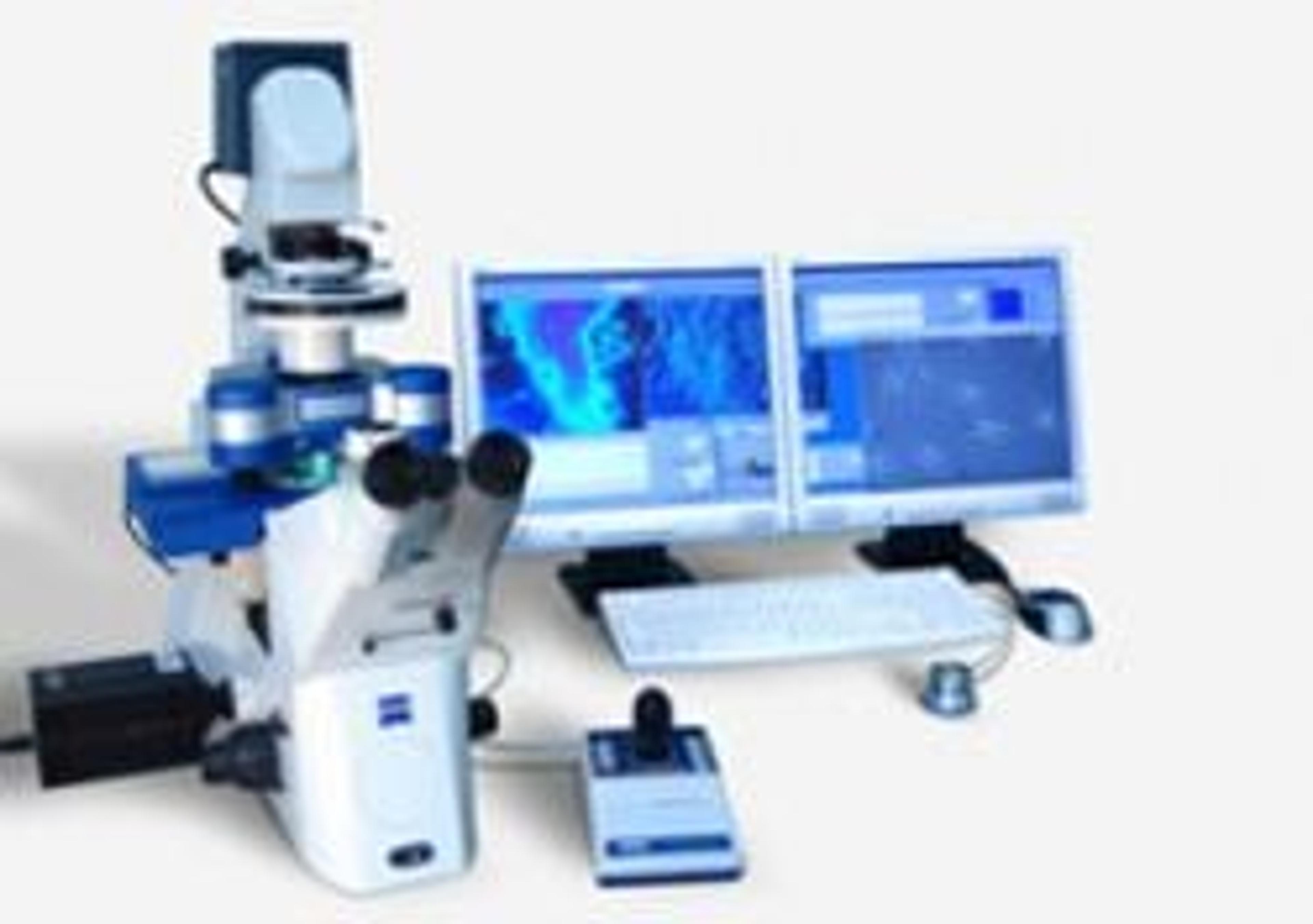
NanoWizard II
JPK InstrumentsNew standards for soft matter and life science AFM Most stable platform for highest resolution in imaging and force measurements Stand-alone tip scanning design for flexibility in the applications Fits to all standard inverted research microscopes from Zeiss, Leica, Olympus and Nikon Integrates with advanced optical imaging (DIC, CLSM, TIRF, FRET ...) Patented DirectOverlay™ software feature for combining AFM and optical images distortion free In-situ imaging in biological/chemical fluids or in air Measurements at variable temperatures with perfusion possibilities Large scan field of 100×100×15 µm3 with highest closed loop performance through capacitive sensors