
Insider insights on the strategy behind Agilent and BioTek’s combined live-cell analysis portfolio
Agilent Technologies’ acquisition of BioTek Instruments will strengthen its leadership position in the growing cell analysis segment, says Senior Vice President, Jason Thaysen
26 Aug 2019
Industry news
Earlier this year Agilent Technologies Inc. announced it had signed a definitive agreement to acquire privately-owned BioTek Instruments for an expected net purchase price of approximately $1.05 billion. The combined companies’ strategic focus is to complement Agilent’s existing capabilities and position in order to lead the market in live-cell analysis. In this SelectScience interview, Jason Thaysen, Senior Vice President at Agilent, provides insider insight into the strategic rationale behind the BioTek deal.
Expanded and integrated live-cell analysis portfolio
Agilent entered the cell analysis segment in 2015 with the acquisition of Seahorse Bioscience, a leader in specialized instruments and live-cell, kinetic assays. Agilent Seahorse XF technology was a leap in the evolution of cellular metabolism analysis, allowing researchers to better understand metabolic profiles in live cells.
With this acquisition, Agilent worked closely with BioTek to develop a workflow for the Seahorse system, cementing the compatibility of the two companies and highlighting the opportunity to provide more value to customers by working together.
“We saw that we needed a company like BioTek, a plate reader company and an imaging company, that gave us a strong position in the market and gave us a critical mass and access to customers,” explains Thaysen. “We also believe that live-cell analysis requires multiple technologies to connect in workflows, so you can investigate cells from many different angles. This is really the main reason we decided to work with BioTek.”
Added value to the immuno-oncology and immunotherapy markets
By combining BioTek’s offerings with Agilent’s, we will deliver a breadth of differentiated workflows, enabling customers to obtain deeper, more reliable insights across a variety of cell analysis applications
Jason Thaysen Senior Vice President, Agilent
Those behind the acquisition believe it presents a unique opportunity to innovate, integrate and simplify live-cell, real-time cell analysis workflows used in attractive high-growth markets such as immuno-oncology and immunotherapy.
“A few years ago, we looked strategically at the opportunities for Agilent, aiming to find new areas with a lot of opportunity scientifically, but also growth-wise,” notes Thaysen. “Having seen previous success with cancer diagnostics, it was clear to us that one of these areas was immuno-oncology, and thereby the revival of cell analysis was approaching. With that knowledge and strategy, we decided to step into the immuno-oncology arena with the acquisition of Seahorse Bioscience. We believed that the ability to measure live cells from many different angles was going to be a key component in really understanding the cellular, and thereby immune system especially within cancer research, but also a lot of other new research in that space.”
The future of live-cell analysis and mass spectrometry
What sets Agilent apart from other companies with this technology is that it already offers a wide range of analytical and mass spectrometry instruments. Agilent sees this offering, along with the company’s very strong scientific foundation, as an advantage to scientists conducting live-cell analysis. “Not only do we develop some of the best analytical instrument solutions, but our scientists really understand what is important going forward,” Thaysen highlights. “We can see that mass spectrometry and a focus on metabolomics is going to play a central role in understanding cells even better and combining those technologies across those different modalities is key. Furthermore, we have a very strong presence in the pharma space, where this is clearly moving to from academia, so we can use this brand recognition and coverage we have in the pharma market.”
This transaction is expected to be completed in Agilent’s fiscal fourth quarter of this year, subject to regulatory approvals and customary closing conditions.
Do you use Agilent products in your lab? Write a review today for your chance to win a $400 Amazon gift card>>
Related products
Request Quote for All Products
Seahorse XFe24 Analyzers
Agilent TechnologiesXFe Extracellular Flux Analyzers simultaneously interrogate the two major energy producing pathways of the cell – mitochondrial respiration and glycolysis - in a microplate, in real-time.
Seahorse XF Real-Time ATP Rate Assay Kit
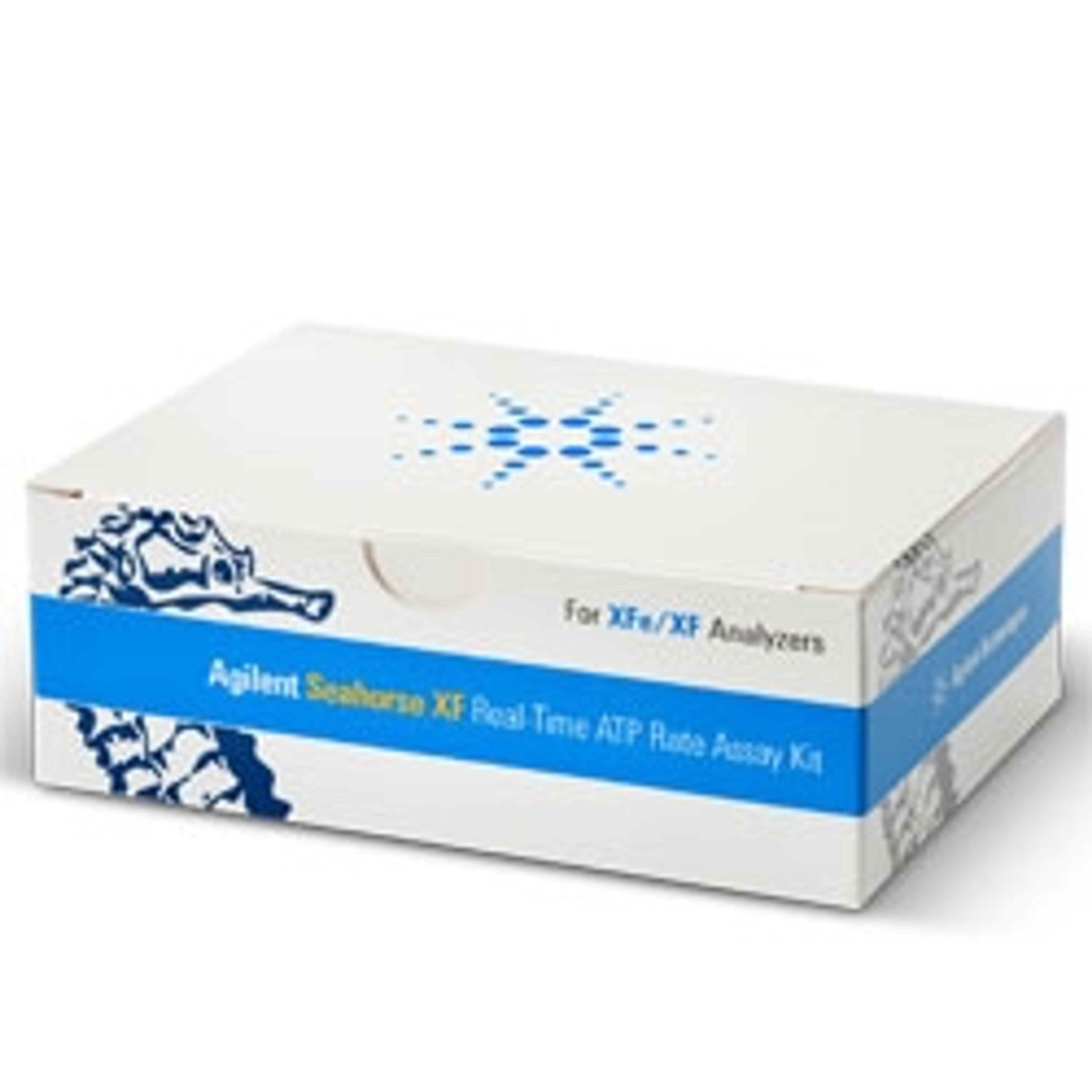
Agilent TechnologiesThe Agilent Seahorse XF ATP Real-Time rate assay is the only assay that measures and quantifies the rate of ATP (adenosine triphosphate) production from glycolysis and mitochondria simultaneously using label-free technology in live cells, in real time.

Seahorse XF Glycolytic Rate Assay Kit
Agilent TechnologiesThe XF Glycolytic Rate Assay provides real-time measurements of glycolysis, allowing to detect glycolysis modulation in minutes in live cells.