
Improve RNAi Screening and Cell Assay Workflows with Acoustic Dispensing
9 Apr 2017Editorial article
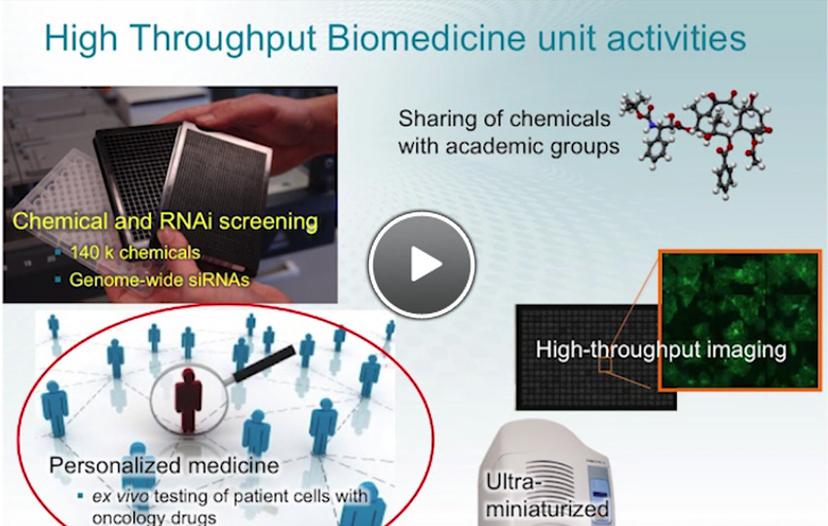
Snapshot of the video from the Labycte Genomics Symposium 2016

Institute for Molecular Medicine Finland Institute for Molecular Medicine Finland (FIMM) is an international research institute in Helsinki focusing on human genomics and personalized medicine.
Dr. Jani Saarela a Senior Researcher in the High Throughput Biomedicine Unit, Institute of Molecule Medicine Finland (FIMM) discussed the advantages of acoustic dispensing in automated screening used by the unit, at the Labcyte Genomics Symposium.
With extensive facilities for high-throughput cell analysis and imaging, the unit provides access to large RNAi and chemical libraries, generating custom library preparations for cell assay screening. The majority of the unit’s activity is focused on drug sensitivity and resistance testing, in particular ex vivo testing of oncology patient cells. Workflows center around the Labcyte Echo 525 liquid handling platform; watch Dr. Saarela discuss the impact of this technology on patient treatment selection and new drug development using selected examples from over 1800 studies on primary leukemia and solid tumor cell lines.
The FIMM High Throughput Biomedicine Unit generates chemical and RNAi libraries for high-throughput screening, including genome-wide siRNAs. Dr. Saarela describes the unit’s extensive array of workstation and standalone laboratory equipment for activities including high-throughput imaging and ultra-miniaturized assays. The chemical library contains over 140, 000 screening chemicals, drugs, and known bioactives and chemical diversity libraries. Dr. Saarela provides more details on whole genome screening of their Ambion Silencer Select genome-wide siRNA library, and drug sensitivity and resistance testing (DSRT) of over 525 oncology drugs on patient cell samples. Acoustic dispensing is used for producing assay ready plates of all libraries, in custom combinations. For siRNA screening, transfection reagents and cells are added to assay plates using the Echo, then incubated in either standard or live-cell imaging equipment. The cells are then fixed and imaged or measured on a plate reader using detection reagents.
In the presentation, Dr. Saarela explains how acoustic dispensing enables miniaturization of commercial and custom assays of the same quality but at a fraction of the volume and cost. Several case studies that apply the library are presented, including siRNA screening for liposome mediated reverse transcription and an siRNA screen based on single nucleotide polymorphism (SNP) data from breast cancer patient cells treated with anthracyclin.
The FIMM oncology collection is currently the most complete collection in the world. Oncology compounds are typically tested at 5 different concentrations with a 10,000-fold concentration range. Using the oncology compound library, drug sensitivity and resistance testing (DSRT) assays are performed on relapsed leukemia patient cell samples. Cells are added to the compounds in assay plates and incubated for three days. Cell viability is measured and combined across concentration ranges to generate dose response curves. Data are compared to control cells and used to guide and enhance patient treatment.
Dr. Saarela describes studies linking mutation data to drug response that provide evidence for a new functional classification of acute myeloid leukemia. Future work aims to use imaging and flow cytometry to obtain more in depth information from compound screening assays. Solid tumor samples are challenging to assay, as tissue is often very limited and heterogeneous. Dr. Saarela explains how technology in use at FIMM enables ultra-miniaturization for highly effective screening. Finally, the custom data management system Breeze is introduced, which is a web interface that aids automated control and analysis of DSRT.
Watch the full presentation or learn more about the Echo® 525 Liquid Handler
Leave a product review today to be entered into a prize draw for the chance to win an iPad or $400 Amazon voucher (or equivalent currency)
Related products
Request Quote for All Products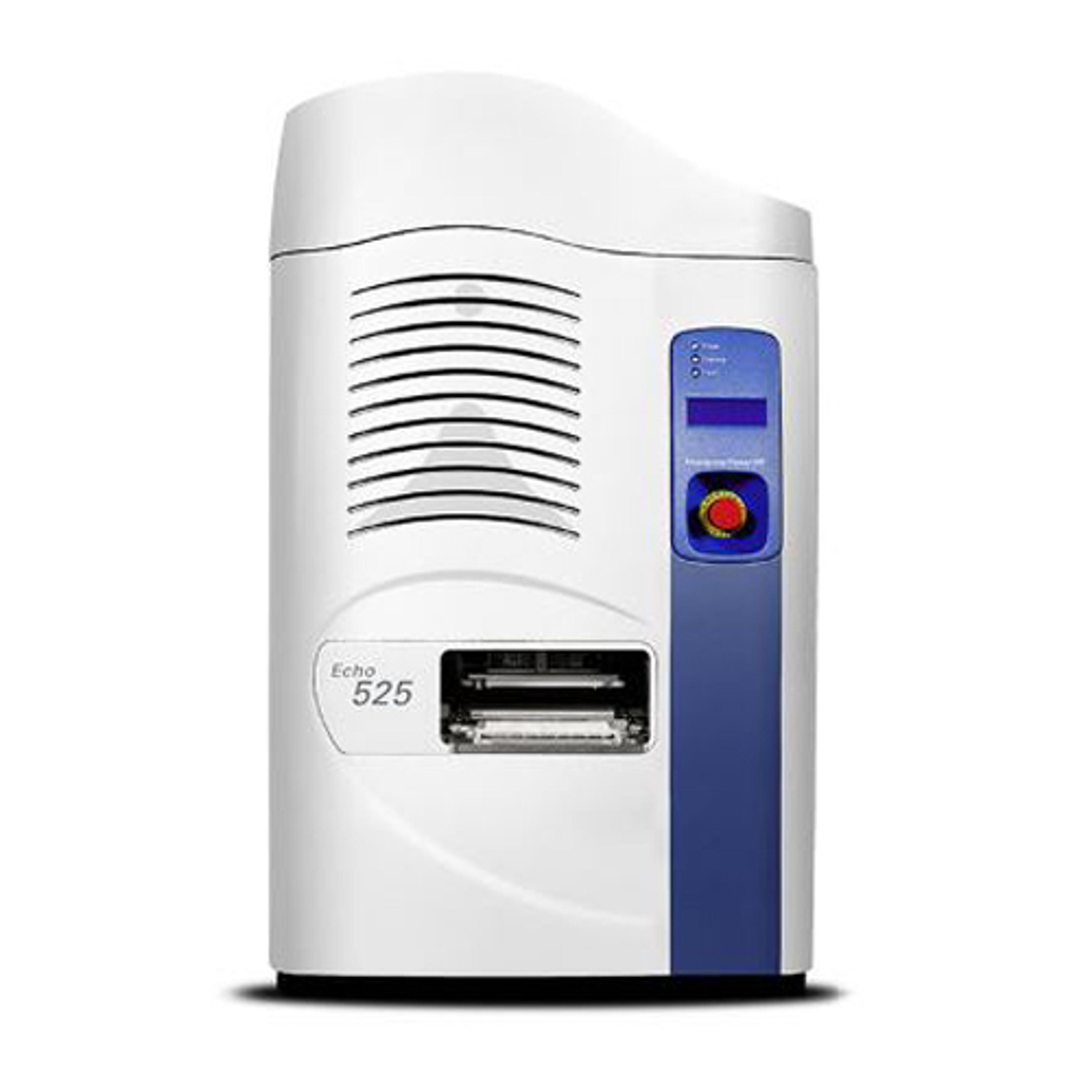
Echo® 525 Liquid Handler
Beckman Coulter Life SciencesThe Echo 525 platform, like the other Echo liquid handler models, is designed to use sound energy to transfer reagents. Unlike the other Echo models, the Echo 525 platform transfers at a larger volume increment (25 nL). This enables the more rapid transfer of aqueous reagents required in biochemical and genomics assays setup.