
HPTLC Online User Meeting: Highlights from the discussion
Watch this on-demand webinar to expand your knowledge of HPTLC and discover the benefits of HPTLC for a diverse range of applications
18 Jul 2022
Expert insights

Promoting the use of high-performance thin-layer chromatography (HPTLC) in plant analysis and other analytical fields is the main purpose of the International Association for the Advancement of High-Performance Thin-Layer Chromatography (HPTLC Association). To help facilitate a worldwide exchange of knowledge between HPTLC users, the HPTLC Online User Meeting brings together representatives from academia, industry, research, regulatory, and standard-setting bodies.
In this SelectScience webinar, now available on demand, join a panel of HPTLC experts as they discuss their work using HPTLC for the identification of adulterants in dietary supplements, the separation of common hallucinogenic tryptamines, and the screening of active compounds in traditional medicine.
Speakers include:
- Brittany Brodziski, QC Supervisor at Nature’s Way
- Kelsey Patterson, graduate student at Cedar Crest College
- Dr. Sidney Sudberg, President & CSO at Alkemist Labs
Think you’d benefit, but missed the live event? Register now to watch the webinar at a time that suits you or read on for highlights from the Q&A session.
How sensitive is HPTLC compared to techniques like HPLC?
SS: We've done studies in our lab to determine that HPTLC can be as sensitive in certain cases. It depends on factors such as resolution and the ability of the instrument to separate the compounds. In my opinion, HPTLC is not a competitive tool but where it shines is where it's more a matter of fit for purpose. HPTLC is adequate in achieving some of the same goals that HPLC does, but there are different circumstances where HPTLC might not have the resolution or the capacity to separate compounds as well as HPLC and/or mass spectrometry. One advantage of HPTLC is, it is much greener in terms of how much solvent is used and can achieve the same results as HPLC in a lot of cases in a much more efficient and cost-effective way.
Day to day, how reproducible are the results when using HPTLC?
BB: The CAMAG® HPTLC PRO Module we use is closed in the fact that it's humidity and temperature-sensitive. Where I'm located, summers are very humid and hot versus winters which are extremely dry so having a system that monitors and controls the temperature and humidity is extremely useful. This means once you have a method with the same mobile phase, it's extremely reproducible. You can see in my results with the elderberry that those samples were run over months, but they were still comparable to each other.
SS: The beauty of HPTLC is that you can analyze several samples at the same time under the same conditions, and you will get results that are not necessarily achievable in the same way with other methods and techniques. For us, it has been extremely reproducible, but it depends again, on a fit for purpose use.
How would you prepare HPTLC samples for mass spectrometry?
SS: There are different instruments with a vacuum, that will scrape the band from the plate, and then inject it into the mass spectrometer. Alternatively, you can directly add the sample into the mass spectrometer from a solution, which in our case, is what we did. We just dipped the probe into the solution, and from there, it gets into the mass spectrometer and is analyzed.
How would you typically discover adulteration in dietary supplements using HPTLC?
BB: Typically, we test every raw material which we compare with a third-party certified botanical reference material (BRM). Most of the time when we're discovering adulteration, it's when something just looks off, some extra bands or missing bands in the HPTLC. When we notice some sort of deviation, we try to understand what might have caused the deviation if it is the starting material that was provided, an error in the vendor documents, or maybe even a potency issue.
How frequently are you facing adulteration issues with dietary supplements?
BB: When I first started working at Nature's Way, which was nearly 13 years ago, and we were just implementing the identification program, it was more often. Now, because we have implemented a program where we require vendors to submit not only the powder sample, but the starting material, and then also their identification documentation, that seems to have helped improve the quality of our supply chain. I would say in less than 5% to 10% of our materials, we detect adulteration currently. However, with the case of elderberry, when we had to deviate from our typical supply chain, we did see approximately 40% of our samples that we brought showing some sort of non-conformance whether it was failing potency claims or adulteration of some sort.
Why are tryptamines better analyzed by HPTLC compared to other separation techniques?
KP: You don’t want to be heating some of these compounds so using GC-MS, or ICP-MS isn't the best idea. One of my colleagues is running these compounds using HPLC and it is interesting to look at our data and see the differences between them. With HPTLC, we have the added benefit of only using a small amount of solvent. With HPLC, you're probably going to use more solvent to run your samples than with HPTLC, I only need 60 mL of solvent to run a plate and that plate can have up to 15 samples on it so there are throughput benefits to using HPTLC.
Can you explain the economic aspects of your HPTLC analysis of tryptamines?
KP: I think with forensic science labs, the biggest hurdle would probably be obtaining the HPTLC. Other than the instrumentation, you only need to purchase the HPTLC plates. But again, if we have 15 possible areas on the plate to use, maybe a couple of them we use for a blank or a QC mix, you could realistically run 13 samples at a time and so you would need to purchase plates less regularly.
The solvents that we're using, like methanol, acetic acid, butanol, are not expensive. The only thing I'm not aware of is how much money it is for a nitrogen tank to hook up to the autosampler, but other than that, HPTLC is cost-effective because of the throughput you have from the possibility of putting a lot of samples on one plate.
To learn more about HPTLC and its benefits, watch the full webinar here>>
SelectScience runs 10+ webinars a month across various scientific topics, discover more of our upcoming webinars>>
Related products
Request Quote for All Products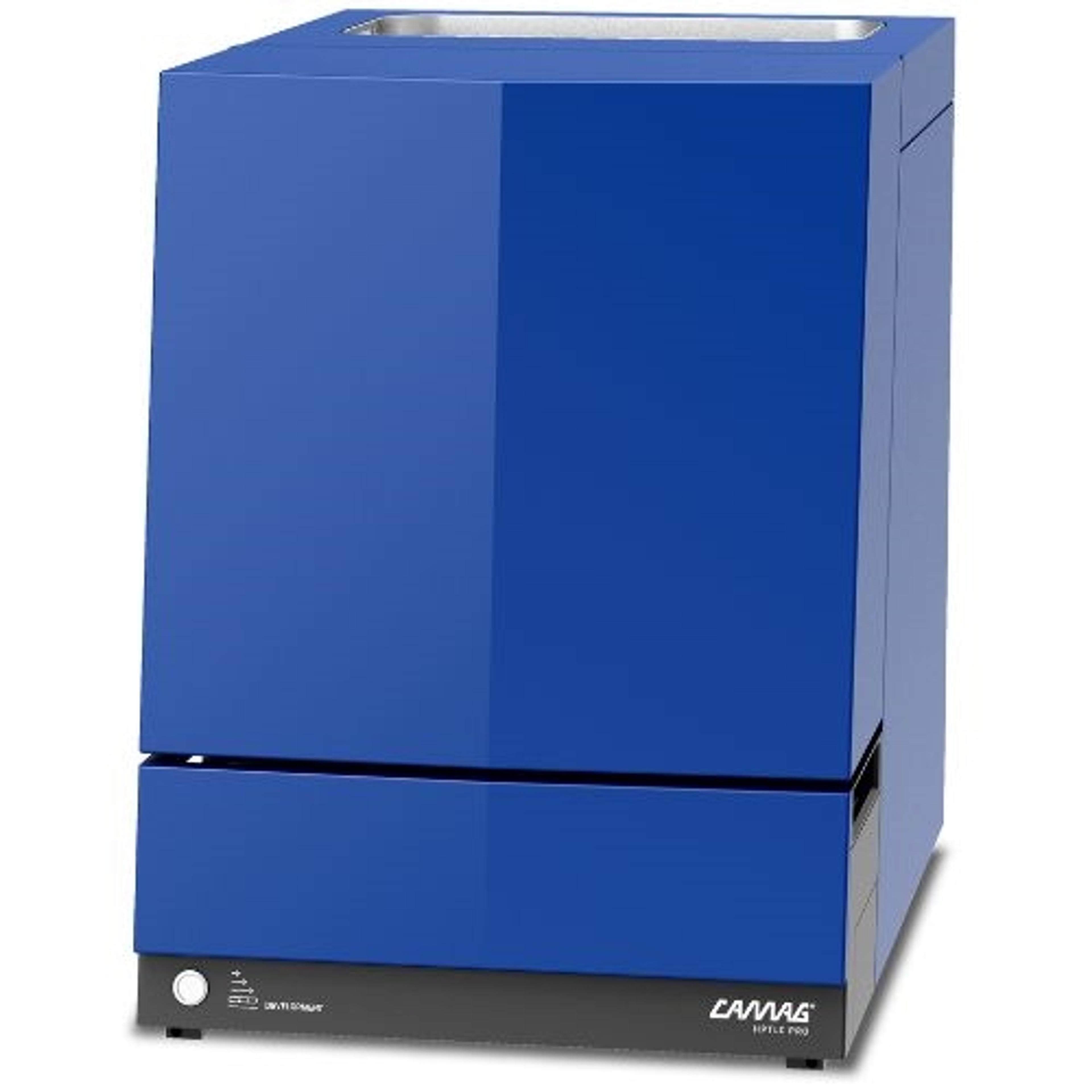
HPTLC PRO Module DEVELOPMENT
CAMAGChamber designed to separate analytes using optimized parameters (activation and preconditioning of the HPTLC glass plate (20 x 10 cm) before, conditioning during, and drying after development).
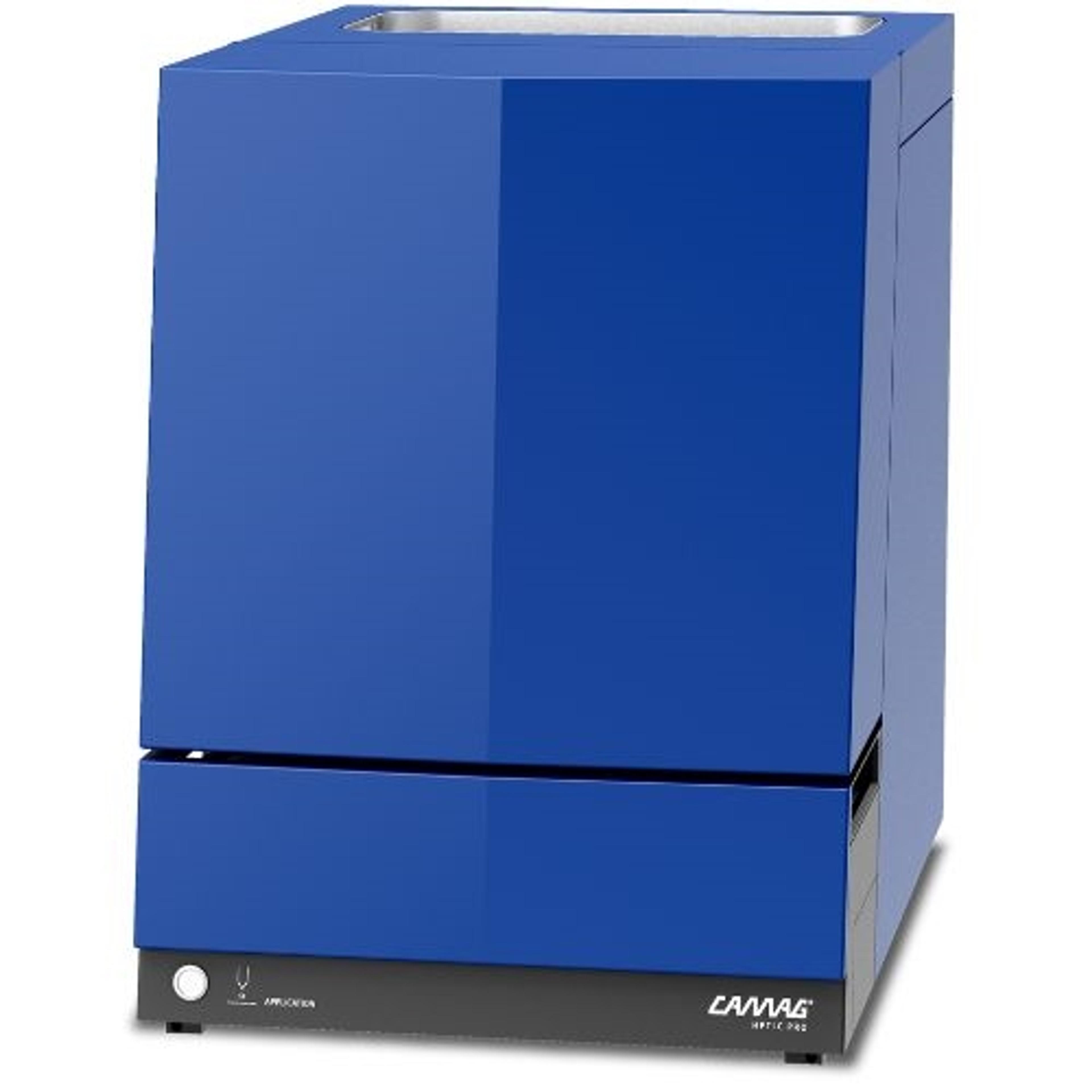
HPTLC PRO Module APPLICATION
CAMAGApplication of up to 75 samples as bands onto HPTLC glass plates (20 x 10 cm).