
How to choose the best LC autosampler design for your application needs – on demand webinar
Experts Dr. Paula Hong and Jennifer Simeone review how each autosampler aliquots and delivers the sample and discuss their differences
18 Dec 2019Expert insights
A liquid chromatography (LC) system is often chosen based on availability, history or personal preference. Many methods are not significantly impacted by the autosampler differences between the systems, but some workflows or applications can benefit from two different types of injectors: the flow-through-needle or the fixed-loop design.
In a free webinar now available on demand, experts in the field, Dr. Paula Hong and Jennifer Simeone from Waters Corporation, discuss the similarities and differences between the ACQUITY UPLC PLUS systems across multiple areas, including design features — such as the manner of needle washing and injection modes — strategies to transfer across autosamplers, as well as workflows that have specific requirements for the autosampler, such as a high-throughput application or one with problematic carryover.
Watch the webinar now and find highlights from the Q&A discussion at the end of the live event below:
Q: What are the best strategies to address carryover with each autosampler?
It will vary for each type of autosamplers. For the flow-through-needle (FTN), there is only a single injection mode, and the most effective tool to adjust for reducing carryover is the needle-wash composition. For fixed loop autosamplers, there are different strategies you can use. For example, the injection mode will impact your carryover, specifically whether you use a full loop, partial loop, or partial loop with needle overfilled. TIn addition, as with the FTN the washes can also impact carryover.
In addition, there's another characteristic that we didn't specifically discuss that applies more to the fixed loop; a valve switch option. By switching the injection valve when the gradient washing step occurs, the carryover that originates from the injection valve can be reduced in FL autosampler.
Q: Is there a difference in cycle time between the flow-through-needle and the fixed loop autosampler?
There can be a difference in cycle time between the two autosamplers. However, the biggest thing that will impact cycle time is the method and washes. On the FTN, the wash is programmed in seconds - it's the default is often six seconds post-injection. Whereas on the fixed loop, two washes are performed because you have your weak needle wash and your strong needle wash. It will take longer on the fixed loop because you're doing two washes.
However, if you're going for the ultimate in speed and cycle time and you are not concerned about carryover, you could choose not to do any wash after injection. They are the fixed loop that would be slightly faster than the flow-through-needle - but this may be a matter of a few seconds.
Learn more about autosampler designs in LC systems: Watch this webinar on demand >>
SelectScience runs 3-4 webinars a month across various scientific topics, discover more of our upcoming webinars>>
Related products
Request Quote for All Products
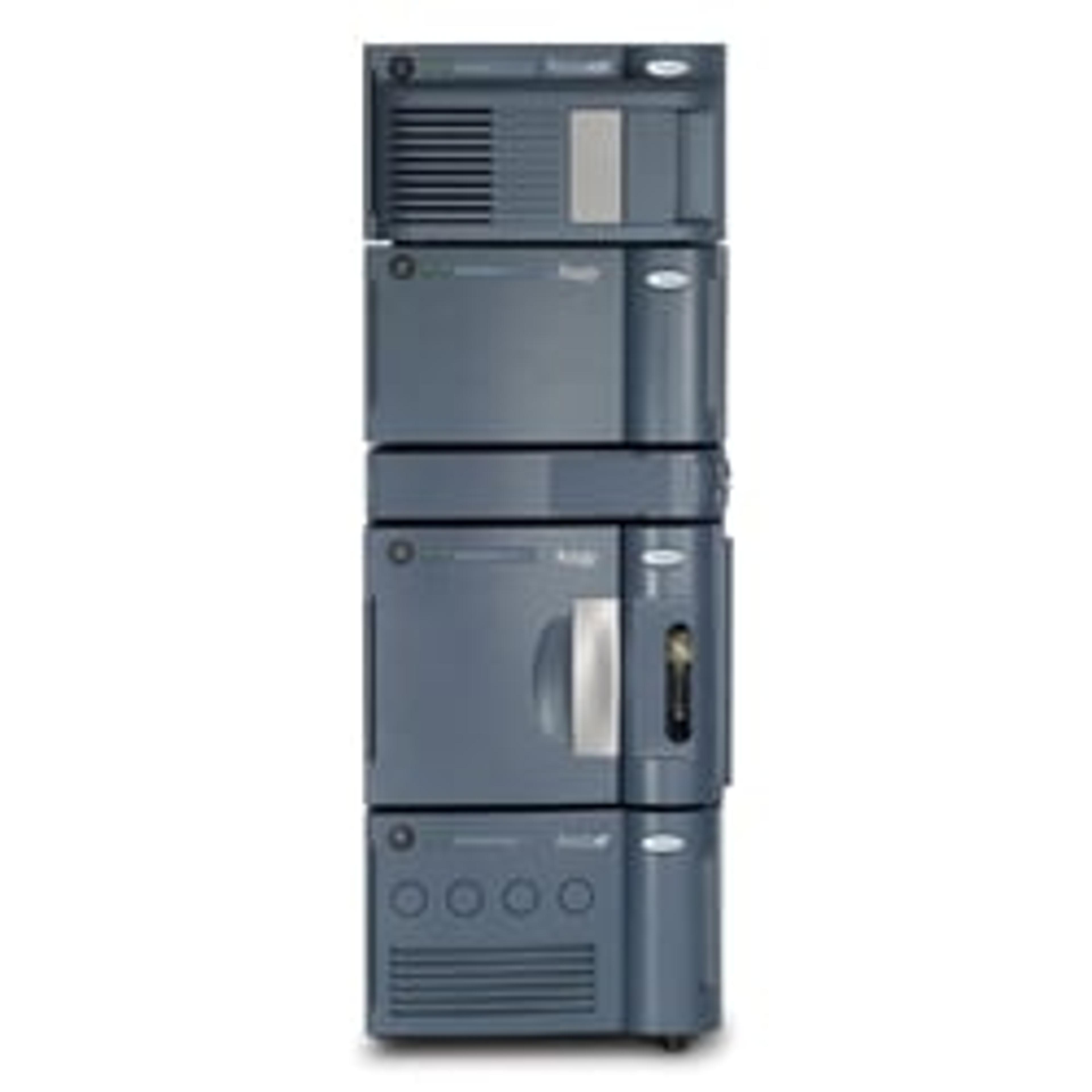
ACQUITY UPLC® I-Class PLUS System
WatersThe most powerful solution to the most critical need in separation science today.

ACQUITY UPLC System
WatersWaters ACQUITY UPLC - Dramatic Improvements in Speed, Sensitivity and Resolution Whether you work in methods development or quality assurance, in drug discovery and development or testing for safety in food supplies, you seek a productivity edge. With the ACQUITY UPLC® System, now you can get more information in a single, short run than you've ever seen with HPLC. Waters ACQUITY UPLC System UltraPerformance LC® (UPLC®) technology starts with unique 1.7 μm small-particle chemistries. Chromatographers no longer need to choose between speed and resolution–with UPLC you get both. Instrument Designed for Chemistry; Chemistry Designed for the Instrument The ACQUITY UPLC System has been holistically designed to match the performance needs of our innovative column chemistries with robust hardware, easy-to-use software and specialized support services. Small, pressure-tolerant particles High-pressure fluidic modules Minimized system volume Negligible carryover Reduced cycle times Fast response detectors Integrated system software and diagnostics With UPLC you have the ability to work more efficiently with higher speed, sensitivity and resolution at a much wider range of linear velocities, flow rates and backpressures to obtain superior results. The Waters ACQUITY UPLC System's high-pressure fluidics optimizes flow rates to make the most of small particle technology. The ACQUITY UPLC System's sample-handling design is designed to ensure exceptionally low carryover and reduced cycle time. And when interfaced with the Sample Organizer, it increases unattended sample capacity by ten times. High-speed detectors, both optical and mass, contribute to increased sensitivity and help manage the heightened speed and resolution requirements of UPLC. ACQUITY UPLC Systems are easily controlled, diagnosed, and monitored via a graphical system console interface. The console offers: Quick and easy access to critical instrument parameters Simple system start-up, elegant system status monitoring and predictive performance indicators to ensure maximum productivity Data management capabilities that are supported by both MassLynx™ and Empower™ software The ACQUITY UPLC System is also supported by Intelligent Device Management technology with our Connections® INSIGHT™ service, providing instrument diagnostics.