How to Accelerate Nanobody Discovery with High-Throughput Flow Cytometry

Join this webinar to learn more about the new generation of therapeutic antibodies and find out how solutions from Sartorius can be used to accelerate their identification

27 May 2019

Charlie Carter
Life Sciences Editor

Expert insights

While antibodies are set to be increasingly important as therapeutic options for cancer and other diseases, the discovery of fully functional antibodies that lack light chains in Camelidae (camels and llamas) has opened the door to an exciting new generation of therapeutic antibodies known as nanobodies.

Unlike conventional antibodies, the heavy-chain antibodies of Camelidae contain a single variable domain (VHH) and two constant domains (CH2 and CH3) only. Using these functional antibodies as a base, nanobodies – small, single-domain antibody fragments that retain full antigen-binding capabilities and the properties of heavy-chain antibodies – have been created.

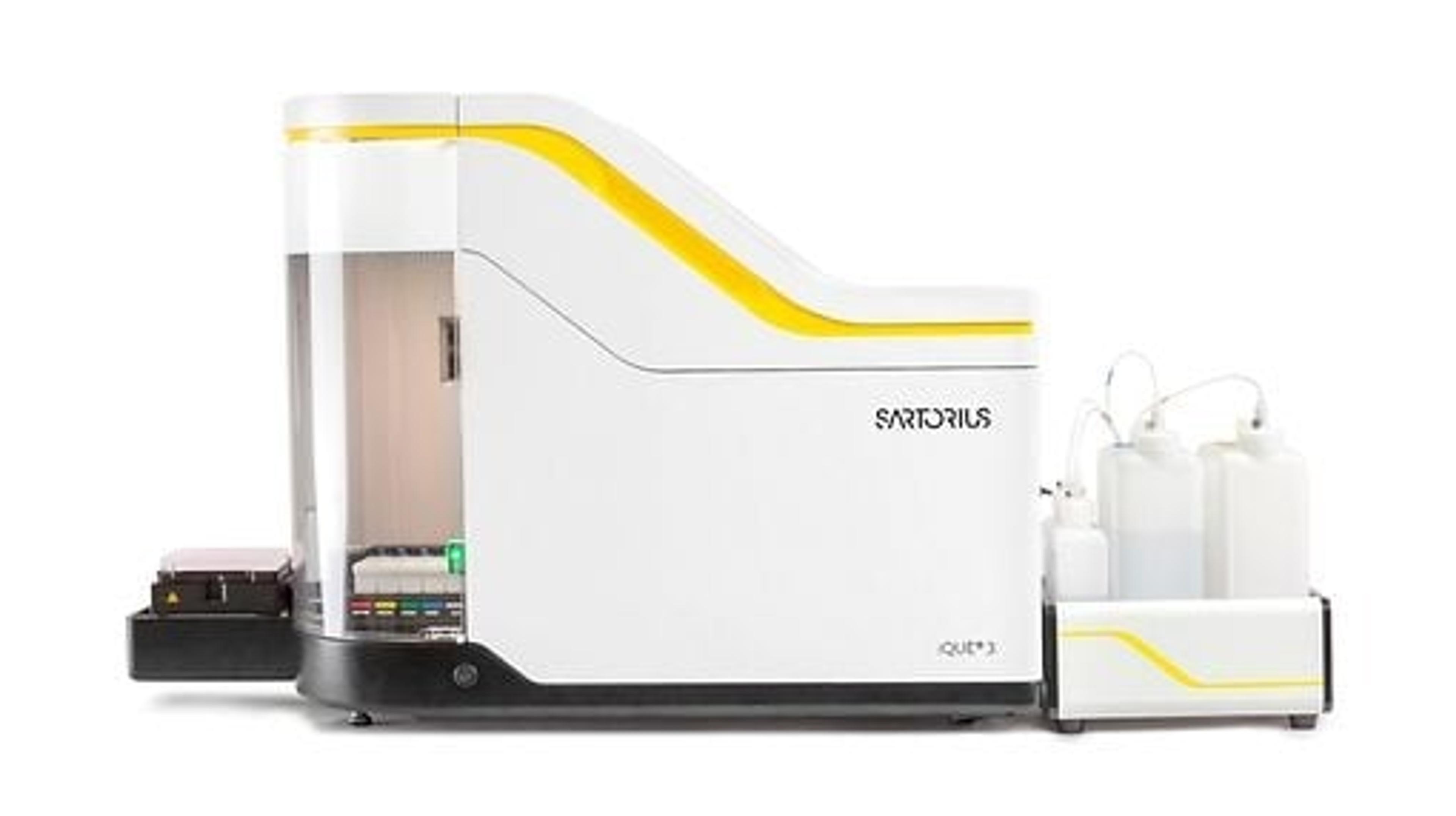
In this expert webinar, Pieter Kennis, Associate Scientist for the high-throughput profiling unit at Ablynx, discusses these proteins. Through multiplexing of primary screening assays and semi-automated dose response binding data analysis, we explore antibody binding using the Intellicyt® iQue Screener to accelerate lead identification.

REGISTER NOW

Watch this expert webinar to learn about:

  • Efficient labeling of cells using MultiCyt encoder dye
  • Multiplexing of cell lines encoded with MultiCyt dyes to screen for compound binding (through examples from nanobody discovery campaigns)
  • Semi-automated data analysis with ForeCyt software to determine EC50 values from dose-response binding

The live webinar will take place on Tuesday, June 11, 2019, at:

  • 16:00 BST
  • 11:00 EDT
  • 08:00 PDT
  • 17:00 CEST

Scheduling conflict? Register to receive an on-demand link to watch later>>

iQue Forecyt® software

Sartorius Group

A comprehensive and interactive assay development, implementation, and analysis environment, available with the  iQue ® High-Throughput Screening Cytometry Platform.

(2)

Links

Tags

AntibodiesAntibodies are used in techniques such as confocal and fluorescence microscopy, flow cytometry, ELISA, ELISPOT, immunohistochemistry, western blotting and immunopreciptation. Select specific antigen reactivity, high specific affinity, low non-specific binding, monoclonal or polyclonal, primary or secondary antibodies and associated conjugates such as an enzyme or dye for visualization.Flow Cytometry / Cell CountingFlow cytometers are used to count, sort and examine multiple characteristics of cells. Other cell analysis equipment includes image cytometers, cell counters, fluorescence-activated cell sorters (FACS), magnetic-activated cell sorters (MACS), and a range of flow cytometry assay kits. Flow cytometers can reveal information on cell viability, cell proliferation, apoptosis and cell cycle progression, as well as identify cell populations and intracellular or cell-surface molecules. Additionally, some flow cytometers, known as FACS, have an additional sorting function after analysis. Cell counters and image cytometers count live and dead cell populations and can also conduct cell proliferation assays. Find the best flow cytometers, cell counters and cell sorters in our peer-reviewed product directory: compare products, check customer reviews and receive pricing direct from manufacturers.Therapeutic AntibodiesTherapeutic antibodies are antibodies engineered for use in treating diseases. They can be designed to target specific antigens, blocking harmful interactions or modulating immune responses. Therapeutic antibodies are critical in treating conditions like cancer, autoimmune disorders, and infectious diseases. Explore the best therapeutic antibody products in our peer-reviewed product directory; compare options, check reviews, and get pricing directly from manufacturers.Cancer ResearchAlthough cancer is often referred to as a single condition, it actually consists of more than 100 different diseases. Microscopy, mass spectrometry, high throughput sequencing and flow cytometry are some of the most common techniques employed in cancer research labs.
How to Accelerate Nanobody Discovery with High-Throughput Flow Cytometry