
How Scientists Can Predict the Properties of Energy Crops for Efficient Conversion of Biomass Feedstock
Learn how FTIR technology is helping to build chemometric models to predict quality parameters of energy grasses
7 May 2019
Editorial article

As energy producers move towards biomass as an energy source, there is an increasing need to produce a sustainable supply of quality energy crops. This requires the ability to accurately measure and predict the chemical qualities of this fuel type to ensure efficient energy conversion. SelectScience speaks to Dr. Gordon Allison, Analytical Biochemist at the Institute of Biological, Environmental and Rural Sciences (IBERS) at Aberystwyth University, to learn about his work profiling energy crops; the key analytical technologies advancing his work; and how predictive modeling is benefiting the industry.
Starting his career in molecular biology, Allison’s work in the field of metabolomics, looking for blood markers of transmissible spongiform encephalopathies (TSEs) in the early 2000s, drew him into the world of analytical chemistry. Over the past ten years, Allison’s work at IBERS has focused on the analysis of biomass and energy crops, specifically energy grasses, with a view to developing sustainable sources of biomass. Much of his work has been part of the BBSRC-funded UK breeding program on miscanthus, a giant Asian grass. “We're developing new varieties of grasses that can be grown as an energy crop on land that's not used for food production and can be biorefined into various products. Of course, like any other feedstock, chemical composition is important for conversion process efficiency,” explains Allison.

There is a drive towards efficient chemical analysis of samples, which undergo thermochemical conversion for energy production, and this is where Allison’s work characterizing energy crop properties is key.
Chemical analysis of plant cell wall composition can be time-consuming. Chemometric models based on infrared spectra offer a faster and easier alternative that can be used to predict analytical information.
“I characterize variation in trials, for example, setting up predictive models to predict things like the concentration of lignin, cell wall phenolics, water-soluble carbohydrates, etc.,” Allison continues.
Two techniques are key to his work: gas chromatography-mass spectrometry (GC-MS) and vibrational spectroscopy, including infrared and Raman techniques. Exploring the chemometrics of the data generated from these analyses using MATLAB and software from Eigenvector Research forms the focus of his research and has been applied across several projects including collaborations within the industry.
Biomass Quality Parameters
For example, working with Dr. Ian Shield, of Rothamsted Research, as part of a Supergen Bioenergy II research project, Allison developed a model to predict quality trait parameters in well-characterized grass feedstocks grown at Rothamsted Research. “If those materials were being grown, for example, for an energy producer, you could very quickly give them a breakdown of key aspects of quality of that feedstock, which would be very useful for them when they're deciding how they're going to use it,” Allison tells us.
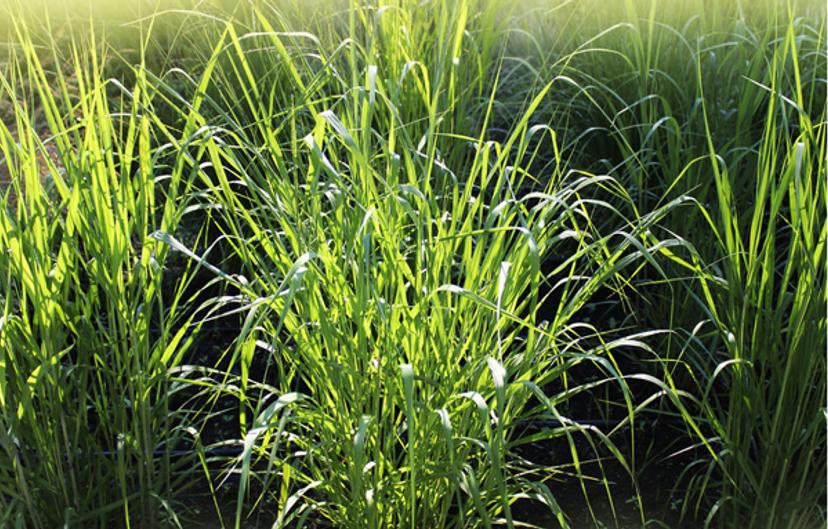
Using FTIR spectra, Allison developed models to predict the chemical composition of two grass feedstocks. “I set up models for a number of parameters that they'd measured, and that was very successful,” Allison shares. “Firstly, nitrogen content. Nitrogen’s quite an important factor if you're going to thermally convert these feedstocks because it's associated with the formation of nitrous oxide emissions, so you want to be able to control that nitrogen quite well, to limit the amount that's going to be given off in the exhaust gases.”
Key Quality Aspects for Energy Crop
- Low nitrogen and alkali metal content
- Reduced ash production
- High lignocellulose content
“Another parameter is alkali index – a fouling parameter that measures the amount of alkali oxide in the fuel. Grasses are a difficult feedstock, because as they're being combusted, you've got alkali metals in the feedstock, and at fairly low temperatures, they'll combine with silicates that are in the feedstock, and you get deposition of silicates. It's like vitrification – you get glass being deposited within the heat exchangers and it can cause huge amounts of damage.”
The model Allison determined from the FTIR spectra gave a high coefficient of determination (0.947), signifying a very good model for prediction of alkali index in energy crops. The ability to measure and predict quality parameters of energy grasses is of particular importance to those using such biomass feedstocks for energy production. Once spectral profiles are built, they can also help to simplify the analysis process: “Once you've got your models, it might be possible to use a handheld infrared device, for example, and then apply the model to spectra that you could take from powdered material,” explains Allison.
One key piece of equipment used for infrared analysis in Allison’s work is the Specac Golden Gate™ ATR Accessory. “The Golden Gate is my main way of taking infrared spectra from powdered samples,” says Allison. “For plant samples where we've got dried, ground samples, it means that you can collect a large number of spectra – around 200 spectra a day is not unusual. And it's a very easy way to amass data and it's very reproducible as well.” Commenting on the reliability of the technology, Allison adds: “I bought a couple of Golden Gates over 10 years ago and in practice, they've been really reliable, student-proof, repairable, and thoroughly robust. They're not the cheapest of accessories, but on value for money, I’d recommend them quite wholeheartedly. And the quality of the spectra you get off them is really, really good.”
Developing New Varieties of Biomass
Looking to the future, there is a growing demand from energy producers for biomass feedstocks. “It’s important that we develop new varieties of biomass, so-called energy crops, that will grow on marginal lands or land that we can repurpose for growing crops,” says Allison. “There's a lot of breeding that needs to be done in a short space of time to optimize things like their yield, chemical composition, and tolerance to stresses that are going to be common where they grow.” The laboratory will play a crucial role in meeting these demands: “Having effective chemical analysis of samples that you can do at throughput is an important issue so that the breeders have reliable information, that's fairly cheap to produce and time-effective to help and inform decisions,” Allison concludes.
Learn more about Dr. Gordon Allison’s work and the Specac Golden Gate™ ATR Accessory.
Related products
Request Quote for All Products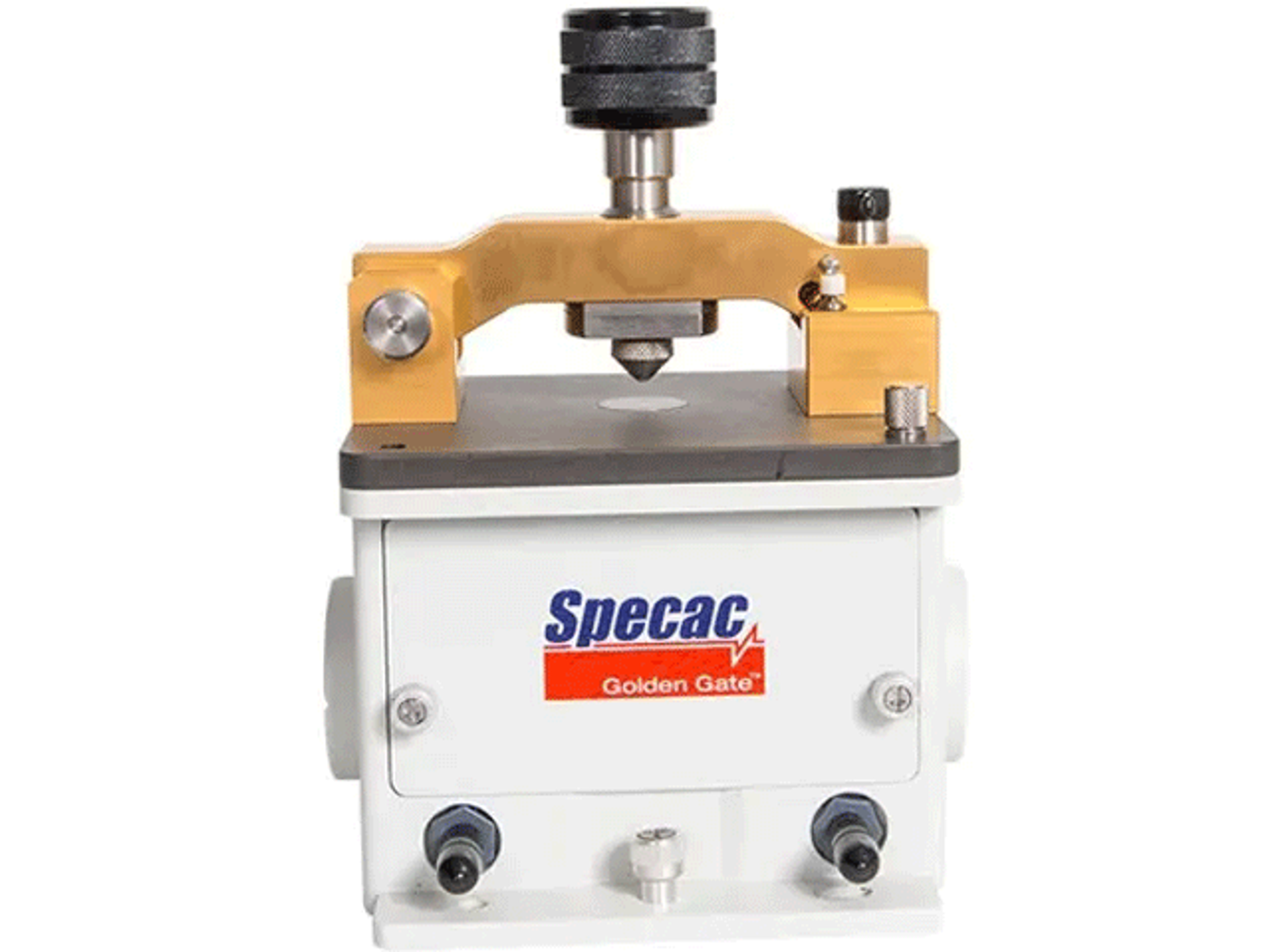
Golden Gate® diamond ATR
Specac LtdThe Golden Gate® is a robust option for demanding single-reflection ATR applications. It features a brazed diamond ATR crystal and a signature “Golden Gate” sample loading bridge. More advanced top-plate assemblies are available for in-situ, high- and low-temperature work.