
How collaboration is driving innovation in genomics
Former Illumina Senior Executive and current SPT Labtech board member, Paula Dowdy discusses the importance of collaborating to develop automated liquid handling solutions and other advances in sequencing technology
22 Oct 2023

In recent years, the field of genomics has seen massive innovation and expansion, leading to new applications across the life sciences from basic research to healthcare. The rise of next-generation sequencing (NGS) technologies is enabling DNA/RNA sequencing to take place more rapidly and at a much larger scale. However, to meet the ever-increasing demand for sequencing data, there is a need to reduce costs and further increase throughput.
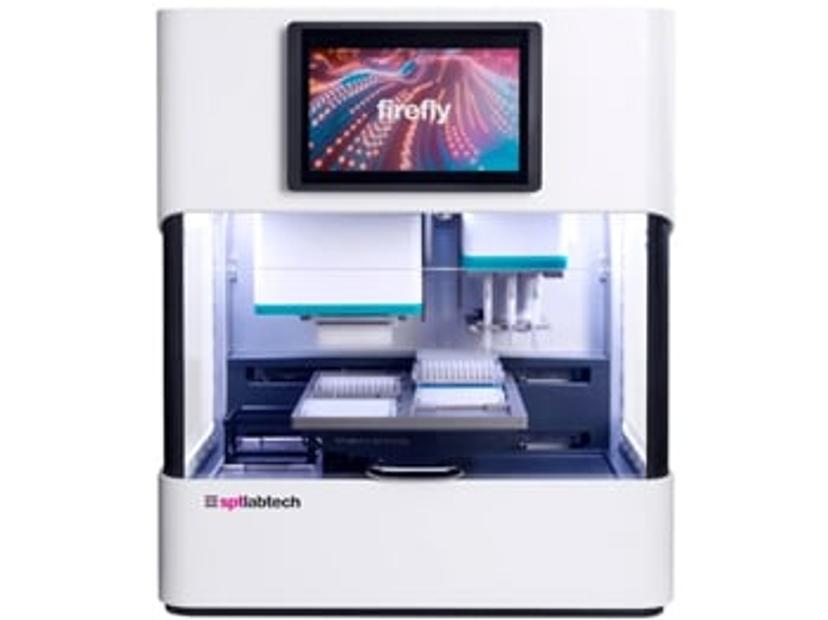
One way to achieve this is to optimize sequencing sample preparation by automating the liquid handling steps and reducing the volumes of samples and costly reagents required in the sequencing process. Expert teams of scientists, hardware engineers, and software developers at SPT Labtech, a designer and manufacturer of automated liquid handling instruments, are developing state-of-the-art solutions for NGS and other lab processes. For example, its firefly® liquid handling platform provides a compact, all-in-one solution for complex workflows including NGS sample preparation.
In this SelectScience® article, we speak with Paula Dowdy, SPT Labtech’s newest board member. With over 30 years of global commercial experience, Dowdy splits her time between the US and Europe, supporting companies as they scale and expand. She is also an advisor at EQT Life Sciences, one of Europe’s largest investors in healthcare.
From communications to biotechnology
Dowdy has spent the majority of her career working in the technology field both in the US and in Europe, Africa, and the Middle East, predominantly at digital communications firm Cisco Systems. She says, “In that time the industry experienced a lot of transitions as the internet came out. Collaboration, security, data, cloud – it gave me a phenomenal exposure to the impact these technologies had on our society.”
In 2016, Dowdy become Senior Vice President of biotechnology company Illumina. One of her main aims was to expand the business in Europe, Africa, and the Middle East (collectively known as EMEA), which was starting to grow but was still significantly smaller than its US operations. “I had a unique opportunity to build out the EMEA team at Illumina to make an even bigger impact across our customer base in both research and clinical laboratories.”
In her six years at Illumina, Dowdy more than doubled the EMEA business to over 1 billion US dollars and she was instrumental in the creation of the UK base of Illumina’s genomics startup creation engine, the Illumina Accelerator.
A shared passion
Dowdy met David Newble and Kieran Murphy – CEO and Chairman of SPT Labtech, respectively – towards the end of 2022 and was immediately struck by their shared passion for advancing NGS technologies. “We're [all] trying to get the cost of next generation sequencing lower and lower,” she says. “Ilumina focusses on the entire NGS solution, with the aim of ultimately passing on answers to scientists and patients. Hearing about SPT Labtech’s mission showed me how the front-end of the process, the handling of the samples, is also very important to bringing down the cost of sequencing. The whole efficiency of that end-to-end solution really matters.”
Both Ilumina and SPT Labtech have centres in Cambridge, UK, Europe’s largest biotechnology cluster. A visit to another member of the cluster – the Wellcome Sanger Institute, one of the largest genome sequencing centres in the world, who have worked closely for several years with SPT Labtech,reinforced to Dowdy the importance of the front-end of the sequencing process.
“The team at the Wellcome Sanger Institute were excited about SPT Labtech’s automated liquid handling solutions and how they are making their sequencing processes more efficient,” says Dowdy. “Liquid handling used to be overlooked and taken for granted, but, if you can make it more efficient, the researchers can do more science and that ultimately helps us to advance our understanding of biology, including human health.”
Working together
SPT Labtech prides itself on listening to its customers and working together, both internally and with external partners, to develop innovative solutions to the challenges they face. In addition to working with the Wellcome Sanger Institute, SPT Labtech has ongoing partnerships with various other organizations including Synthace, Thermo Fisher Scientific, and Takara Bio to deliver automated liquid handling solutions for a variety of different applications, such as single cell sequencing and drug discovery.
This focus on collaboration appealed to Dowdy. “I think collaborations are phenomenal,” she says. “The partnerships come in so many different guises, for example, two or more institutions, or a technology vendor and a customer, and together the partners often find unique ways to solve scientific problems. But collaborations aren’t just for scientific development, they are also widely used in evidence generation in healthcare. Illumina did a lot of that in the last few years because you need the evidence to get the reimbursement, and you need the reimbursement for the solution to ultimately become a standard part of patient care.”
Collaborations have been at the heart of many recent breakthroughs in the biotechnology industry, especially during the SAR-CoV-2 pandemic. In early 2020, Illumina formed a collaboration with several other partners to test whether NGS sequencing was a viable alternative to the gold standard in COVID testing, the PCR test. “In the end the answer was no, and yes,” says Dowdy. “When you just wanted a yes/no answer, PCR was faster, cheaper and more efficient. But the emergence of new variants of SARS-CoV-2 towards the end of 2020 meant that sequencing viral genomes became super important in understanding how the virus was changing.”
In the UK, a large-scale SARS-CoV-2 sequencing effort was led by the COVID-19 Genomics UK consortium, an innovative collaboration with the NHS, the Sanger Institute, the UK’s four public health agencies, and numerous academic institutions. The Sanger Institute quickly reached out to SPT Labtech for support with getting its part of the project up and running as soon as possible.
Cost paradigms and technology breakthroughs can open up entire new possibilities for further progress.
Paula Dowdy SPT Labtech
Together, they rapidly developed new methods to increase the Sanger Institute’s sequencing capacity by incorporating the SPT Labtech dragonfly® discovery and low volume mosquito® liquid handling instruments into its sequencing pipeline. SPT Labtech also rapidly scaled its manufacturing of both instruments and consumables to meet the institute’s demands. At the height of the pandemic, this enabled the Sanger Institute to sequence tens of thousands of SARS-CoV-2 virus samples each week.
“I use some of the breakthroughs in sequencing during the pandemic as an example,” says Dowdy, “of how cost paradigms and technology breakthroughs can open up entire new possibilities for further progress.”
A collaborative future
Going forward, more widespread use of automated approaches and increased availability of compact and efficient end-to-end workflow solutions like the firefly will hopefully continue to drive down the costs of NGS sequencing. Some researchers may fear that automating routine lab processes may make them redundant, but Dowdy doesn’t believe this is the case. “It doesn't put people out of jobs, but it diverts their efforts into the more interesting parts of the research project where their expertise is most valuable.”
Multiomics approaches – which combine genome data with data from transcriptomics, proteomics, epigenetics, and other levels of biology – are also on the rise. SPT Labtech has been keen to apply its technology to this and has an established partnership with Olink, an innovative and high-throughput proteomics focused company. Olink Explore, leverages Olink Proteomics’ innovative NGS-based Proximity Extension Assay technology with SPT Labtech’s automated pipetting systems (dragonfly and mosquito).
Dowdy is excited about the role similar partnerships between biotechnology firms – and those between biotechnology firms and customers – will play in future innovations in life science technology, especially in areas with large bioscience communities, such as the Cambridge biotechnology cluster. “There's an ecosystem in Cambridge that enables collaboration to thrive,” she says. “I think we'll see more and more collaborations over the coming years, not less.”
Related products
Request Quote for All Products
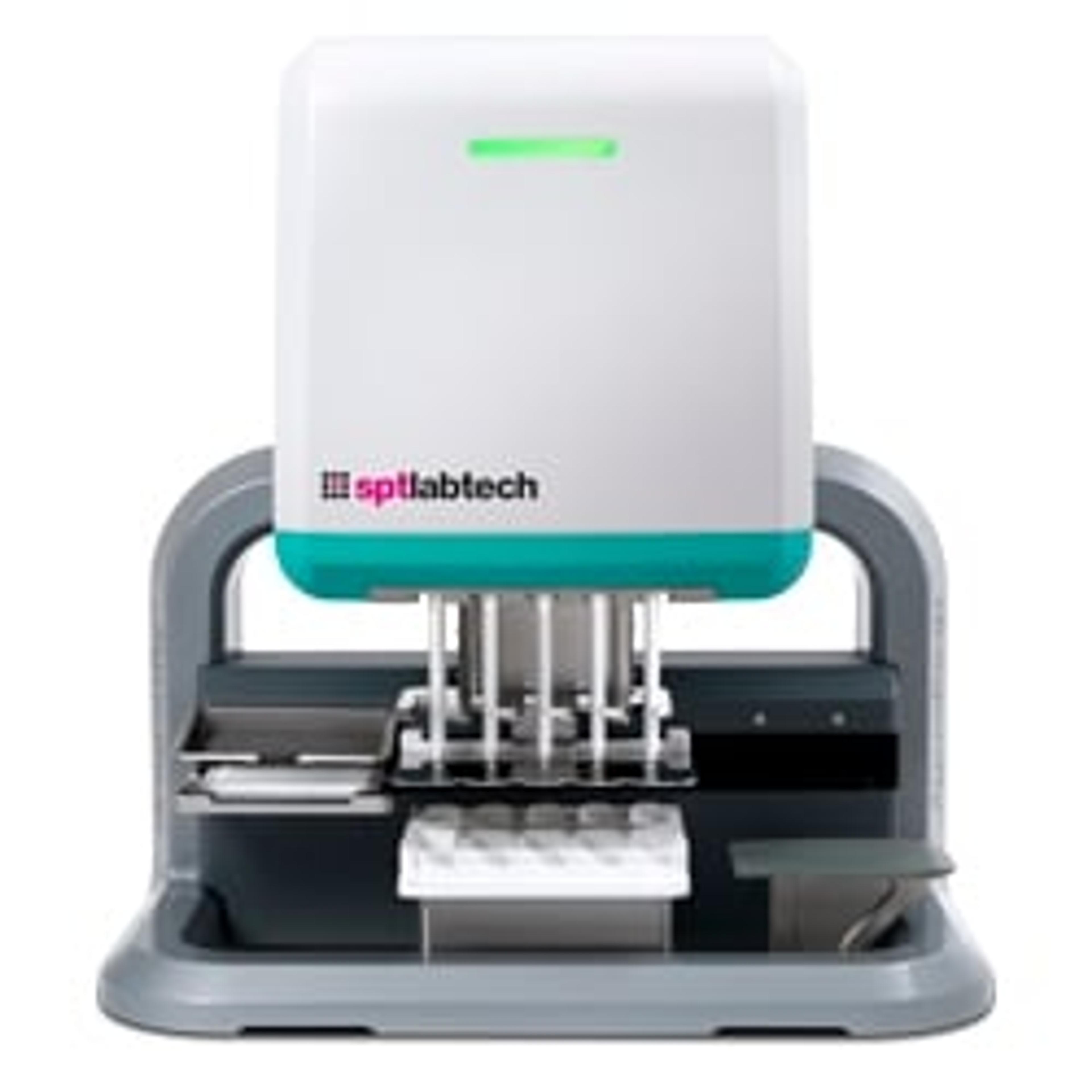
dragonfly® discovery
SPT Labtechdragonfly discovery enables innovative, low volume liquid dispensing that is compatible with a wide range of applications including molecular biology and genomics, biochemical assays, as well as cell- and bead-based assays.
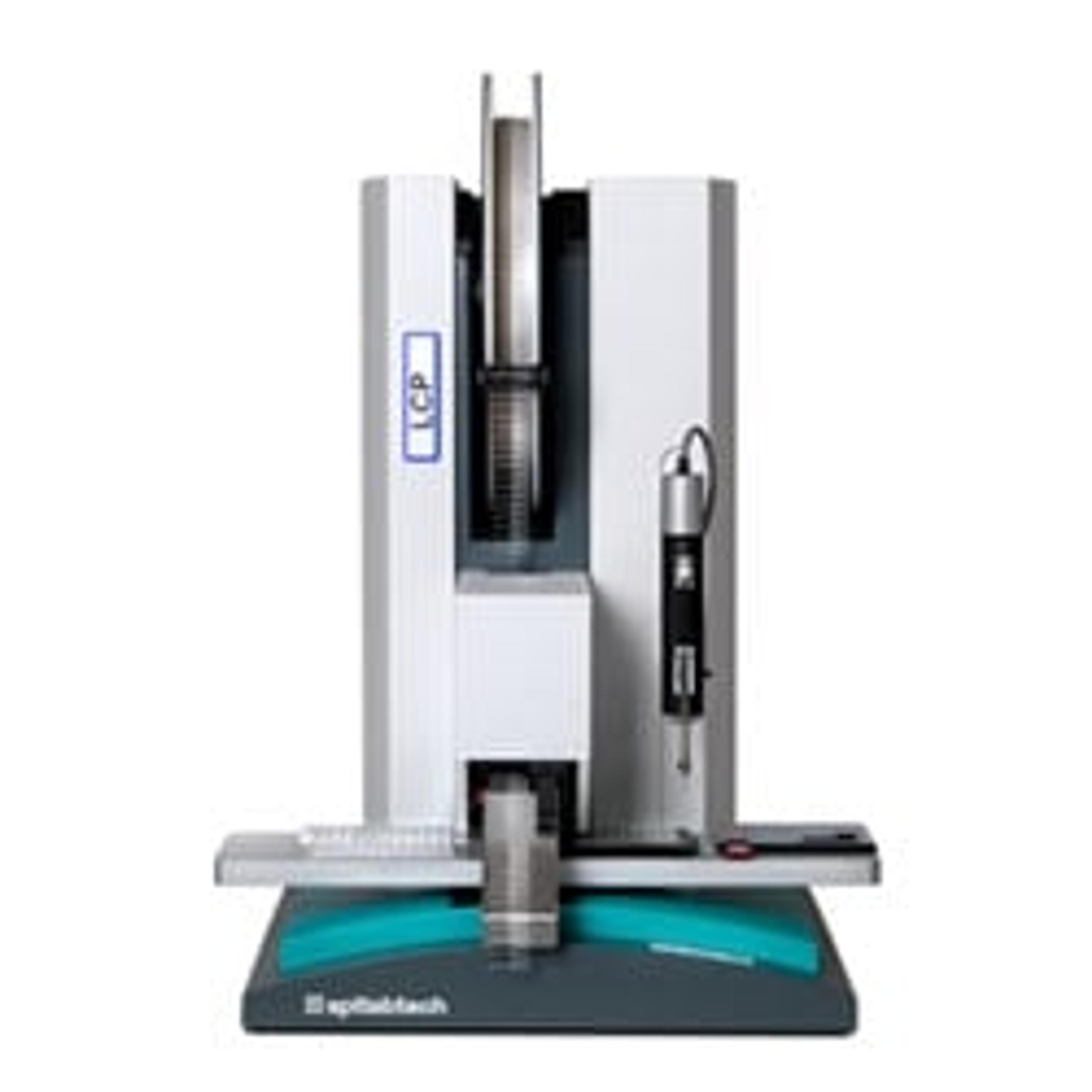
mosquito® LCP
SPT LabtechAutomated membrane protein screening, optimization, and scale-up to empower better protein crystallization research.