
Harnessing the power of label-free molecular interaction analysis in biopharmaceutical characterization
Dr. Kalhari Silva, the Head of Scientific Innovation and Research at Custom Biologics, shares how her organization is able to offer a complete package of bioanalytical testing services that are compliant with evolving regulatory requirements
21 Mar 2022
Editorial article

Biotherapeutics are among the fastest-growing therapeutic segments in the pharmaceutical industry and account for many new drug approvals. Custom Biologics is a Health Canada audited, global contract research organization (CRO) which conducts regulatory compliant cell-based bioassays to characterize and define the activity and pharmacokinetics of novel antibodies, biomarkers, and biotherapeutics. These assays support its client's drug development programs and play a crucial role in bringing new biotherapeutics to market.
In this SelectScience® interview, we speak with Dr. Kalhari Silva, Head of Scientific Innovation and Research at Custom Biologics, to discuss the technology that enables her organization to offer a complete package of functional biotherapeutic testing services. Dr. Silva highlights the essential role quality assurance plays to ensure that these services maintain compliance with ever-changing regulatory requirements.
What types of biotherapeutics do you work on and what are the key methods you use?
KS: We play a crucial role in supporting the characterization and comparability of novel antibodies, biotherapeutics, and biosimilars for clients around the globe. Custom Biologics develops bioassays and molecular diagnostic assays and conducts phase-appropriate validations for all functional assays. We provide our clients with a solid data package that supports internal lot-to-lot comparability activities, Investigational New Drug Applications (INDs), Biologics License Applications (BLAs) or market lot release testing. We also provide an entire portfolio of assays, including cell-based assays such as enzymatic/reporter-based assays, antibody or complement-dependent cell cytotoxicity assays, potency, proliferation, migration, inhibition, and cytotoxicity. In addition, ligand binding assays using cell-based and bio-layer interferometry (BLI), immunogenicity assays, and residual contamination testing are also employed to characterize biotherapeutic drug candidates.
Tell us more about the binding studies you perform and the technology you use.
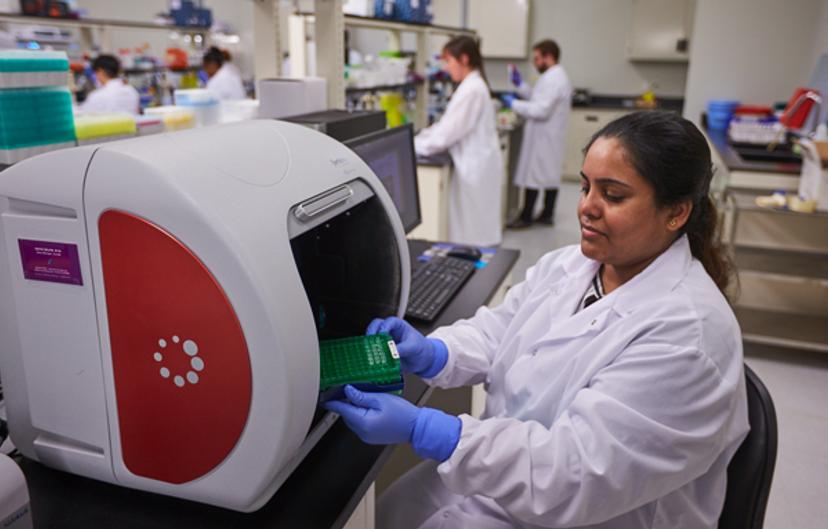
KS: We purchased the Octet RED96* system in 2017 and we have since used this instrument to perform many binding studies for a wide range of analytes. Most of these binding studies involve monoclonal antibodies. Complex products such as monoclonal antibodies can have numerous critical quality attributes (CQAs) that can potentially impact the safety and/or efficacy of the product. The safety and efficacy of therapeutic antibodies are strongly influenced by their capacity to bind to effector cells through fragment crystallizable ɣ (Fcɣ) receptors – membrane glycoproteins found on the surface of immune effector cells such as macrophages and natural killer cells. The crucial binding of monoclonal antibodies to the Fcɣ receptors plays a pivotal role in initiating Fc effector functions, such as antibody-dependent cell cytotoxicity (ADCC) or phagocytosis (ADCP). Identifying CQAs for a biotherapeutic is arguably the most difficult step in the development and production of biopharmaceuticals. The Octet BLI system has played an important role in assessing the CQAs of many monoclonal antibodies.
We have found the label-free Octet BLI approach advantageous for many reasons such as the inclusion of an 8-channel parallel detection system that makes it possible to observe dose-dependent binding of the analyte to the ligand, and the subsequent global fit of the binding data to generate reliable binding constants. In addition, low sample consumption allows for the most efficient use of client material, while the microfluidics-free, dip-and-read format reduces assay time and maintenance costs. Finally, the 21 CFR Part 11 compliant software ensures that the binding assays adhere to regulatory guidelines.
How does Octet BLI technology compare to traditional methods for characterizing biotherapeutics?
KS: Octet BLI technology has proven to be superior to traditional methods of biotherapeutic characterization such as enzyme-linked immunosorbent assay (ELISA). ELISA requires many assay steps, multiple reagents, and rigorous sample preparation. When it comes to assay versatility in particular, Octet BLI technology has made it possible to characterize a variety of analytes that range from small molecules to monoclonal antibodies and cell culture supernatants.
Furthermore, ELISA may not provide all the information required for the accurate elucidation of a drug molecule’s mechanism of action. Measuring the kinetics of an interaction is extremely important as it reveals the time component of the interaction. Two different binding pairs may have the same affinity (KD) values despite differences in association and dissociation rates. Therefore, the true nature of the interaction is not known. BLI, on the other hand, does provide detailed insight into the essence of these interactions.
How does this technology help meet the workflow needs of a large CRO?
KS: The Octet BLI system is a critical component of our testing services, performing accurate binding measurements using recombinant purified ligand systems. Custom Biologics complements these binding assays with cell-based assays. This combination makes it possible for us to offer a complete package of functional biotherapeutics testing. With the use of 21 CFR Part 11 compliant software, data are generated with the regulatory rigor that is required, irrespective of the stage of a client’s drug development process.
What measures do you take to ensure quality control and why are these important?
KS: We take data integrity and quality control very seriously. We have an independent quality assurance (QA) unit to ensure that all work performed at Custom Biologics adheres to rigorous quality control procedures governed by FDA 21 CFR, Part 58, and Part 11 Guidelines. We adopt the latest laboratory technologies when we establish new assays. These assays must be compliant with evolving regulatory guidelines. This makes it possible for us to remain at the forefront of industry practices for chemistry, manufacturing and quality control (CMC). Custom Biologics has standard operating procedures (SOPs) and a data governance plan (DGP) that outlines how test data are generated, captured, and managed, and that ensures that the integrity of the data is not compromised. Only authorized users assigned to the project are permitted access to the computer systems. Data are generated using the GxP-compliant software, and any analysis or modification is tracked by an audit trail. Upon completion of an experiment, batch records and corresponding raw data, including the audit trail, undergo a sequential and multilayer review process.
What do you see for the future of your work and what role will BLI technology play?
KS: We are currently using the Octet BLI system exclusively for cell-free assays. New, published work reports its use for cell-based assays, and we plan to implement the BLI system for these cell-based assays as well. Label-free BLI technology has the advantage of generating extensive and regulatory compliant data in a fraction of the time.
* Previous model corresponding to the current model Octet® R8
Do you use Sartorius products in your lab? Write a review for your chance to win a $400 Amazon gift card >>
Related products
Request Quote for All Products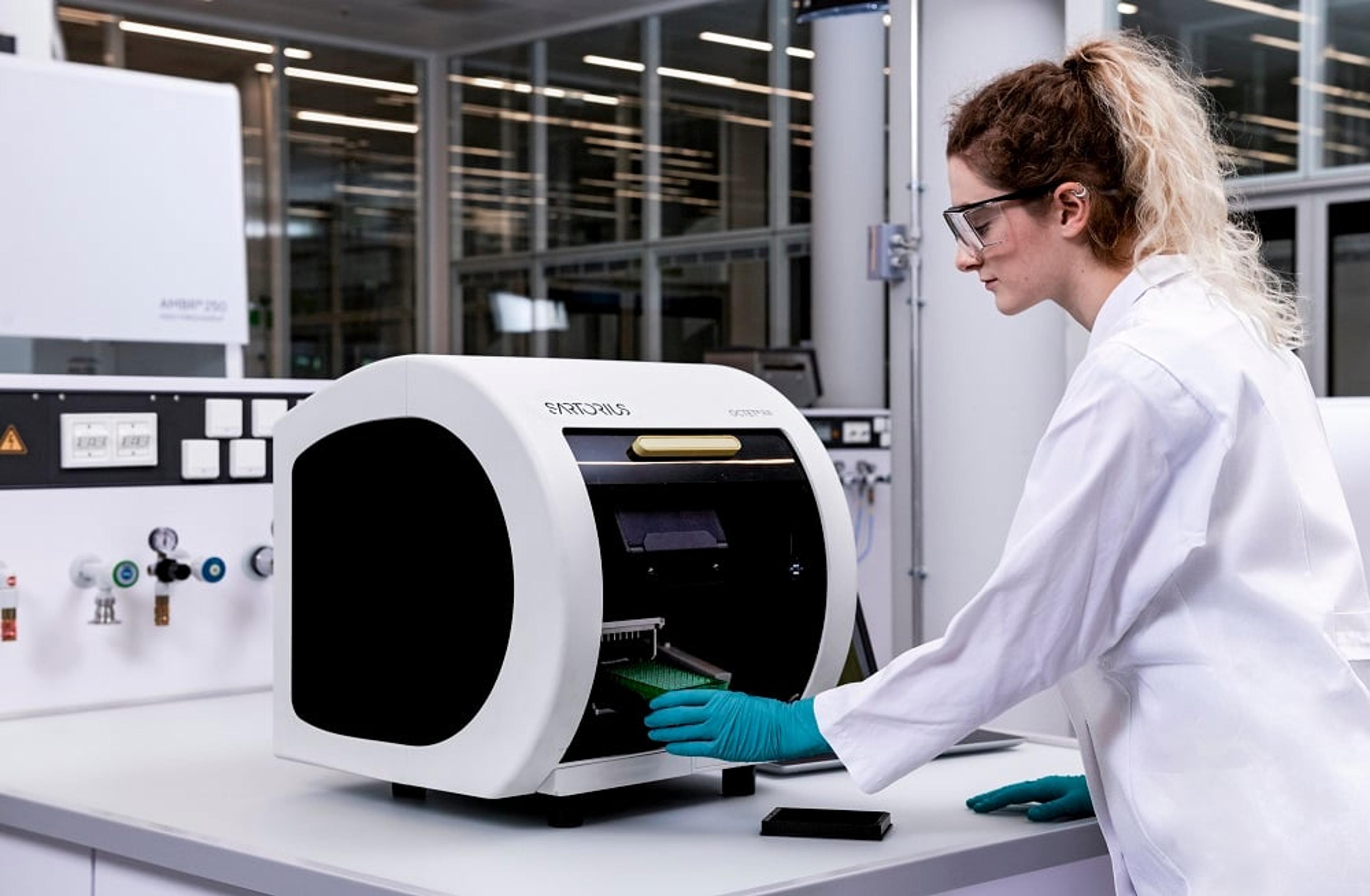
Octet® R8 BLI System
Sartorius GroupSuperior quantitation and kinetics performance with increased assay flexibility and cost efficiency.