
Harnessing the immune system to revolutionize cancer therapy – your questions answered
Watch this on-demand webinar to learn about the applications for cell-based therapies and biologics using advanced high-throughput flow cytometry
2 Jun 2020
Expert insights

Immunotherapies direct the body’s immune system to identify and destroy cancer cells and are revolutionizing cancer treatment. In recent years, advancements in immuno-oncology have seen the development of antibodies targeting checkpoint pathways that can inhibit T cell exhaustion or reawaken exhausted T-cells leading to more effective tumor killing, and even antibodies that can increase the engagement of immune and tumor cells stimulating killing by direct cytotoxicity or phagocytosis.
In this on-demand SelectScience® webinar, Dr. John O'Rourke, Head of Product Development at Sartorius, and Dr. Nina Senutovitch, Senior Scientist at Sartorius, illustrate the use of advanced high-throughput flow cytometry to detect immune cell cytotoxicity with a variety of applications and model immunotherapeutics.
Read on for highlights from the live Q&A session or register to watch the webinar at any time that suits you.
Watch Webinar NowQ: How can you immunostain cells in a 96-well plate and not lose them during the washing steps?
NS: With the Intellicyt iQue®3 advanced flow cytometry platform, we typically recommend that researchers use a V-bottom well plate to reduce any cell loss. Another feature that I recommend for researchers is when they are doing immunophenotyping and interested in getting high-content data from the iQue3 advanced flow cytometry platform, is to couple it with some of our optimized reagent products. This is so that you can perform cell immunophenotyping without having to do fixation, thereby reducing your washing steps, and reducing possible cell loss. That saves a lot of time and effort in your sample preparation. Several of our available reagents are optimized so that researchers can simply take a bit of their sample, add the necessary reagents, and then gather the data within a few minutes on the iQue3 platform and analyze them using our integrated ForeCyt® Software.
Q: How does cell phenotyping and cytokine detection work in the same well?
NS: The iQue3 advanced flow cytometry platform allows phenotyping and cytokine detection in the same well because it is a 3-laser 13-fluorescence channel system that has a seven decades signal resolution, which means that we can access data on cytokines as well as cell phenotyping. It is very simple to take a bit of your sample of interest, add reagents and then put it on the iQue3 to quickly analyze data.
Q: Are there any limitations to multiplexing three or more cytokine detections in the same T-cell activation (TCA) assay?
NS: For T-cell activation assays and for other assays, we have been able to multiplex up to 30 different cytokines in a single assay well. We offer products that are customizable for cytokines of interest. We have ready-made off-the-shelf products for common cytokines that are related to inflammation such as interferon-gamma and TNF-alpha. We also offer beads that can be customized for a researcher's cytokine of interest. For instance, if you needed to screen with biotinylated targets, we offer streptavidin-coated beads.
Q: If I want to measure different time points of T-cell killing using the same culture, is it possible to run on the IQ? Additionally, how quickly can it be visualized in the software?
NS: The iQue advanced flow cytometry platform is a great tool for looking at kinetic data and gathering information on kinetic studies especially for phenotyping such as T-cell killing. I would recommend the scientist take samples at their time points of interest, then add the reagents and run it on the iQue. One of the great things about the ForeCyt® Software, our integrated software package for the iQue platform, is the ability to condense data from different time points and look at it as a single plate. If you want it to analyze data across hours or days of time, where you had to analyze that data as a group, you can do a plate-level analysis using our software without having to export to third-party software. You can quickly get software-generated IC50 curve based on the data that you produced.
As for how quickly they can visualize that data in the software, you can gather data from the assay of interest and analyze it typically within half a day. The acquisition can only take a few minutes using a 96-well plate. Since our software is intuitive and easy to use, you can analyze your data within several hours.
Q: Isotype control IgG could also be labeled with pH-sensitive dye. Do you have any suggestions on how to suppress non-specific internalization or uptake of labeled isotype as well as free dye?
NS: This is related to our study showing antibody internalization. Typically for those assays, we would recommend running a time course between 15 minutes and four hours to reduce potential non-specific dye fluorescence. That will depend on the biology of the system. Depending on the biology of the system, I also might recommend taking a time point by three hours. We have noticed that there can be some increase in nonspecific internalization after 24 hours. The optimal window for looking at some of these isotype controls and reducing internalization for non-specific factors would be between 15 minutes and four hours.
Q: Can this assay be multiplexed with QBeads for cytokine measurement?
NS: For further multiplexing for T-cell activation, you can increase your multiplexing capabilities with QBeads in a variety of hallmark inflammatory cytokines. We also offer QBeads that can be customized based on the biology of interest.
Learn more about flow cytometry to detect immune cell cytotoxicity: Watch this webinar on demand >>
SelectScience runs 3-4 webinars a month across various scientific topics, discover more of our upcoming webinars >>
Related products
Request Quote for All Products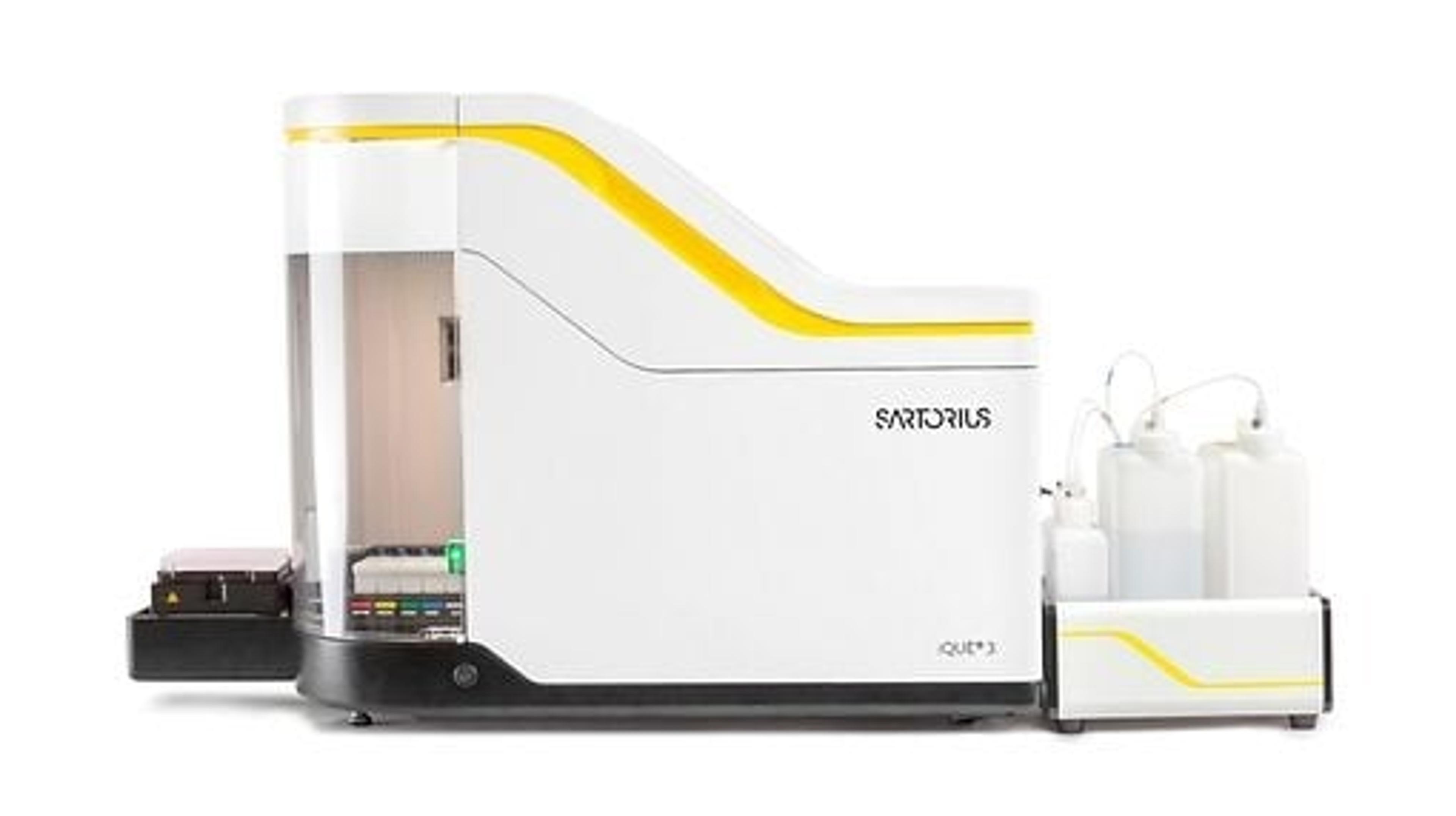
iQue Forecyt® software
Sartorius GroupA comprehensive and interactive assay development, implementation, and analysis environment, available with the iQue ® High-Throughput Screening Cytometry Platform.