
Ground-Breaking Research Reveals Hidden Environmental Dangers of POPs
Discover how Waters technology is facilitating this pioneering study
27 Jul 2015
Editorial article

Dr Frank Dorman spoke at the Waters Users Meeting at ASMS 2015
Dr Frank Dorman, Associate Professor, Biochemistry & Molecular Biology at Penn State University, is pushing the boundaries of environmental forensics with his research on currently unregulated persistent environmental pollutants (POPs). These compounds have been shown to negatively affect human and animal health, but due to lack of research, there are several we know little about.
There's very little understood about the occupational exposure that people have
Dr. Frank Dorman Penn State University
"Our research falls into the category of environmental exposure and environmental forensics," says Dr Dorman. "We're trying to figure out what molecules have entered the environment, how they got there, and whether we should be concerned about them."
Some of the compound classes studied by Dr Dorman's group are mixed halogenated dioxins and furans, which are created as combustion byproducts in household and office building-type fires. Understanding these compounds is crucial to understand the health hazards caused by exposure. For example, "firefighters have various different cancer rates that are elevated above the normal population and we don't know conclusively why,” explained Dr Dorman, continuing: "there's very little understood about the occupational exposure that people have, and even less understood about the environmental exposure once these compounds have formed, been released and then transported and re-deposited."
Cause for concern
While Dr Dorman can't say for definite that these byproducts are the cause of this cancer spike, he has shown that: "these molecules are clearly being formed, that people are being exposed to them, and that this exposure may be of concern." He has already carried out a receptor binding study with these compounds which showed the receptor binding affinity of the mixed-halogenated dioxins and furans seems to be "similar to polychlorinated analogues", which have already been studied in some depth and subsequently been controlled for many years.

Pennsylvania State University The Pennsylvania State University is a public, state-related research university with campuses and facilities throughout Pennsylvania. Founded in 1855, the university has a stated threefold mission of teaching, research, and public service.
The worrying thing, revealed Dr Dorman, is that these POPs are not the only contaminants around. He has found "chemotherapeutic drugs in waste and drinking water," as well as polybrominated diphenyl ethers, which are used as flame retardants. These ethers are very resistant to degradation, allowing bioaccumulation in blood, breast milk and fatty tissue from inhalation and eating foods such as ground beef, butter and cheese.
Positive future
However, it's not all doom and gloom; Dr Dorman explains that the "increased sensitivity and method robustness offered by the Xevo TQ-S from Waters," has enabled ground-breaking research that will allow for better understanding of these contaminants, eventually targeting "environmental regulatory methods". Dr Dorman discussed a second important study, where he proved the capability of the Xevo TQ-S against "traditional magnetic sector based high-res instruments", providing up to "20x more sensitivity". This improvement in sensitivity and detection limits will allow the study of compounds that "clearly do pose potential for environmental impact" with more accuracy.
Eventually, Dr Dorman hopes, with the "adoption of additional methodologies throughout the globe for the analysis of these molecules," the world will be a safer place.
Watch our talk with Dr Dorman, or learn more about ASMS 2015.
Related products
Request Quote for All Products
Xevo TQ-S micro Triple Quadrupole Mass Spectrometer
WatersHigh Performance from a compact design with rapid, reliable and reproducible quantitative data.
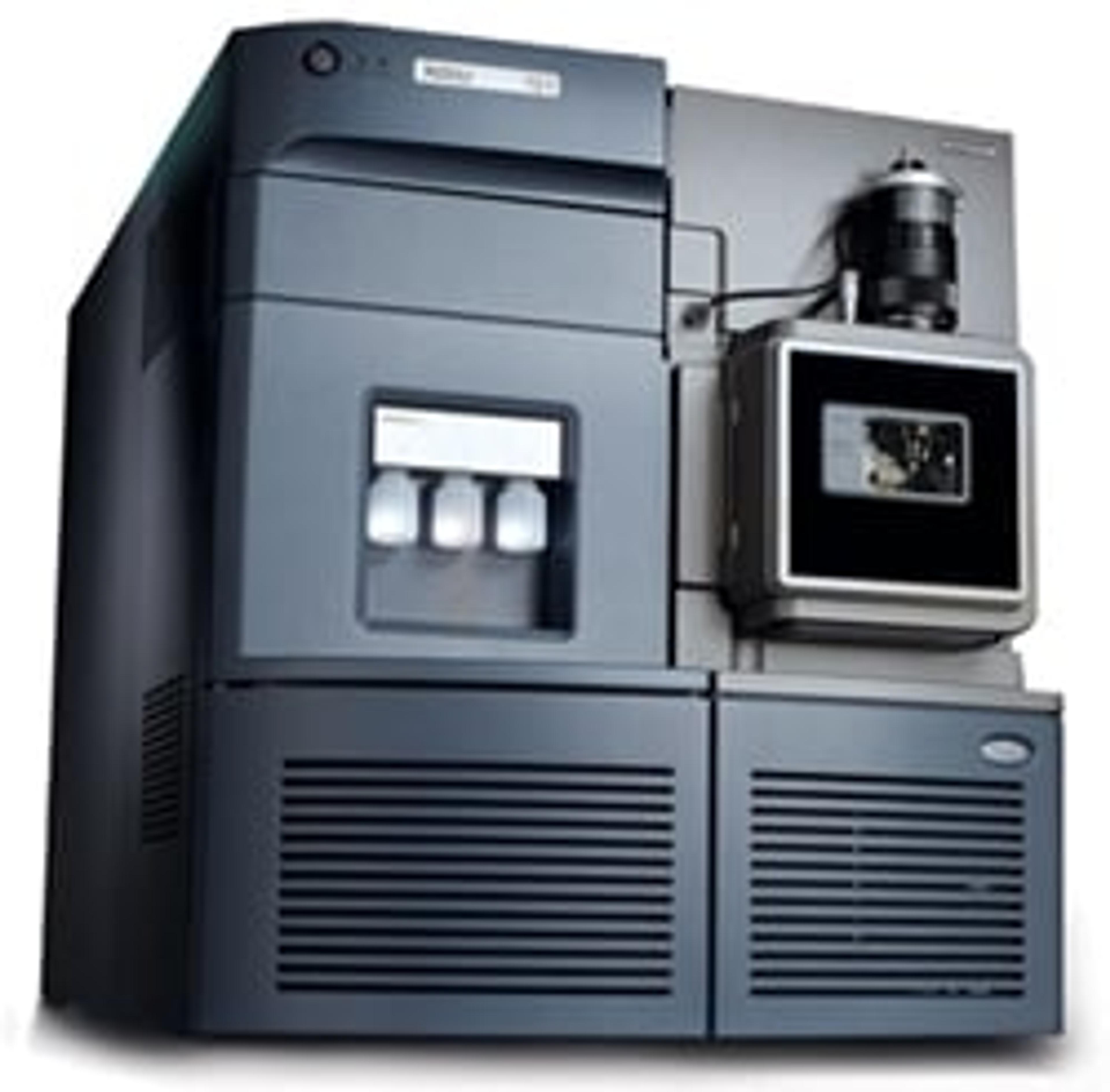
Xevo TQ-S
WatersXevo TQ-S tandem quadrupole mass spectrometer - designed for the most demanding quantitative UPLC/MS/MS applications. The ultimate in tandem quadrupole performance allows you to achieve unrivalled sensitivity and robustness, available to everyone due to the accessibility of the Xevo platform. The Xevo TQ-S gives you class leading sensitivity and robustness, qualitative information when you need it most and accelerated method development for sensitive and robust methods. Reducing complexity, increasing ease of use, and ensuring the correct result every time.