
From Farm to Fork – Developing New Technologies to Analyze Veterinary Medicines in the Agri-Food Supply Chain
Dr Stuart Adams is part of a team at Fera Science Ltd that is developing a LC high-resolution MS/MS strategy to accurately quantify residues of veterinary medicines in agricultural and food samples
26 Jan 2017
Editorial article
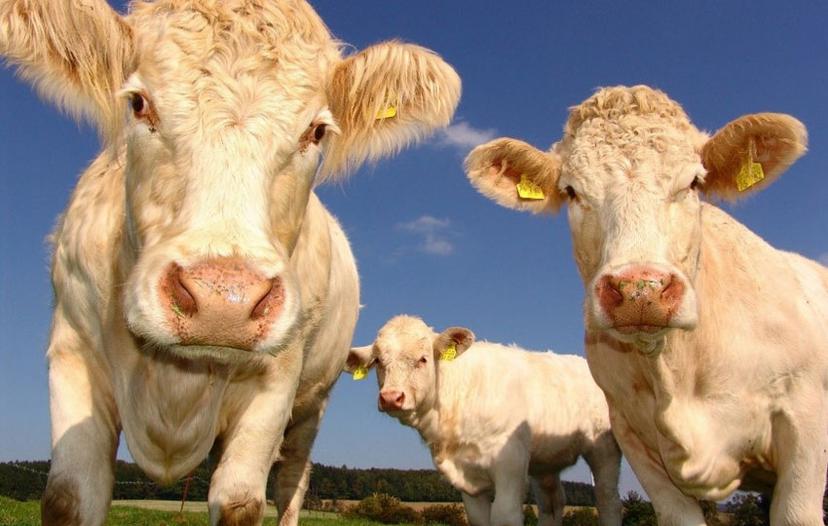
The team are screening bovine milk and tissue for 167 veterinary medicines
Fera Science Limited Fera is a leading supplier of scientific solutions, evidence, and advice across the agri-food supply chain. In an average year, they are involved in around 600 research and developments projects and run around 100,000 samples for routine testing.
We study science from the farm to the fork and everything in between
Stuart Adams, Ph. D Fera Science Limited, UK
Stuart Adams, Ph.D, a Senior Analytical Chemist at Fera Science Limited, UK, gave an informative presentation on targeted and non-targeted analyses of residues of veterinary medicines at the 130th AOAC meeting, 2016, Dallas, Texas. He discussed the development of a new LC-MS/MS multi-residue method based on high resolution accurate mass (HRAM) mass spectrometry (MS). Read on for an overview or watch the full presentation.
Dr Adams began by noting that the EU guidelines for validation of methods for the analysis of veterinary medicines in food of animal origin and animal products were currently under review to include high resolution mass spectrometry. He is part of a team evaluating the Thermo Scientific™ Q Exactive™ Focus Hybrid Quadrupole-Orbitrap™ Mass Spectrometer for the screening of 167 veterinary medicines in a single multi-residue method.
He explained how the team was using two HRAM MS data acquisition modes: full scan with fragmentation by data-dependent MS/MS (FS-ddMS2) and full scan with fragmentation by variable data independent acquisition (vDIA). The full scan data is used for quantification while the fragmentation (MS) is used to identify the analytes. Data-dependent acquisition is a targeted approach that uses an inclusion list: the retention times and precursor ion information of the analytes of interest must be included in the method before the start of acquisition. By contrast, vDIA is a non-targeted approach that will provide fragment data for all of the precursor ions across the full scan mass range of interest. Because the full mass range is segmented into a series of smaller mass ranges, the product ion spectra are much cleaner compared to fragmentation of all the ions within the entire mass range.
Dr Adams went on to describe how the Fera team was evaluating the method, from extraction to determination, for bovine milk, cattle tissue and salmon muscle. A wide range of veterinary medicines, including various classes of antibiotics and NSAIDs, were used to validate the method. They had found the results so far to be very promising, with an impressive mass accuracy of <2ppm for most compounds and good agreement between the data acquisition modes. Dr Adams concluded that the quantification results they were obtaining using the two HRAM MS acquisition modes were comparable with results obtained using triple quadrupole mass spectrometry, which is considered to be the gold standard for this type of analysis.
vDIA is not available in the U.S.
Watch the full presentation or learn more about the Thermo Scientific™ Q Exactive™ Focus Hybrid Quadrupole-Orbitrap™ Mass Spectrometer.
Leave a product review today to be entered into a prize draw for the chance to win an iPad or $400 Amazon voucher (or equivalent currency).