
Fresh Produce Quality – Delaying the Inevitable?
23 Mar 2015
Editorial article
Written by Dr Hilary J Rogers
School of Biosciences, Main Building, Cardiff University, Cardiff UK
Food security and land use are becoming increasingly important issues due to a rising world population and climate changes. To increase productivity, we need to improve crop resilience to environmental stresses so that plants can grow in more marginal areas subject to stresses such as drought, flooding and soil salinity. We also need to improve their defences against pathogens and herbivores. However, we can also make a significant contribution by reducing waste post-harvest. Estimates of post-harvest waste vary widely, but can be up to 40% of the crop. Understanding the underlying processes regulating plant stress and senescence may therefore help to improve food security and the quality of fresh produce, and reduce the expansion of agricultural land use.
Delaying Programmed Cell Death
Harvesting fresh produce such as leafy vegetables, fruits and flowers initiates metabolic, molecular and cellular changes that will ultimately result in the death of all the plant cells. This process shares many features with developmental plant senescence and programmed cell death that occur as plant organs age. During this process, suites of regulatory genes are activated which coordinate the breakdown of chlorophyll, proteins and important nutritional compounds, ultimately resulting in cell death. What happens to the produce post-harvest is important in delaying these processes to retain freshness. In particular, deterioration of the produce is further accelerated by stresses imposed during the supply chain, including low light and dehydration stress. To delay these degenerative processes, low temperatures are employed throughout the supply chain for most produce; however, while this reduces metabolic activity, it also activates cold stress responses, requiring temperatures to be tailored to the crop to prevent further damage. For example, in the important cut flower Alstroemeria, we have shown that dehydration stress post-harvest accelerates the activation of genes that are normally switched on as the flowers die. However, extended cold periods, which are also damaging to the flower vase life, switch on another set of genes in response to the cold stress.1 Understanding how these genes are regulated may provide useful tools for treatments to delay the processes or breed cultivars with improved post-harvest resilience. For example, current work in my lab is aimed at studying stress-inducible genes in the model plant Arabidopsis thaliana, by analyzing the regulatory networks that switch these genes on in response to individual and combined stresses.2
Detecting Volatile Organic Compounds
Processing of fruits and vegetables, for example in the production of ready to eat salads, also results in changes in the genes that are switched on or off. We recently showed in tomatoes that slicing the fruit at different stages of maturity results in different responses. In immature fruit, responses relate more closely to defense, whereas in more mature fruit, genes related to producing volatile organic compounds (aroma) are more important.3 Volatile organic compounds (VOCs) can provide excellent markers for following changes post-harvest. With funding from the European Union’s Seventh Framework Program for research, technological development and demonstration (under grant agreement n° 289719), we have been developing markers to detect changes in temperature of storage and contamination with human pathogens in fresh cut products as a tool for the industry.4 For this work, we are using a Markes International TD100 for thermal desorption gas chromatography linked to time of flight mass spectroscopy (TD-GC-TOF-MS), which gives us excellent robustness for sample collection, coupled with exceptional sensitivity. We may not be able to prevent the ultimate death of the plant tissues, but at least we can understand the processes and try to control them.
References
1Wagstaff et al. (2010) Journal of Experimental Botany, 61, 2905-2921
2 Salleh et al. (2012)Plant Cell and Environment, 35, 418-429.
3 Baldassarre et al. (2015) Journal of Experimental Botany doi: 10.1093/jxb/eru516
4 Spadafora et al. Acta Hort (in press)
Image: Taken by Dr Hilary Rogers
Related products
Request Quote for All Products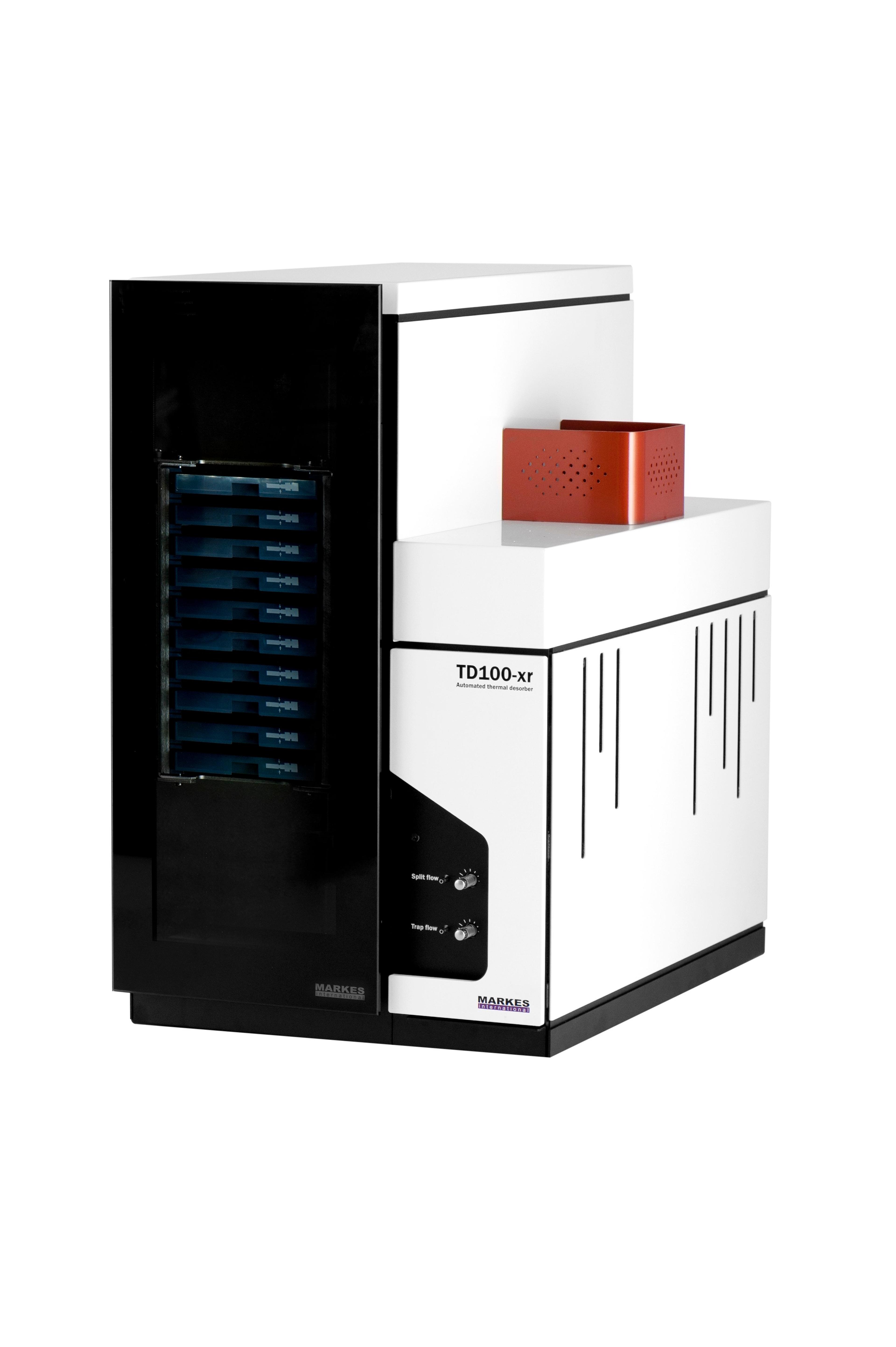
TD100-xr
Markes International LtdFully-automated analytical thermal desorption instrument for GC or GC–MS