
Food Ingredients Firm Chr. Hansen Installs TAP’s Automated Vial Processing System To Meet Increasing Demand for its High Quality Bacterial Starter Cultures
28 Oct 2013
Product news
TAP Biosystems, a leading supplier of innovative cell culture and fermentation systems and consumables for life science applications, is delighted to announce its Fill-It™; automated benchtop vial filling system has been installed at Chr. Hansen, a global bioscience company that develops natural ingredients for the food and nutritional industries. The system, which is being utilized for the first time in the food industry, will be used to improve processing throughput of large batches of vials containing bacterial starter cultures for use in variety of fermented food products.
Scientists at Chr. Hansen have factory tested and installed the Fill-It to decrease production time of their culture inoculation material. It will also be used to convert non-Kosher strains to ones that are Kosher certified. Each vial contains 4mL of a yeast extract media or a thick milk based culture containing up to 100,000 cells/mL of bacterial strains, including Lactobacillus, Lactococcus and Bifidobacterium. These starter cultures will be distributed globally to Chr. Hansen’s production sites to be used as the first step in producing cultures for yoghurts, fermented milks and cheese, or for wine fermentation. Microbiologists at Chr. Hansen selected Fill-It for this application because it has the capability to double batch production and more importantly, maintain high quality, contamination-free cultures.
James Lemanczyk, Microbial Service Technician at Chr. Hansen explained: “We were using a huge semi-automated filling system which took two people to operate with one technician loading vials at one end and another one to remove and package the vials at the other. It was very time consuming and we knew we had to upgrade our process to make it not only more efficient but also more consistent. We assessed two automated filling systems but chose Fill-It because the system is so compact we can use it in a standard laminar flow cabinet, we can also fit the system with a disposable tube set, as well as adapt it to fit 5mL sterile Nunc tubes. These features will not only save time with batch set-up but will help us ensure there is minimal operator interaction to produce cultures that are kept pure and contamination free during each run.”
Lemanczyk added: “We also liked the fact that TAP’s staff were willing to work with us in partnership to re-calibrate the Fill-It system to precisely dispense milk cultures. These are challenging as they can be gaseous and are very thick due to the cells lactic acid production which thickens the milk and their bacterial slime production. Now we can fill accurately, we’re really looking forward to implementing the Fill-It system into our new dispensing process.”
Stephen Guy, Fill-It Product Manager at TAP Biosystems commented: “Use of the Fill-It system for its time saving and quality benefits is well established in many international cell banks and we’re delighted that our first installation in the food industry is at such a prestigious nutritional ingredients company. Chr. Hansen’s adoption of our state-of-the-art automation indicates to food ingredients firms looking to improve batch productivity and product consistency that adding a Fill-It system in their workflow is a forward thinking investment.”
Related products
Request Quote for All Products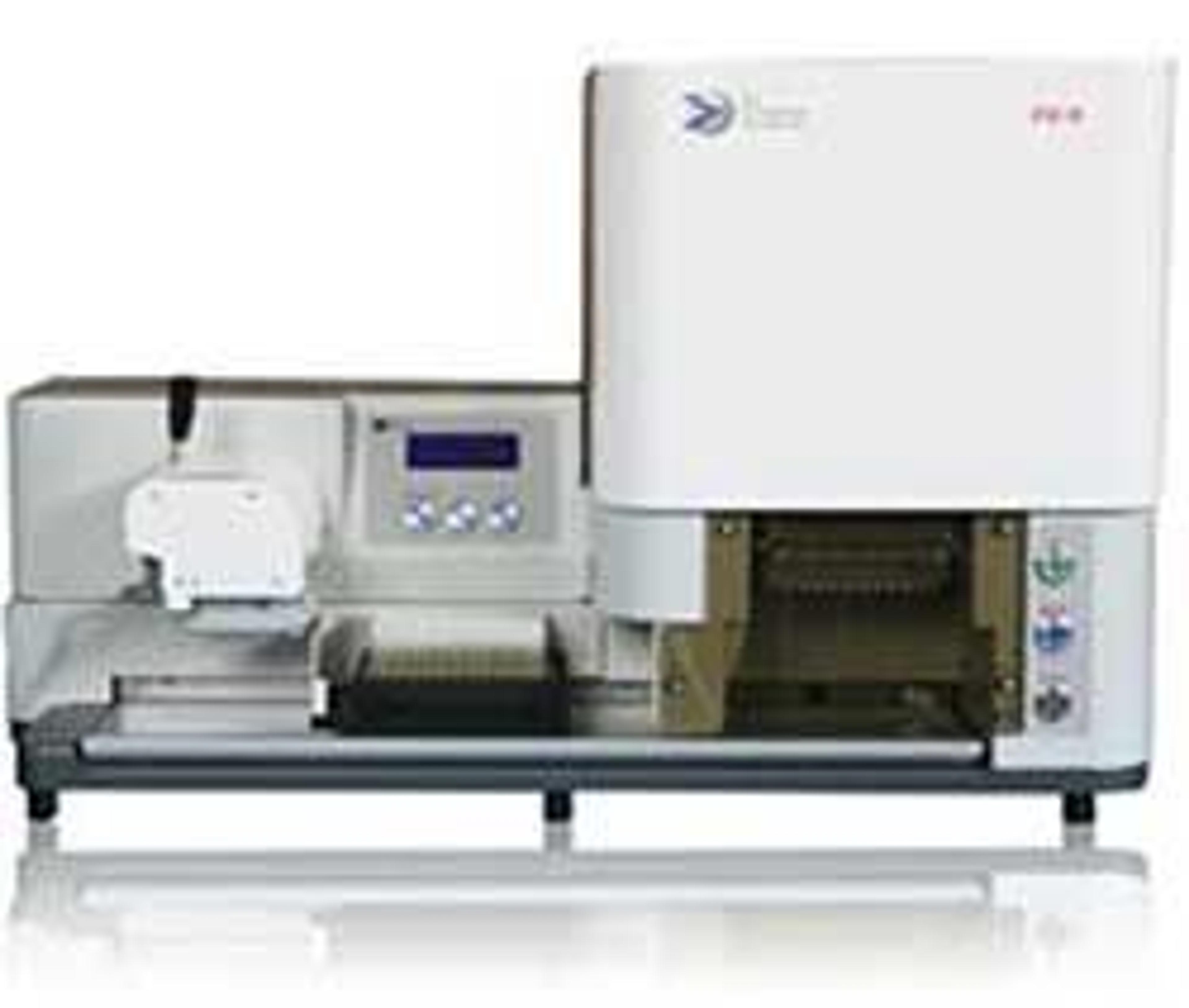
Fill-It Automated screw-cap cryovial filling system
TAP BiosystemsFill-It - is an automated benchtop system for filling screw-cap cryovials. Fill-It is designed to help create cell banks of higher quality, consistency and viability. It combines proven decap / recap modules with aseptic liquid handling. Fill-It removes all screw caps simultaneously and then dispenses into multiple cryovials in parallel. Compatible with Corning, Greiner, Micronic, Matrix, Nalgene, Nunc and Sarstedt screw-cap cryovialsKey benefits:• Creates consistent, high quality cell banks • Reduces risk of repetitive strain injury (RSI) • Helps maintain sample integrity due to lower risk of contamination when compared to manual processing. • Improves lab productivity by enabling larger batch runs.