Exploring the Benefits of UV-Vis for Ensuring Drinking Water Safety

SelectScience® spoke to Carolin Klein, Global Product Manager Photometry, Merck KGaA Darmstadt, Germany about the power of the Spectroquant® Prove

5 Jun 2016
Alex Waite
Editorial Assistant

Editorial article


SelectScience® Deputy Editor, Sarah Thomas spoke to Carolin Klein, Global Product Manager Photometry, Merck KGaA Darmstadt, Germany about the company’s new Spectroquant® Prove spectrophotometers for water analysis.

ST: What are the current challenges and opportunities in the field of water analysis?

CK: Water treatment methods like ozonation are routinely used to ensure a safe drinking water supply. However, these processes can sometimes lead to unwanted side reactions that introduce compounds, such as bromate, into the water. According to European and WHO drinking water regulation the limit for bromate is 10 µg/l, as described in ISO 15061:2001 and is used in many countries. In this standard, the method used is ion chromatography.

ST: What are the benefits of using UV-vis in this industry?

CK: The techniques used to measure bromate concentration in water, which include ion chromatography and photometry, can be challenging. Careful handling and critical appraisal of the results yielded are crucial to both approaches. Ion chromatography is often not available in drinking water laboratories, and handling of these systems requires a high level of technical skill. Although high-capacity separation columns provide accurate results for bromate concentration, interfering Cl-, NO3- and SO42- anions may lead to inaccurate low results.

Photometers, on the other hand, are typically available in drinking water laboratories because they are used to measure iron, manganese and other drinking water parameters. Photometry can be used to measure bromate in the range of 0.001 – 0.2 mg/L[CK1] in the 50 mm rectangular cell in the MilliporeSigma Spectroquant® Prove spectrophotometer with a unique pre-programmed application.
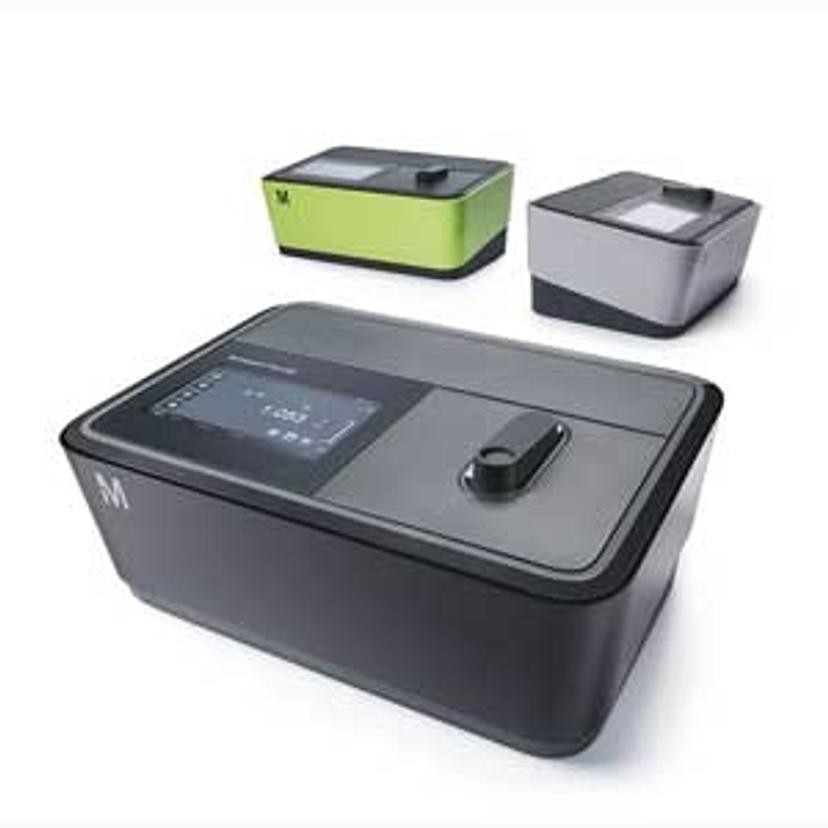
Spectroquant® Prove 100/300/600 Intuitive, innovative and preprogrammed for the broadest range of test kits, Spectroquant® Prove makes water analysis smoother than ever. Spectroquant® Prove is available in three versions, so you can select the one that perfectly suits your requirements.

ST: What are the main applications of the Spectroquant® Prove?

CK: Besides all pre-programmed test kits for drinking water analysis (iron, manganese etc.), the Spectroquant® Prove has a unique application for bromate pre-programmed. The photometry method is based on the reaction of 3,3’-dimethylnaphthidine with iodide and bromate that produces a red radical cation, which can be measured by absorbance. The more bromate there is present in the sample, the more intense the color of the solution at the end of the reaction.

If there are higher mineral contents, including calcium and/or sulfate, this may interfere with the results obtained using ion chromatography. Using the Spectroquant® Prove 600 with a 100 mm rectangular cell, the recovery rate for bromate is much better in comparison to the measurement using the 50 mm rectangular cell. The Spectroquant® Prove with its intuitive touch screen symbols guides the user through the procedure of the measurement.

ST: Do you have any tips for improving UV-vis analysis results?

CK: To improve the results and make the analysis more reliable I recommend to use standards frequently, in parallel to measurement of the real sample. Moreover, the Spectroquant® Prove has an enhanced Analytical Quality Assurance system, AQA Prime, which guides the user through the quality assurance process. In AQA 1 mode, the hardware of the instrument itself, can be checked by the user. With AQA 2, the whole system, which includes also the handling of the test kits by using standards, can be checked. The pre-programmed pipette check also ensures the pipettes are calibrated.

ST: What do you see for the future of UV-Vis in the water analysis industry?

CK: Bromate is becoming more and more important in drinking water regulations in many countries worldwide, because bromate is carcinogenic for humans. The limit is very low with 0.01 mg/l and so reliable measurement is challenging. Consequently, we are looking into the development of new methods for photometry, to make life easier for all users of the Spectroquant® Prove is our goal in the research department in Darmstadt, Germany.

Find out more about water testing in the food and beverage industry, or how the Spectroquant® Prove enables more reliable bromate testing.
Links

Tags

Sample PreparationSample preparation can improve the quality and speed of separation techniques. Products to assist sample preparation include filtration equipment, evaporators, membranes and sieves.Mass SpectrometryMass spectrometry (MS) is a powerful analytical technique used to identify and quantify molecules based on the mass-to-charge ratio of gas-phase ions. It provides detailed information about the structure, composition, and properties of compounds and is widely used across fields such as environmental monitoring, materials science, drug discovery and development, food and beverage testing, and wider chemical research. Key MS techniques include tandem mass spectrometry (MS/MS), liquid chromatography–mass spectrometry (LS-MS) and inductively coupled plasma (ICP-MS). Choosing from these wide range of techniques and technologies can be a daunting task, so keep up to date with scientific applications, performance expectations, and customer reviews here all in one place. Visit our product directory to receive quotes direct from the manufacturer. UV-Visible SpectroscopyUltraviolet-visible (UV-Vis) spectrophotometers are used to measure the interaction of UV and visible light with a sample, including transmission, reflectance & absorbance. The two major instrument classes are single-beam or double-beam spectrophotometers. More specialized equipment includes colorimeters, spectroradiometers and refractometers. Portable and microvolume spectrophotometers are also available. For the modular spectroscopy lab, explore a range of light sources for combination with a spectrograph/spectrometer and optics. Find the best UV-Vis spectroscopy products in our peer-reviewed product directory: compare products, check customer reviews and receive pricing direct from manufacturers.Environmental Monitoring and TestingEnvironmental monitoring and testing uses handheld portable analyzers, kits, spectrometers or chromatography systems for air, water, soil, food and other sample testing. Useful features of analyzers such as BOD and COD include portability, easy calibration, automation and sensitivity.  Environmental test kits for pH, water, moisture, etc, should be accurate, sensitive, reliable, fast and easy to use.Food and Beverage AnalyzersFood and Beverage Analyzers are commonly used to provide information about the chemical composition, structure and physical properties of food materials.CalciumChromatographyChromatography is a powerful technique used to separate and analyze components of mixtures based on their chemical properties. It is widely used in fields like biochemistry, pharmaceuticals, and environmental analysis. By exploiting differences in the interaction of substances with a stationary phase and a mobile phase, chromatography enables precise purification and quantification of compounds. Whether you're working with complex biological samples or industrial chemicals, chromatography is essential for obtaining high-quality results. Browse our peer-reviewed product directory to find the best chromatography systems, compare products, read customer reviews, and get pricing directly from manufacturers.SulfurWater AnalysisAnalytical methods used to test the purity of drinking water include determining the level of contaminants abides to the level set by the Environmental Protection Agency (EPA).Elemental AnalysisElemental analysis involves determining the elemental composition of a sample, often used in environmental, pharmaceutical, and material sciences. Techniques like ICP-MS, X-ray fluorescence, and atomic absorption spectroscopy allow precise quantification of elements such as metals and nonmetals in complex matrices. Browse our peer-reviewed product directory to find the best elemental analysis tools, compare products, check reviews, and get pricing directly from manufacturers.Water Content AnalysisWater content analysis is crucial for determining the moisture levels in food, pharmaceuticals, chemicals, and other materials. Accurate measurement ensures product quality and shelf-life. Explore water content analysis tools in our peer-reviewed product directory; compare products, check reviews, and get pricing directly from manufacturers.UVUltraviolet (UV) light is used in a variety of applications, including disinfection, spectrophotometry, and molecular biology. UV light can damage DNA, making it a powerful tool in sterilization and in studies of mutagenesis and gene repair. Explore UV-related products in our peer-reviewed product directory; compare products, check reviews, and get pricing directly from manufacturers.Pure WaterPure water is processed to remove significant level of contaminants and is suitable for use in many laboratory applications.SpectrophotometrySpectrophotometry is a technique used to measure the absorption or transmission of light through a sample. It is commonly used in chemical analysis, environmental monitoring, and quality control. Explore spectrophotometry tools in our peer-reviewed product directory; compare products, check reviews, and get pricing directly from manufacturers.Photometry