
Enhancing Crop Sustainability Using Automated Synthetic Biology Methodology
Take a tour through the Crop Engineering Consortium’s high-throughput pipeline for creating nitrogen-fixing cereal crops
29 Mar 2017
Editorial article

A slide from the presentation given by Dr. Andy Breakspear for the Labcyte Genomics Symposium

John Innes Centre The John Innes Centre is an independent, international center of excellence in plant science and microbiology, generating knowledge of plants and microbes through innovative research.
Dr. Andy Breakspear, from the John Innes Centre in Norwich, UK, explained the objectives of the Engineering Nitrogen Symbiosis for Africa (ENSA) project and the Crop Engineering Consortium (CEC) at the Labcyte Genomics Symposium. Legumes symbiotically host nitrogen-fixing bacteria, for environmentally friendly growth, without costly fertilizers.
The ultimate goal of Dr. Breakspear, through the work of ENSA and the CEC, is to integrate the molecular pathways from legumes into cereal crops, for better affordability and sustainability.
The consortium devised a synthetic biology-based engineering strategy using Golden Gate assembly. In collaboration with the Earlham institute, work performed by Dr. Breakspear and the growing consortium, now centers around an automated, multi-gene construct assembly pipeline. With access to a database of thousands of construct components, the new automated assembly process is capable of producing hundreds of sequence validated constructs, per week, with 100% accuracy.
Introducing genes for symbiosis into cereal crops
Dr. Breakspear describes how legumes are able to establish symbiotic growth with nitrogen fixing bacteria. The ability to transform cereal crops with genes that encode these mechanisms could revolutionize cereal crop farming. Learn how, using synthetic biology, Dr. Breakspear and his colleagues have begun introducing the genes, approximately 50 of them, required to replicate these processes. ENSA is funded by the Bill and Melinda Gates foundation and has now produced over 2000 transgenic barley lines since its inception four years ago.
Using Golden Gate technology to synthesise genes
Shared across the growing CEC, a basic engineering strategy has been transformed into a well-established pipeline at the John Innes Centre that synthesizes DNA components, and assembles them using Golden Gate technology. Following construct assembly and validation with re-sequencing, plants are transformed and characterized. Golden Gate assembly technology enables the combination of up to five genes in any order, or orientation, ready for transformation. The pipeline has been significantly boosted through collaboration with the Earlham Institute, and the creation of a dedicated synthetic biology database of over 5000 components. The database has online access and is continuously shared, annotated and expanded by the growing consortium of users.
Dr. Breakspear explains how automation of the assembly workflow has exponentially increased the number of constructs possible to make per week; Labcyte’s Echo liquid handling and Access systems are fundamental to this new, accelerated pipeline.
Hear a description of the first project run on the new system that assembled 180 constructs from combinations of 20 promoters and 6 genes of interest, in just 8 minutes, with 100% accuracy, all of which have now been transformed into barley. Miniaturization of the reactions and extension of automation to the microbiological steps is now a possibility, which will further streamline the workflow.
The scope of the CEC and Dr. Breakspear’s involvement, has extended to outreach projects in Africa, and adaption of numerous other technologies for use with Golden Gate, details of which are provided in the video. As the consortium expands and undertakes outreach projects to educate other crop breeders in Africa, opportunities are being provided to ‘break the access barrier’ around synthetic biology and adapting Golden Gate technology for crop improvement.
Watch the full presentation or learn more about the Echo® 525 Liquid Handler
Leave a product review today to be entered into a prize draw for the chance to win an iPad or $400 Amazon voucher (or equivalent currency)
Related products
Request Quote for All Products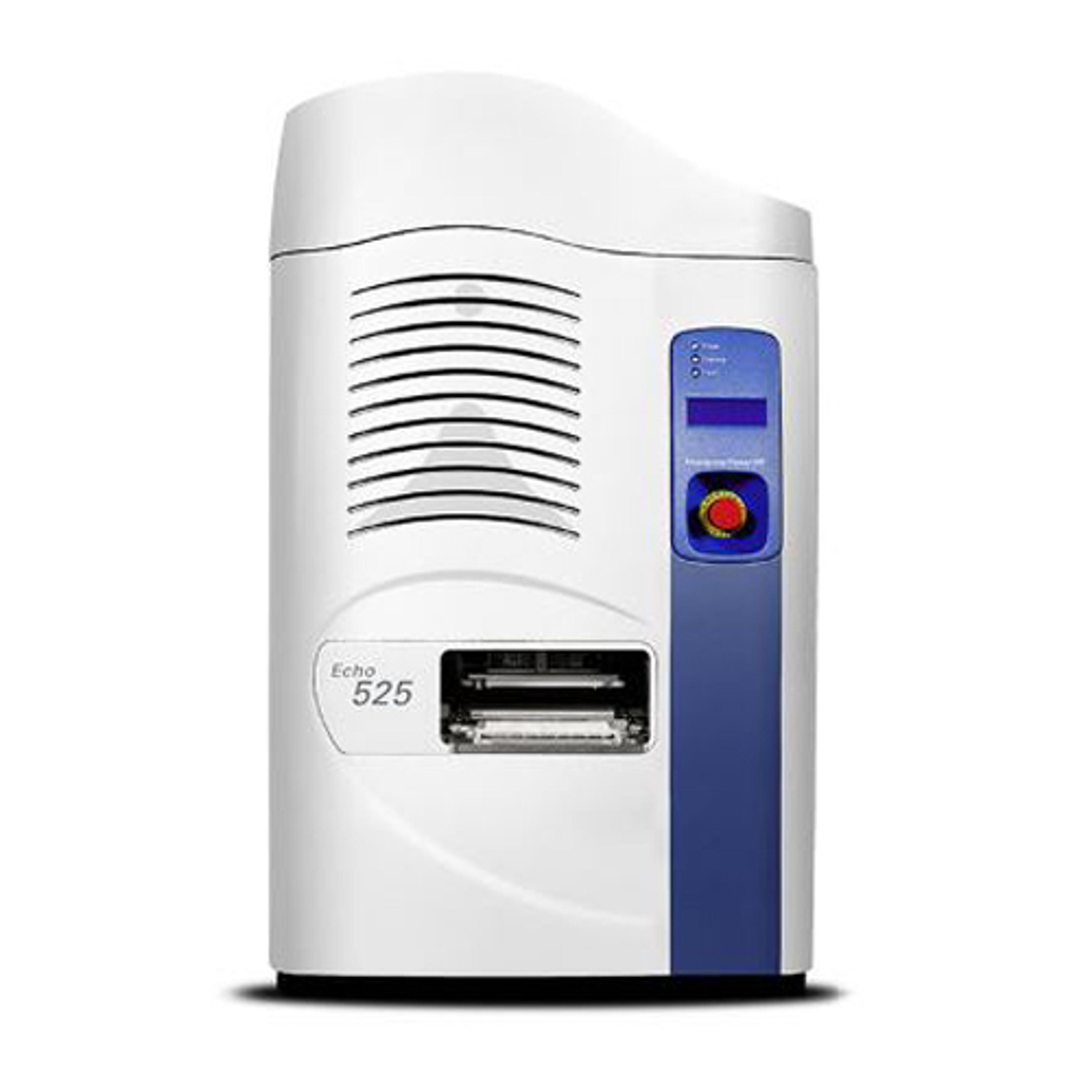
Echo® 525 Liquid Handler
Beckman Coulter Life SciencesThe Echo 525 platform, like the other Echo liquid handler models, is designed to use sound energy to transfer reagents. Unlike the other Echo models, the Echo 525 platform transfers at a larger volume increment (25 nL). This enables the more rapid transfer of aqueous reagents required in biochemical and genomics assays setup.