‘Effective communication enables you to stand on other people's shoulders and see much further'

Gang Chen, lab manager at Simon Fraser University, reveals his contribution to tackling the pandemic and how communication is vital in science

28 Apr 2021

Diane Li
Assistant Editor

Editorial article

Reviewer in the Spotlight Banner
Gang Chen, lab manager, Simon Fraser University
Gang Chen, lab manager for Dr. Robert Young's research lab at Simon Fraser University

Lab product reviews can change the world by helping other scientists find the best equipment to accelerate their vital work. Here at SelectScience®, we are dedicated to promoting peer-to-peer communication that will make the difference – but we couldn’t do it without our esteemed reviewers. In this regular new feature, we put the spotlight on some of our most dedicated and impactful reviewers and find out what inspires them to keep sharing their knowledge with the global scientific community.

This week’s ‘Reviewer in the Spotlight’ is Gang Chen, lab manager for Dr. Robert Young’s research lab at Simon Fraser University in British Columbia, Canada. With a keen interest in the world of science since childhood, Gang tells us about his ongoing drug discovery programs and explains how communicating with fellow scientists allows you to keep up with scientific progress.

Tell me about your role and your current research

We have several new drug discovery programs ongoing. The first one is a bone-targeting prodrug that can enhance bone growth. This class of drugs can be used in the treatment of osteoporosis and many other conditions. The second is an autophagy inhibitor, which is for supportive cancer treatment. A third one is for COVID-19: current vaccines can reduce the chance of contracting COVID-19, but for those who unfortunately got it, there is currently no effective treatment. We are collaborating with a few agencies in Vancouver to develop an effective treatment for this devastating disease.

The COVID-19 virus relies on a unique protease enzyme to function, and this enzyme is conserved across many mutants. This enzyme is a dimer, and the two subunits need to assemble in a precise way to be functional. What we are trying to do is to target the dimer interface such that the two subunits cannot mate normally, resulting in a non-functional enzyme, thus disrupting the normal function and proliferation of the virus.

What inspired you to get into the world of science?

I have been interested in science since my childhood. A high school chemistry national competition training camp played a big role in steering my career path to chemistry.
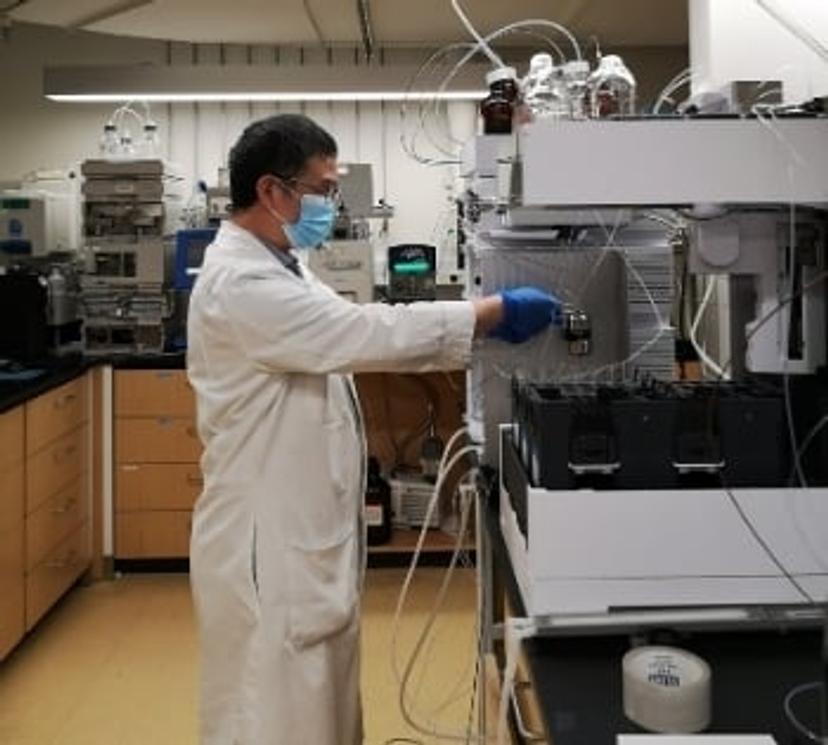
Gang Chen, Simon Fraser University
Gang is working on several new drug discovery programs, including a bone-targeting prodrug that can enhance bone growth

Why is communication vital in science?

The amount of knowledge, experience, tricks, and know-how are vast in any scientific field. It is simply impossible for a researcher to figure out everything all on their own. By effectively communicating with others, you essentially stand on other people's shoulders and will be able to see much further ahead.

Why do you think lab equipment reviews are important?

All equipment manufacturers proudly claim they have the best product, and they will suit your needs. However, real-life experience could be quite different. A piece of equipment may have an advantage in one aspect but falls short in another. By reading customer reviews you can have a much better sense of the real-life experience and make an educated selection in your purchase. By writing customer reviews, it not only helps others in making their selection, but also helps the manufacturers improve their product.

SelectScience reviews enable us to ‘test drive’ a piece of equipment before buying, which saves us both money and time, none of which we have enough.

What’s your favorite piece of lab equipment?

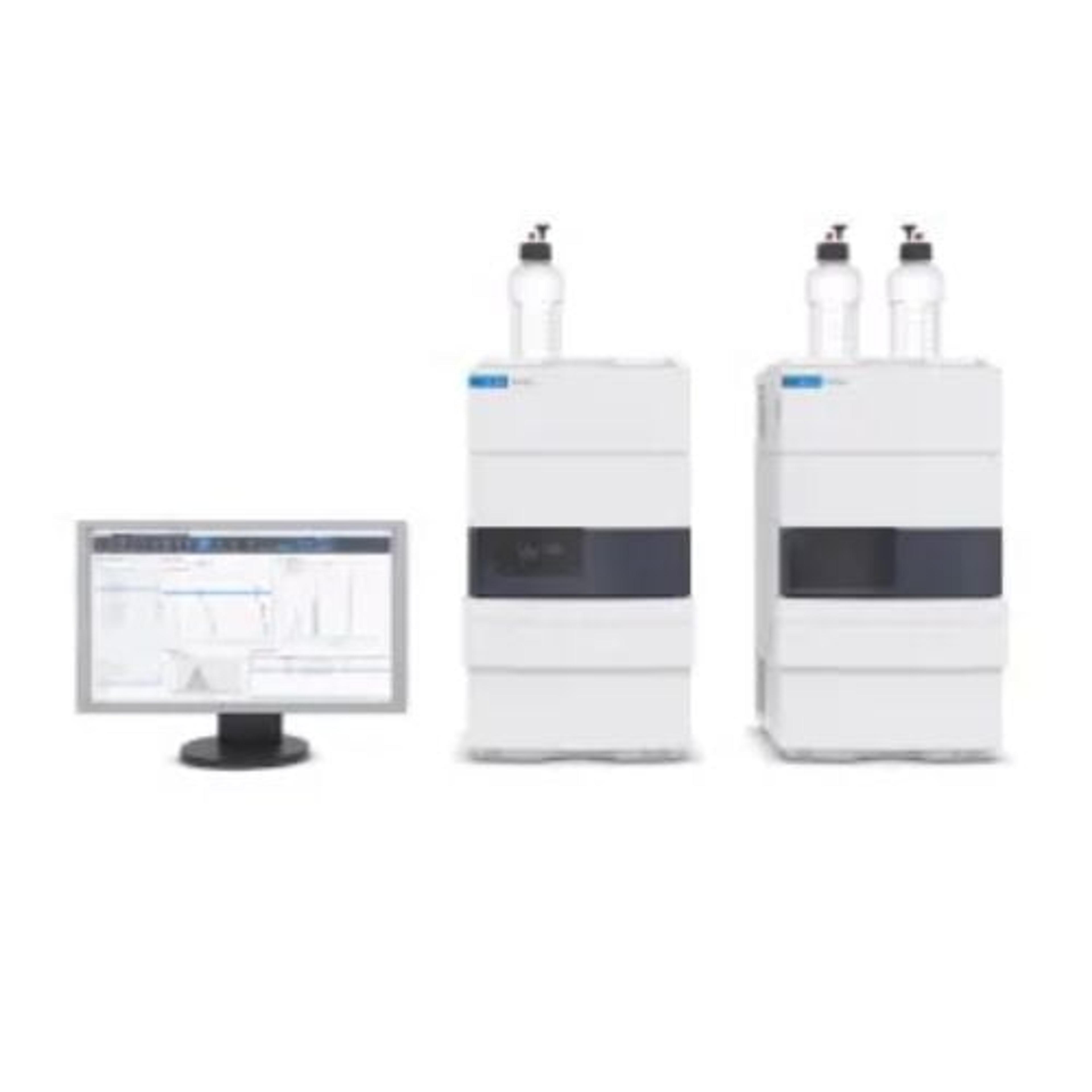
The Agilent 1100 HPLC. It is quite an old piece of instrument now, but it is still the workhorse in the lab. With a few simple modifications, you can get UHPLC-like performance from this old soldier. The hardware is rock solid and reasonably easy to maintain and service. A lot of the parts are generic and easily available from third parties, which makes the running cost low.
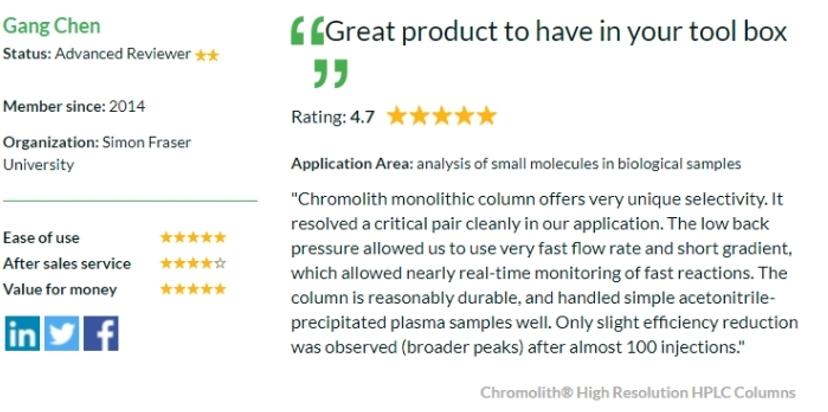
Review Gang Chen Chromolith

What would you like to achieve in your work?

I hope one day new drugs will come out of our research work and alleviate the pain of patients.

Would you like to feature in our Reviewer Spotlight? Write your review here to be in with a chance >>
Links

Tags

UHPLC and HPLCHigh performance liquid chromatography (HPLC) and ultra high performance liquid chromatography (UHPLC), also known as UPLC, are analytical techniques used to separate, identify and quantitate components of complex mixtures including biological samples such as proteins and lipids as well as chemical mixtures of pesticides, drugs and oils. Both techniques are liquid chromatographic methods but differ by operating pressures (HPLC < 6000 psi < UHPLC ). Components of HPLC and UHPLC systems include columns, detectors, pumps, autosamplers and column heaters. Explore a range of UHPLC and HPLC columns for your specific sample needs including reverse phase, normal phase, ion exchange, HILIC, ion exclusion and size exclusion columns. For more specialized HPLC, explore FPLC, countercurrent LC and simulated moving bed systems. Find the best UHPLC and HPLC equipment in our peer reviewed product directory: compare products, check customer reviews and receive pricing direct from manufacturers.Combinatorial ChemistryCombinatorial chemistry, also known as combichem, is a technique used in drug discovery to create libraries of structurally related compounds. A library is generated by synthesis with a chemical reactor system or by computer-based modeling of compound combinations. When undertaking combinatorial chemistry consider reagents, buffers, resins and standards.Lab-on-a-ChipLab-on-a-chip (LOC) technology uses microfluidic chips, such as microarrays, to perform biochemical assays on a small scale. Benefits of lab-on-a-chip include the small volume of sample required as well as the speed of analysis. In selecting lab-on-a-chip devices consider the assay, cost, reliability, sensitivity and signal to noise ratio.Compound LibrariesCompound libraries, or chemical libraries, are used in drug discovery for the identification of potential therapeutics compounds. Used in conjunction with high-throughput screening, the libraries of stored compounds are often generated for specific purposes as a drug target or disease model. Cheminformatics are commonly used when designing a compound library and software can be used to analyze the screening process.  Process ChemistryProcess chemistry is an important stage of drug development for scaling-up drug production or chemical synthesis reactions. It is useful for optimizing economical and efficient drug production. Process chemistry uses reactors and pump systems as well as reagents, standards and buffers.Biopharmaceutical AdvancesBiopharmaceutical advances follow the development of pharmaceuticals derived from biotechnology, also known as biotechnology medicines. Biopharmaceuticals may be produced from cell lines, plants, or microbial cells. Important considerations of biopharmaceutical use include application, cost, production process and purification.Plate ProcessingAutomated plate processing is used in microplate technologies for high-throughput, speed and efficiency. Plate processing systems include microplate handlers for moving plates, heat sealers, stackers and carousels for storage, retrieval and delivery, microplate washers and piercers. Useful features of plate processors include walk-away automation, compatibility and easy integration with microplate systems.GC-MS GC-MS (gas chromatography-mass spectrometry) instruments and equipment are used to separate, quantify and identify mixtures of small and volatile compounds, such as polycyclic aromatics, fatty acids and alcohols. Often used in drug detection, forensic investigation and environmental analysis for pesticides and contaminants, GC-MS is a powerful addition to your lab’s analytical capabilities. GC-MS/MS instruments equipped with a qTOF or triple quadrupole analyzers can give greater sensitivity and resolution to your analysis. Find the best GC-MS instruments and equipment in our peer-reviewed product directory: compare products, check customer reviews and receive pricing direct from manufacturers.Drug DeliveryDrug Delivery refers to dosage form, route of administration, formulations, technologies, and systems for transporting a pharmaceutical compound in the body as needed to safely achieve its desired therapeutic effect. Drug delivery is often approached via the biopharmaceutical or small molecule drug's formulation, but it may also involve medical devices or drug-device combination products. Considerations include instrumentation, software and services. Drug DiscoveryDrug discovery is the process of identifying potential new medications, involving stages such as target identification, compound screening, and preclinical development. It relies on cutting-edge technologies like high-throughput screening, artificial intelligence, and molecular modeling to accelerate the identification of drug candidates. Drug discovery plays a pivotal role in developing new therapies for diseases ranging from cancer to rare genetic disorders. Browse our peer-reviewed product directory to find the latest drug discovery technologies, compare options, check customer feedback, and get pricing directly from manufacturers.TherapeuticsTherapeutics are treatments designed to alleviate or cure diseases. These include pharmaceuticals, biologics, and gene therapies, which work by targeting specific disease mechanisms. Advances in personalized medicine and biologics offer new hope for patients with conditions that were previously difficult to treat. Browse our peer-reviewed product directory to find therapeutic solutions for various diseases; compare products, check user reviews, and get pricing directly from manufacturers.Drug DevelopmentDrug development refers to the process of bringing a new drug to market.ReviewsReviewer in the SpotlightCovid-19COVID-19, caused by the SARS-CoV-2 virus, has led to a global health crisis with profound impacts on societies and economies. Research into diagnostics, vaccines, treatments, and understanding viral mechanisms continues to evolve. The pandemic has accelerated innovations in healthcare and biopharmaceuticals, including novel vaccine platforms and rapid testing technologies. Browse our peer-reviewed product directory to find top COVID-19 testing kits, research tools, vaccines, and treatments, compare products, read reviews, and receive direct pricing from manufacturers.