CytoSmart Technologies announces the launch of the remote live-cell imaging system Multi Lux

13 Sept 2020
Tom Casburn
Associate Editor

Product news

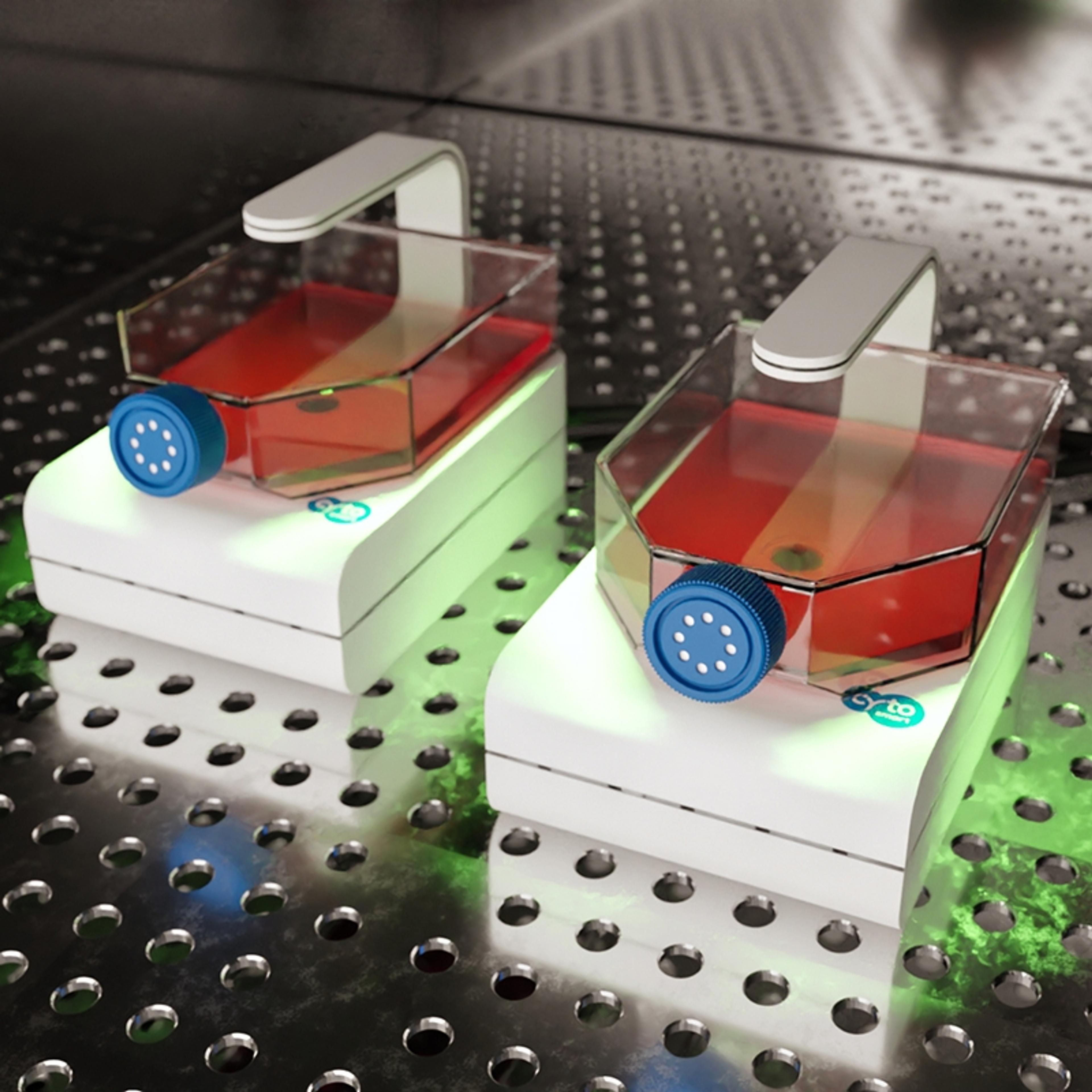
CytoSmart Technologies have announced the launch of a new automated live-cell imaging system designed for long-term experiments, comparison studies, and large laboratory teams. The CytoSmart Multi Lux is a cost-effective solution for researchers who want to carry out side-by-side comparisons between cell cultures, run long-term experiments, and monitor cells from their home’s comfort.

Said Joffry Maltha, CEO at CytoSmart Technologies "An advanced live-cell imaging system consisting of four mini digital microscopes supported by automated image analysis software is especially useful for research groups that have been negatively impacted by COVID-19 restrictions and want to find new ways to continue their research. No matter how big your laboratory team is, this new Multi Lux technology lets scientists run up to four experiments simultaneously from inside the incubator at perfect culture conditions. Automated image analysis and immediate visualization of the results are accessible remotely via the CytoSmart Cloud. Besides, researchers who need to culture cells for weeks or even months, can also benefit from this long-term live-cell imaging solution without fear of needing to throw away cells because of failed experiments."

The main features and benefits of the CytoSmart Multi Lux include:

  • Four sample stages for simultaneous side-by-side comparison
  • Long-term non-invasive, label-free image analysis
  • Full remote access: possibility to inspect cell cultures while working from the comfort of home
  • Suitable for large laboratory teams
  • Cost-effective solution: four imaging devices connected to a single laptop, including unlimited storage

Do you use CytoSmart products in your lab? Write a review today for your chance to win a $400 Amazon Gift Card>>

CytoSMART Lux2

The CytoSMART Lux2 is a compact inverted microscope for bright-field time-lapse imaging. It works from inside any standard CO2-incubator and can be used in routine cell culture processes. The CytoSMART Lux2 provides a small and easy solution for time-lapse imaging. Monitor cell proliferation, motility and morphology for hours up to weeks at a time.
(20)

CytoSMART Lux2 Duo Kit

The CytoSMART Lux2 Duo Kit is a compact and cost-effective method to follow the complete growth progression of mammalian cells. It is an automated live-cell imaging system, specifically designed to operate from within CO2- incubators and hypoxia chambers. Bright-field imaging is used to create time-lapse videos, which are remotely accessible. Samples are imaged under identical conditions, thus providing a robust platform for unambiguous comparison between cell culture variables.

(1)

Tags

Cell / Tissue CultureCell culture or tissue culture is used to study the biology of cells or tissues and to isolate cellular products in an environment which can be manipulated and well defined. Accurately control your culture environment with bioreactors or culture incubators, bind your cells to a surface or together with an extracellular matrix. Distinguish cell types with differential media or proliferate cells with certain characteristics using selective media. Enrich your media with supplements such as growth factors, sera and vitamins. Find the best cell and tissue culture products, kits and equipment in our peer-reviewed product directory: compare products, check customer reviews and receive pricing direct from manufacturers.Flow Cytometry / Cell CountingFlow cytometers are used to count, sort and examine multiple characteristics of cells. Other cell analysis equipment includes image cytometers, cell counters, fluorescence-activated cell sorters (FACS), magnetic-activated cell sorters (MACS), and a range of flow cytometry assay kits. Flow cytometers can reveal information on cell viability, cell proliferation, apoptosis and cell cycle progression, as well as identify cell populations and intracellular or cell-surface molecules. Additionally, some flow cytometers, known as FACS, have an additional sorting function after analysis. Cell counters and image cytometers count live and dead cell populations and can also conduct cell proliferation assays. Find the best flow cytometers, cell counters and cell sorters in our peer-reviewed product directory: compare products, check customer reviews and receive pricing direct from manufacturers.Robotic InstrumentsRobotic instruments can be used for high-throughput automation of many lab processes. Such processes use instruments for assays like cell based assays and ELISA, for sample preparation like shakers, centrifuges and incubators, and for analysis such as sequencing and western blot analyzers. Useful features of robotic instruments include speed, reproducibility, barcode readers, software and automation.In Vivo Imaging Systems<i>In vivo</i> imaging systems, including pre-clinical imaging systems and medical imaging systems are used to non-invasively visualize and capture images of live animals and plants. Monitor the natural processes or diseases of your subjects using small-animal pre-clinical imaging systems, including single photon positron emission tomography (SPECT), positron emission tomography (PET), computed tomography (micro-CT), magnetic resonance imaging (MRI), X-ray radiography, ultrasound, fluorescence and bioluminescence imagers. Multimodal systems and software solutions are also available for correlative analysis of organ, tissue, cell, or molecular-level processes. Find the best in vivo imaging products in our peer-reviewed product directory: compare products, check customer reviews and receive pricing direct from manufacturers.AutomationAutomation in laboratories and manufacturing processes enhances efficiency, precision, and scalability by reducing the need for manual intervention. It plays a critical role in improving productivity, minimizing human error, and accelerating workflows in fields like diagnostics, drug development, and industrial testing. Automation technologies include robotic systems, automated liquid handlers, and process control systems that streamline complex tasks and ensure consistent, reproducible results. Explore our peer-reviewed product directory to discover the best automation solutions, compare options, read user reviews, and get prices directly from manufacturers.Cell ImagingCell imaging can be achieved using a number of techniques including confocal microscopy, transmission electron microscopy, atomic force microscopy, and light sheet microscopy.Live Cell ImagingLive cell imaging is the study of living cells using microscopes and high-content imaging systems. This technique provides in-depth insight into fast and complex biological processes, by allowing dynamic imaging of living cells instead of acquiring an individual image at a single point in time.Non-Invasive Imaging
CytoSmart Technologies announces the launch of the remote live-cell imaging system Multi Lux