
Christmas Comes Early as Scientists Win Big in Our 12 Reviews Festive Giveaway
The first lucky winners of our massive festive giveaway have been revealed.
16 Dec 2016
Editorial article
It’s halfway through the SelectScience® 12 Reviews of Christmas competition and already hundreds of dollars worth of prizes have been dished out to lab scientists who have shared their opinions with our readers.
In total, there are 12 Amazon.com gift cards to be given away between December 7 and 22 - a gift card per weekday - with a total of $1,000/£650/800€ up for grabs for winners selected at random.
First to scoop $50 to spend at Amazon was Jinchun Sun, of the FDA’s National Center for Toxicological Research in Arkansas, USA. He reviewed the Ultra Performance LC (UPLC) from Waters.
Next to bag a gift card was Tom Phillips, who works in the State Chemist Section at Maryland Department of Agriculture. Tom reviewed the ACQUITY UPLC System, also from Waters.
Our third festive winner was Matteo Dal Ben of the Fondazione Italiana Fegato ONLUS in Italy. Matteo reviewed the PerkinElmer, Inc.’s EnSpire™ Multimode Plate Reader.
Patrice Borgonjon, of Procter & Gamble became our fourth winner when he reviewed the Reference 600+ Potentiostat from Gamry Instruments. He wrote: “Reference 600+ is easy to use and highly reliable.” Read his full review here.
The fifth winner was Lang Shen, of the University of South California, who also reviewed Gamry’s Reference 600+ Potentiostat.
There are plenty more prizes still to be given away and the value is rising as the big day approaches, so why not get involved?
Click here to write a review about a product in your lab and you could be our next winner
Related products
Request Quote for All Products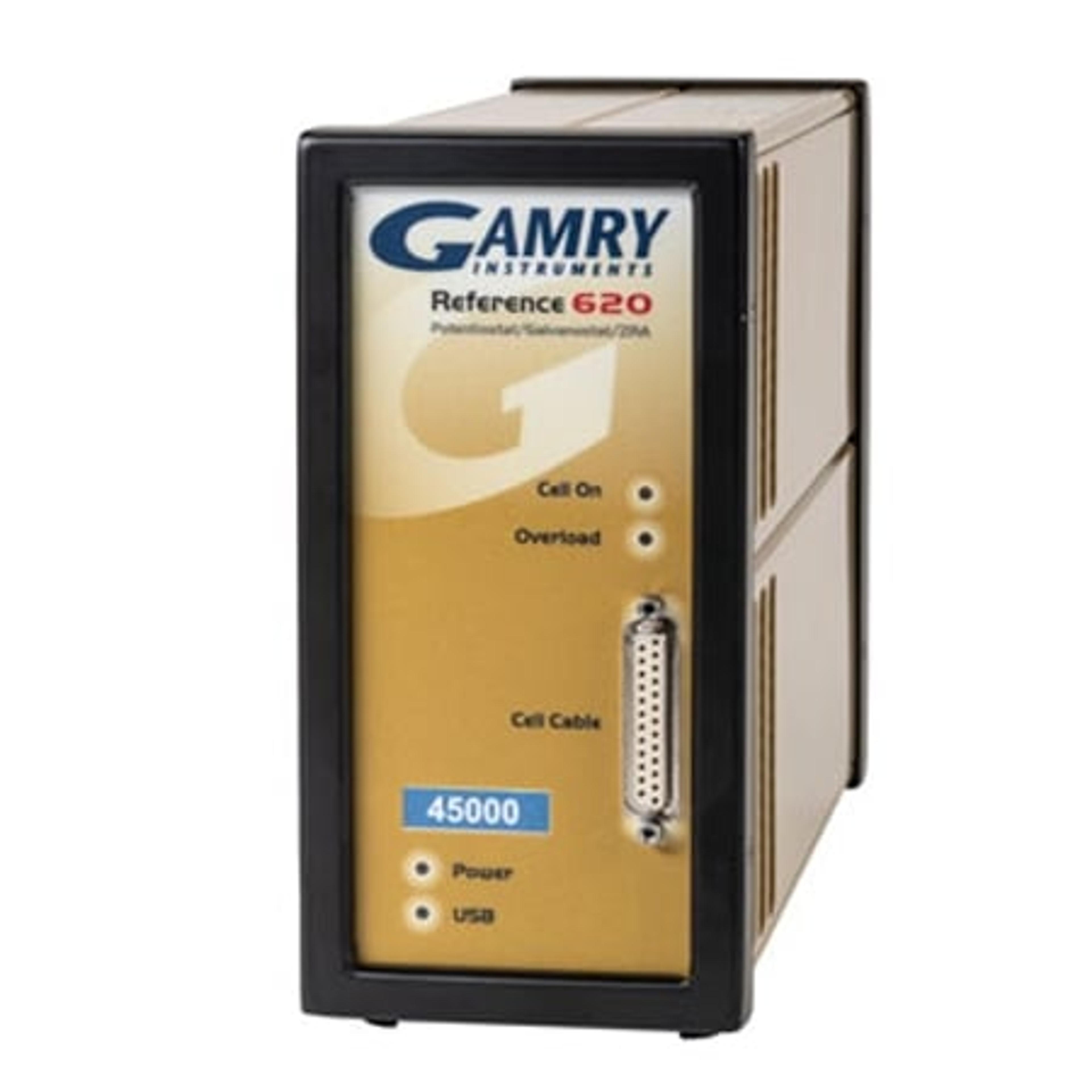
Reference 620 Potentiostat
Gamry InstrumentsA high-performance potentiostat suitable for applications in physechem, coatings, and corrosion.

ACQUITY UPLC System
WatersWaters ACQUITY UPLC - Dramatic Improvements in Speed, Sensitivity and Resolution Whether you work in methods development or quality assurance, in drug discovery and development or testing for safety in food supplies, you seek a productivity edge. With the ACQUITY UPLC® System, now you can get more information in a single, short run than you've ever seen with HPLC. Waters ACQUITY UPLC System UltraPerformance LC® (UPLC®) technology starts with unique 1.7 μm small-particle chemistries. Chromatographers no longer need to choose between speed and resolution–with UPLC you get both. Instrument Designed for Chemistry; Chemistry Designed for the Instrument The ACQUITY UPLC System has been holistically designed to match the performance needs of our innovative column chemistries with robust hardware, easy-to-use software and specialized support services. Small, pressure-tolerant particles High-pressure fluidic modules Minimized system volume Negligible carryover Reduced cycle times Fast response detectors Integrated system software and diagnostics With UPLC you have the ability to work more efficiently with higher speed, sensitivity and resolution at a much wider range of linear velocities, flow rates and backpressures to obtain superior results. The Waters ACQUITY UPLC System's high-pressure fluidics optimizes flow rates to make the most of small particle technology. The ACQUITY UPLC System's sample-handling design is designed to ensure exceptionally low carryover and reduced cycle time. And when interfaced with the Sample Organizer, it increases unattended sample capacity by ten times. High-speed detectors, both optical and mass, contribute to increased sensitivity and help manage the heightened speed and resolution requirements of UPLC. ACQUITY UPLC Systems are easily controlled, diagnosed, and monitored via a graphical system console interface. The console offers: Quick and easy access to critical instrument parameters Simple system start-up, elegant system status monitoring and predictive performance indicators to ensure maximum productivity Data management capabilities that are supported by both MassLynx™ and Empower™ software The ACQUITY UPLC System is also supported by Intelligent Device Management technology with our Connections® INSIGHT™ service, providing instrument diagnostics.

Ultra Performance LC (UPLC)
WatersMaking more informed decisions in less time is a universal asset in today's laboratory. Ultra Performance LC™ (UPLC™ ), a new category of separation science pioneered by Waters, will eliminate significant time and cost per sample from your analytical process—while improving the quality of your results. With UPLC technology you benefit from: more data, faster unparalleled sensitivity greater efficiency and confidence in results Waters ACQUITY UPLC™ and nanoACQUITY UPLC™ Systems use unique small particles, very low system volumes and greater throughput to detect more peaks with faster run times. Ultra Performance LC not only advances what you can accomplish with liquid chromatography analysis. Mass spectrometry’s low dispersion, high-speed detection requirements significantly benefit from the performance characteristics of UPLC.