Cannabis testing - pesticides, topicals, simple standards and more

Keep up to date with the latest techniques and technologies driving cannabis research into 2021

1 Mar 2021

Cameron Smith-Craig
Cameron Smith-Craig
Pharma and Applied Sciences Editor

Editorial article

Cannabis Testing Special Feature

The chemical constituents of cannabis are now being infused into all manner of products - from edibles and vaporizers to creams and lotions, these products have hit the mass market by storm. As their popularity continues to grow, the scientific industry has stepped in with new methods and technologies to ensure these products are well regulated and to investigate any concerns with their use.

In this special feature, we take a closer look at some of the latest breakthroughs being made in this industry and how they could help give scientists the extra edge they need to keep up with the fast-paced field and the demand for quality control.

Plus, we're asking for your opinion on which technologies have been the most effective for your cannabis testing workflows:
Vote in our Series Champion Awards >>
A well-defined analysis of 27 GC-amenable pesticides

CONTAMINANTS: A well-defined analysis of 27 GC-amenable pesticides

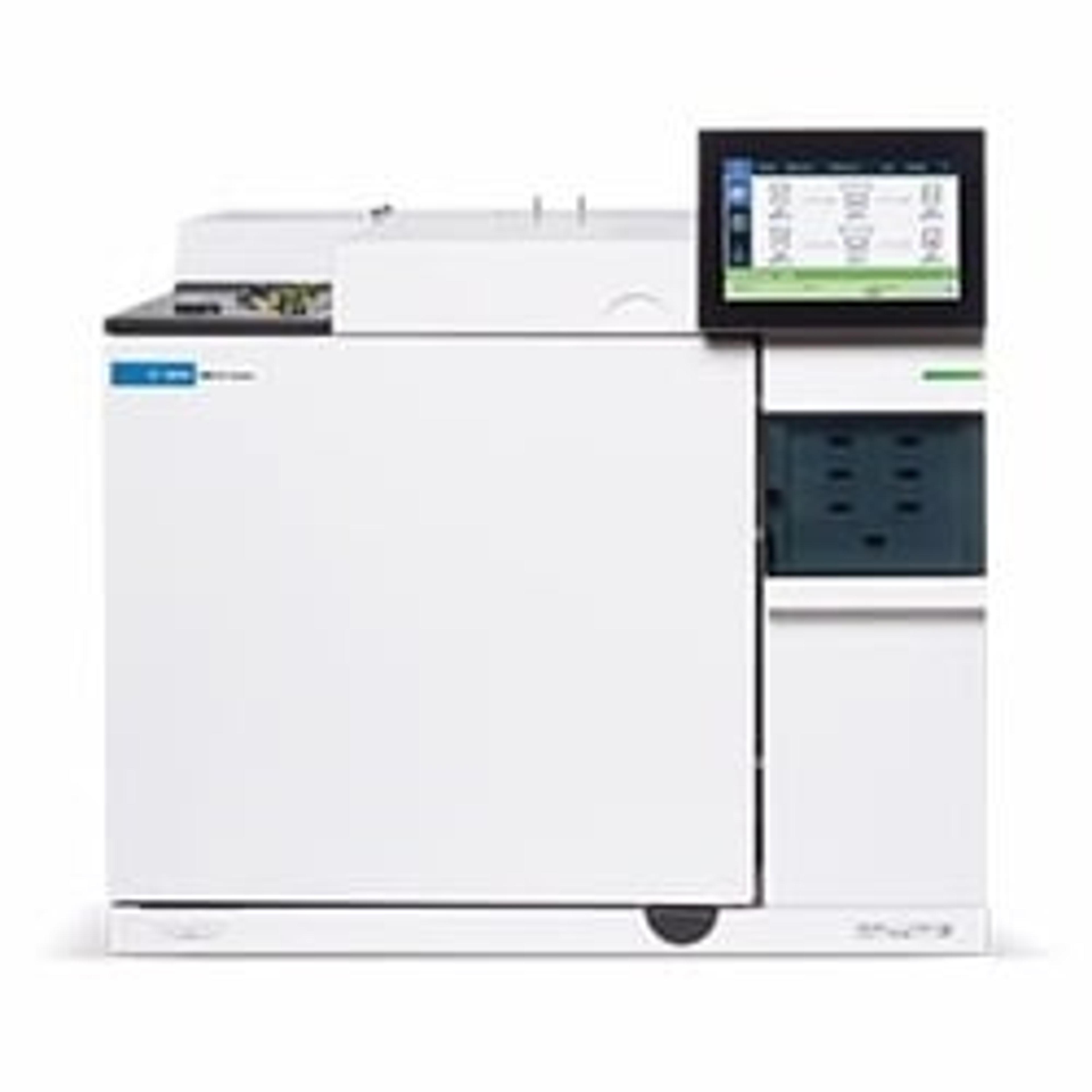
Featuring 27 pesticides regulated in the North American cannabis industry, discover Agilent Technologies' workflow to achieve and exceed LOD, LOQ, accuracy and precision using the 8890/7010B GCMS System.

Download Method

Rapid quantification of CBD in lotions, balms & creams

LC-UV ANALYSIS: Rapid quantification of CBD in lotions, balms & creams

Restek demonstrates a simple LC-UV analysis method to quantify cannabidiol (CBD) in three different complex matrix samples, delivering reliable results in under five minutes.

Download Method

Streamlined sample and standards preparation

EXTRACTION: Streamlined sample and standards preparations

Extraction of cannabis samples from varied matrices can be tedious and time consuming. Here, BrandTech Scientific shares its latest innovations to increase the accuracy, safety and convenience of your prep work.
Download Method

High-throughput analysis of 17 cannabinoids

WORKFLOW: High-throughput analysis of 17 cannabinoids

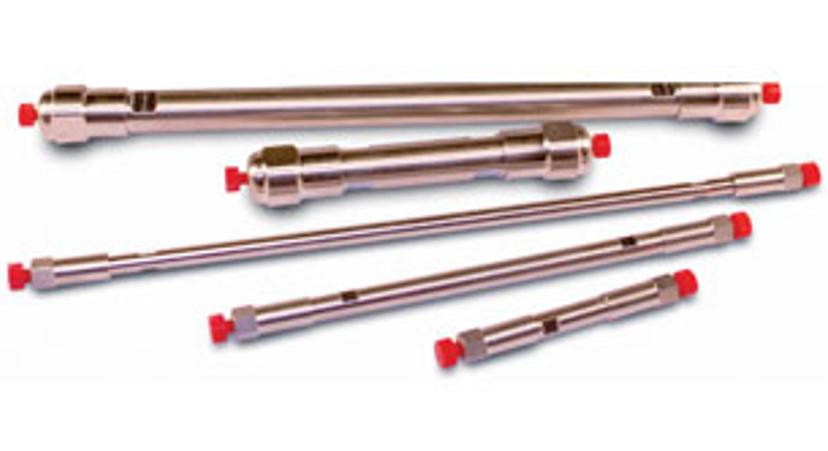
Discover MilliporeSigma's solution for acidic cannabinoid retention time shift issues, with long lifetimes for dirty matrices - as validated in the AOAC official method 2018.11 for quantification of cannabinoids.
Download Method

Shelf-stable emulsions with easy sample prep

HOMOGENIZATION: Shelf-stable emulsions with easy sample prep

In search of consistency and uniformity in your cannabis product production and testing? Download this eBook guide from PRO Scientific for top tips and FAQs on achieving reliable and reproducible results.
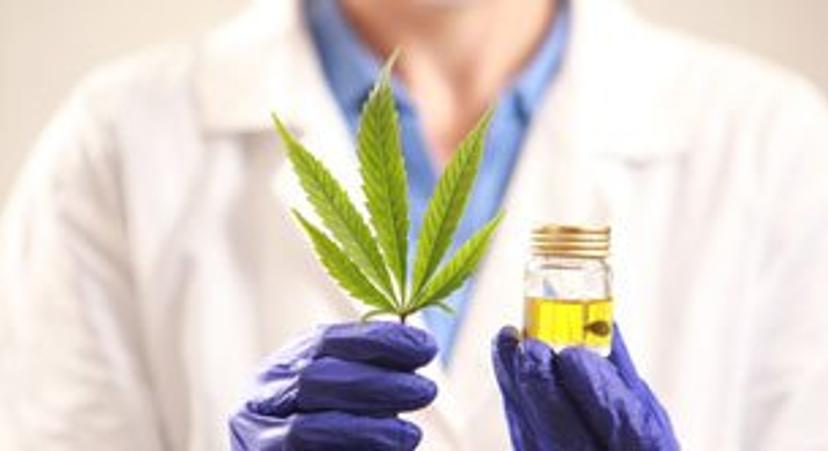
Download Guide

Comprehensive pesticide testing to ensure safe products

EXPERT INSIGHT: Comprehensive pesticide testing to ensure safe products

In a SelectScience webinar on Wednesday, March 31, Dr. Anthony Macherone, Visiting Professor at the Johns Hopkins University School of Medicine, will discuss targeted methodologies to ensure the safety of cannabis products through comprehensive pesticide testing.

Register Now


Watch scientists at the forefront of cannabis testing:

Quality control: Dr. Jonathan Speare, from White Buffalo Laboratories, discusses quality assurance requirements and how quantifying marijuana testing is changing the cannabis industry. Watch video >>

Pesticide screening: In this on-demand webinar, cannabis and hemp consultant Julie Kowalski explains why confirmation testing is a must when screening for residual pesticides in consumer products. Watch webinar >>

Phytocannabinoids: Jeffery Williams, Process Chemistry Exploration Department at Cayman Chemical, discusses degradation pathways of phytocannabinoids and cannabis sinusoids to try and help the accuracy, reliability, and reproducibility of your workflow. Watch video >>

More useful cannabis testing resources:

  • Discover our guide to choosing the most appropriate liquid handling instrument for your lab - save time, decrease sample contamination, and improve accuracy and efficiency. Download guide >>
  • Cayman Chemical illustrates the naming and numbering conventions of phytocannabinoids and the biosynthesis for the orcinol, olivtol, and varinol series. Download poster>>
  • Shimadzu demonstrates the use of supercritical fluid chromatography as a green technique to quantitate nine cannabinoids in hemp flower. Download method >>
  • Discover a test method for the analysis of pesticides and mycotoxins in cannabis brownies, using the California list. Download application >>
  • PerkinElmer launches a fully automated workflow for cannabis & hemp pesticide residue testing, featuring quality control reagent kits, robotic sample preparation, mass spectrometry analysis and data reporting software. Read article >>

Your recommendations:

Find out what researchers around the world are saying about the products they use! Jingpeng Xu, from Pall Corporation, shared this review of the Arc HPLC System by Waters.
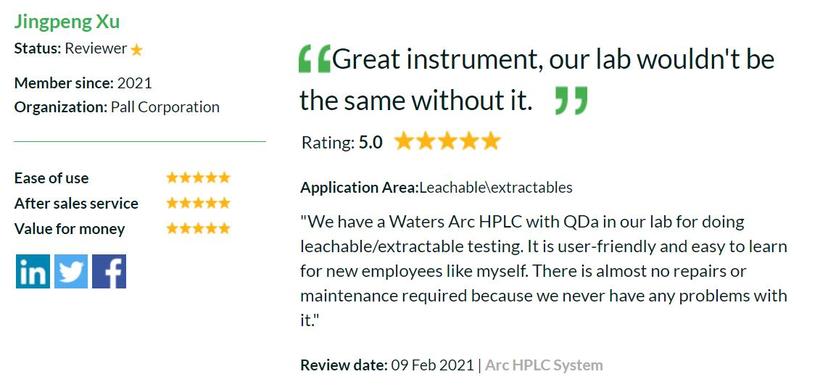
Arc HPLC System by Waters

For more of the latest news, straight to your inbox, become a member of SelectScience for free today>>
Links

Tags

Gas ChromatographyGas chromatography (GC) is an analytical technique used to separate and quantitate mixtures of small and volatile compounds. Gas chromatographs or GC systems include components such as GC columns, detectors, pumps and autosamplers. Choose from packed or capillary GC columns, flame ionization (FID), photoionization (PID) electron capture detectors and selective or non-selective detectors. Find the best gas chromatographs in our peer-reviewed product directory: compare products, check customer reviews and receive pricing direct from manufacturers.UHPLC and HPLCHigh performance liquid chromatography (HPLC) and ultra high performance liquid chromatography (UHPLC), also known as UPLC, are analytical techniques used to separate, identify and quantitate components of complex mixtures including biological samples such as proteins and lipids as well as chemical mixtures of pesticides, drugs and oils. Both techniques are liquid chromatographic methods but differ by operating pressures (HPLC < 6000 psi < UHPLC ). Components of HPLC and UHPLC systems include columns, detectors, pumps, autosamplers and column heaters. Explore a range of UHPLC and HPLC columns for your specific sample needs including reverse phase, normal phase, ion exchange, HILIC, ion exclusion and size exclusion columns. For more specialized HPLC, explore FPLC, countercurrent LC and simulated moving bed systems. Find the best UHPLC and HPLC equipment in our peer reviewed product directory: compare products, check customer reviews and receive pricing direct from manufacturers.Sample PreparationSample preparation can improve the quality and speed of separation techniques. Products to assist sample preparation include filtration equipment, evaporators, membranes and sieves.LC-MSLC-MS (liquid chromatography-mass spectrometry) systems and equipment are used for separation and quantitative analysis of complex mixtures, combining liquid chromatography and mass spectrometry. Quantify proteins, contaminants, pesticides or screen for drug metabolites with a high level of sensitivity. LC-MS systems and equipment include reverse phase, normal phase and specialized columns integrated with various MS detectors such as time-of-flight (TOF), quadrupole, orbitrap or ion trap mass analyzers. LC-MS/MS instruments equipped with a qTOF or triple quadrupole analyzer give greater sensitivity and resolving power to your analysis. Find the best LC-MS equipment in our peer-reviewed product directory: compare products, check customer reviews and receive pricing direct from manufacturers.Mass SpectrometryMass spectrometry (MS) is a powerful analytical technique used to identify and quantify molecules based on the mass-to-charge ratio of gas-phase ions. It provides detailed information about the structure, composition, and properties of compounds and is widely used across fields such as environmental monitoring, materials science, drug discovery and development, food and beverage testing, and wider chemical research. Key MS techniques include tandem mass spectrometry (MS/MS), liquid chromatography–mass spectrometry (LS-MS) and inductively coupled plasma (ICP-MS). Choosing from these wide range of techniques and technologies can be a daunting task, so keep up to date with scientific applications, performance expectations, and customer reviews here all in one place. Visit our product directory to receive quotes direct from the manufacturer. UV-Visible SpectroscopyUltraviolet-visible (UV-Vis) spectrophotometers are used to measure the interaction of UV and visible light with a sample, including transmission, reflectance & absorbance. The two major instrument classes are single-beam or double-beam spectrophotometers. More specialized equipment includes colorimeters, spectroradiometers and refractometers. Portable and microvolume spectrophotometers are also available. For the modular spectroscopy lab, explore a range of light sources for combination with a spectrograph/spectrometer and optics. Find the best UV-Vis spectroscopy products in our peer-reviewed product directory: compare products, check customer reviews and receive pricing direct from manufacturers.Preparative ChromatographyPreparative chromatography equipment is used for purification purposes, separating and collecting compounds eluted from a mixture which can then be subsequently used for further purposes. This can be done in large quantities or small. Preparative chromatography systems are usually low to medium pressure liquid chromatographs that are semi-automated. Explore a range of preparative columns and fraction collectors. Find the best preparative chromatography equipment in our peer-reviewed product directory: compare products, check customer reviews and receive pricing direct from manufacturers.Solid-Phase ExtractionSolid-phase extraction (SPE) is used for clean-up, extraction and concentration of semi-volatile or non-volatile analytes from complex mixtures including blood, urine and food samples. Multiple formats are available for conducting SPE, including prepacked SPE cartridges, disks and microplates, as well as SPE sorbent powders for manual packing. SPE systems can be used to automate the process and extract multiple samples at once. Solid-phase microextraction (SPME) and supported liquid extraction (SLE) products are also available in the same formats. Find the best SPE, SLE and SPME equipment in our peer-reviewed product directory: compare products, check customer reviews and receive pricing direct from manufacturers.GC-MS GC-MS (gas chromatography-mass spectrometry) instruments and equipment are used to separate, quantify and identify mixtures of small and volatile compounds, such as polycyclic aromatics, fatty acids and alcohols. Often used in drug detection, forensic investigation and environmental analysis for pesticides and contaminants, GC-MS is a powerful addition to your lab’s analytical capabilities. GC-MS/MS instruments equipped with a qTOF or triple quadrupole analyzers can give greater sensitivity and resolution to your analysis. Find the best GC-MS instruments and equipment in our peer-reviewed product directory: compare products, check customer reviews and receive pricing direct from manufacturers.Quality ControlQuality control is needed in all production processes. Quality control is a monitoring procedure or set of procedures that are put in place to ensure that a manufactured product adheres to a defined set of quality criteria. PesticidesPesticides are used to protect crops from diseases, pests and unwanted plants. They are classed as persistent organic pollutants (POPs) and can be harmful to humans. The Environmental Protection Agency (EPA) currently regulates the use of pesticides in the USA. Chromatography Method DevelopmentChromatography method development is the process of designing and optimizing chromatographic techniques to separate and analyze complex mixtures. This includes selecting appropriate stationary and mobile phases, determining flow rates, and optimizing detection methods. Successful method development is essential for high-quality results in fields like pharmaceuticals, food safety, and environmental analysis. Explore chromatography method development tools in our peer-reviewed product directory; compare products, check reviews, and get pricing directly from manufacturers.HPLC Method DevelopmentIt is important to develop and validate HPLC methods in order to identify, quantify or purify compounds of interest in the most efficient way. Effective method development ensures optimization, quality control and cost effectiveness.Sample HomogenizerChromatographyChromatography is a powerful technique used to separate and analyze components of mixtures based on their chemical properties. It is widely used in fields like biochemistry, pharmaceuticals, and environmental analysis. By exploiting differences in the interaction of substances with a stationary phase and a mobile phase, chromatography enables precise purification and quantification of compounds. Whether you're working with complex biological samples or industrial chemicals, chromatography is essential for obtaining high-quality results. Browse our peer-reviewed product directory to find the best chromatography systems, compare products, read customer reviews, and get pricing directly from manufacturers.