BMG LABTECH Showcases Products at Arablab 2012

25 Mar 2012

Product news

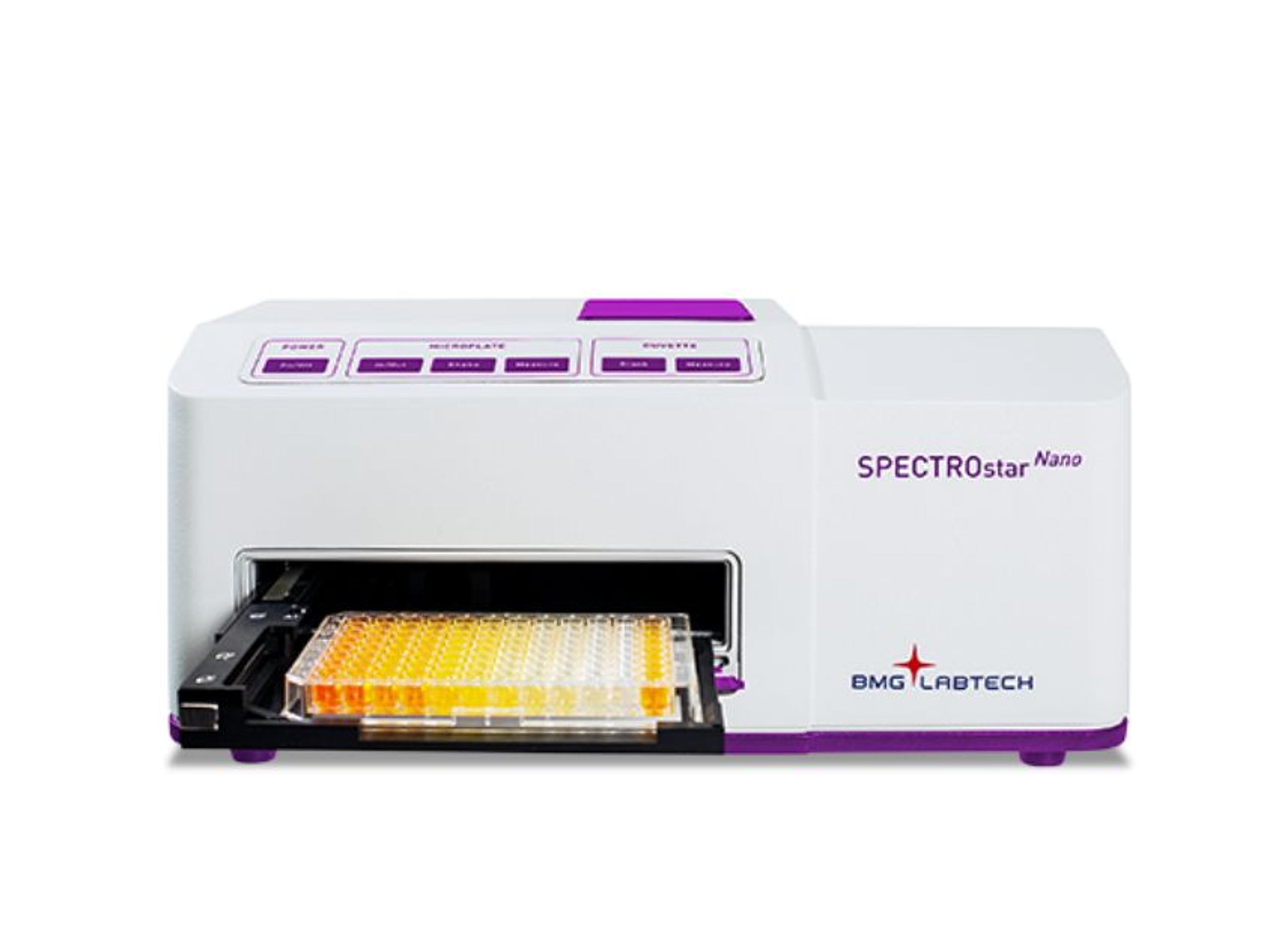
BMG LABTECH, the Microplate Reader Company, based in Ortenberg, Germany will be exhibiting at ARABLAB 2012 from March 26-29th. Visit Booth #408 to get a personal introduction to the SPECTROstar Nano and the POLARstar Omega microplate readers. The SPECTROstar Nano represents a revolution in ultra-fast, full spectrum absorbance measurements for assays such as ELISA, DNA, RNA, and protein determination. Compatible with microplates, cuvettes, and low volume samples down to 2 µL, the SPECTROstar Nano is ideal for all laboratories seeking the finest absorbance microplate reader. Discover how ultra-fast, full spectrum analysis, which is unique to BMG LABTECH readers, can improve data quality for all types of absorbance assays.

Also featured at ARABLAB 2012, the POLARstar Omega is a multidetection life science microplate reader at an affordable price. The POLARstar Omega offers all detection modes including ultra-fast, full spectrum analysis as well as AlphaScreen®/AlphaLISA®, TR-FRET, and fluorescent polarization. In addition, the POLARstar Omega now has a new accessory, the Atmospheric Control Unit or ACU, which is perfect for all types of cell-based assays. Microprocessor controlled, the ACU maintains the optimal environment for cell-based assays by independently regulating two gases, CO2 and O2.

Besides exhibiting at Booth #408, BMG LABTECH will host an onsite BIOLAB seminar (Thursday, March 29, 16:20) titled “Rapid DNA Measurements in Low Volume Samples,” which will feature the SPECTROstar Nano and the LVis Plate for low volume measurements for DNA, RNA, or protein. For further information, please visit us at ARABLAB 2012 or visit the website.
Links

Tags

ELISAEnzyme-linked immunosorbent assays (ELISA), also known as enzyme immunoassays (EIA), are used for the detection and quantification of proteins, peptides and antibodies in a sample. ELISA often comes in kit format, with pre-selected antibody pairs to detect specific proteins or biomarkers of diseases such as diabetes and obesity, or cardiovascular and neurological disorders. Detection is made possible with chemiluminescent, fluorescent or colorimetric substrates and detection instruments such as microplate / ELISA readers. Other kits available include: Enzyme-linked immunospot (ELISPOT) assays for the quantification of protein-producing cells and chemiluminescent immunoassays (CLIA) kits. Find the best ELISA kits and products in our peer-reviewed product directory: compare products, check customer reviews and receive pricing direct from manufacturers.MicroplatesMicroplates are multi-well plates used to increase the throughput of biological investigations. The number of wells microplates contain can range from 6 to 3243 wells, with the 96-well format being the most commonly used. Microplates can come tailored for a range of applications including cell culture, PCR, filtration, storage, non-binding surface, protein crystallization, as well as pre-coated, deep well and normal Standard microplates. Additionally, options for microplate colors include clear , black, white or black with clear bottom and white with clear bottom for absorbance microplate reader applications. Find the best microplates for your lab in our peer-reviewed product directory: compare products, check customer reviews and receive pricing direct from manufacturers.ProteomicsProteomics is the systemic bioinformatics study of proteins and amino acids, including their structure, size, function and identification. Tools used in proteomics include chromatography, blotting and gels, protein arrays, mass spectrometry and ELISA and associated analysis software. Analyzers and proteomic systems should be sensitive, high resolution, fast and may be automated for high-throughput.Microplate Readers / DetectorsMicroplate readers are used to automate the detection and analysis of labeled or label-free components in microplates during assays or live-cell monitoring. Microplate readers are generally distinguished by their mode of detection. Types include absorbance, luminescence, fluorescence intensity, fluorescence polarization, TRF / FRET and multimode microplate readers. Microplate readers deliver a high throughput of samples by reading multiple wells simultaneously, with the 96-well format the most commonly used. As a result, microplate readers are often used in the drug discovery, bioassays, research and pharmaceutical industries for screening applications. Microplate loading can also be automated, with robotic microplate stackers to increase throughput. Find the best microplate readers in our peer-reviewed product directory: compare products, check customer reviews and receive pricing direct from manufacturers.DNA / RNA Extraction and PurificationPurified DNA and RNA are required for numerous downstream molecular biology applications. Consequently, the importance of high-quality DNA/RNA extraction and purification equipment cannot be underestimated. Many purification kits are available and are typically optimized for nucleic acid type and source, including plasmid DNA, genomic DNA, mRNA, RNA and viral nucleic acid purification kits. Automated extraction and purification of nucleic acids can be implemented with magnetic bead separator instruments or high-throughput purification workstations. Find the best DNA/RNA extraction and purification equipment in our peer-reviewed product directory: compare products, check customer reviews and receive pricing direct from manufacturers.Protein PurificationProtein purification is a vital step in drug discovery, therapeutics, biotech and life science research. The purification process typically involves subcellular or membrane protein extraction with cell lysis kits, separation of proteins from cell debris by filtration or spin columns, and the isolation of proteins of interest from other proteins and impurities with affinity purification (including fusion protein tags and antibody binding proteins A, G and L), immunoprecipitation or chromatographic methods, such as ion exchange, size exclusion and immobilized metal affinity chromatography. All purification methods come in multiple formats for your laboratory needs, including agarose or magnetic beads, resins, columns and filter plates. Find the best protein purification equipment in our peer-reviewed product directory: compare products, check customer reviews and receive pricing direct from manufacturers.Plate ProcessingAutomated plate processing is used in microplate technologies for high-throughput, speed and efficiency. Plate processing systems include microplate handlers for moving plates, heat sealers, stackers and carousels for storage, retrieval and delivery, microplate washers and piercers. Useful features of plate processors include walk-away automation, compatibility and easy integration with microplate systems.ARABLAB