Biopharmaceuticals: Oligonucleotide analysis, regulatory compliance, and more

Explore the latest research, expert insights, and new technology driving biopharmaceutical discovery and development

4 Apr 2022

Blake Forman
Content Creator

Editorial article

Biopharmaceuticals Special Feature

As part of our latest special feature, we’ve pulled together a selection of top resources to streamline and advance your biopharmaceutical workflows.

Read on to learn about the technology optimizing analysis when characterizing complex biotherapeutics, find out how you can identify the best ion-pairing reagents for LC/MS analysis of oligonucleotides, explore the benefits of differential scanning calorimetry in vaccine development, and much more.

Plus, register for the Biopharmaceuticals Webinar Series, and catch up on all the latest webinars in the field that can benefit your research and workflows.
Harnessing the power of label-free molecular interaction analysis

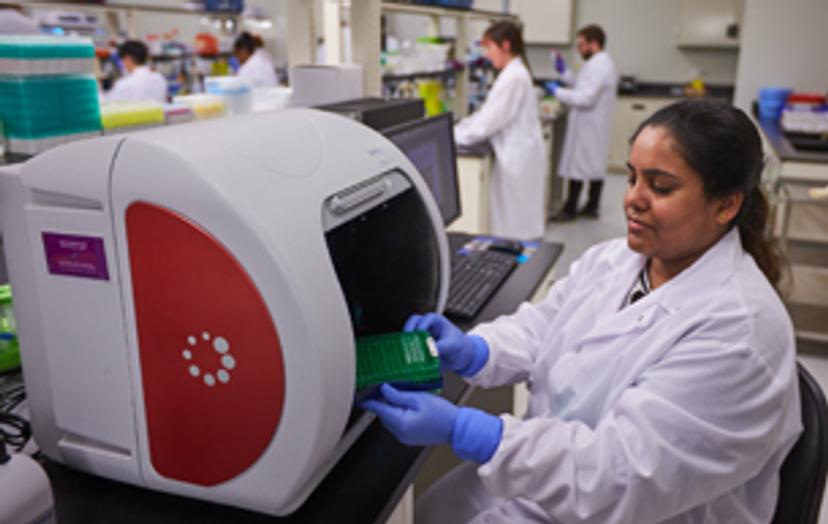
CHARACTERIZATION: Harnessing the power of label-free molecular interaction analysis

Dr. Kalhari Silva, Head of Scientific Innovation and Research at Custom Biologics, discusses the importance of binding studies in the analysis of complex biotherapeutics and how Octet BLI technology is streamlining analyses while meeting regulatory guidelines.

Read article

Optimizing LC/MS analysis of oligonucleotides

ION PAIRING: Optimize LC/MS analysis of oligonucleotides

In this application note, discover the variables associated with various ion-pairing reagents for LC/MS and learn how you can identify the best option for your oligonucleotide analyses.

Download info

Optimize and speed up vaccine development

DSC: Optimize and speed up vaccine development

In this guide, learn how differential scanning calorimetry (DSC) delivers high-standard stability and characterization data for protein subunits, viral particles, and virus-like particle vaccine candidates.

Download info

Sensitive analysis of antisense oligonucleotides

LC-HRMS: Sensitive analysis of antisense oligonucleotides

In this method, the antisense oligonucleotide Mipomersen is analyzed by LC-HRMS. Learn how the YMC-Triart C8 metal-free column enables symmetric peaks, high sensitivity, and no carry-over effects.

Download info

Water purification for QC success

REGULATORY: Water purification for QC success

Form FDA 483s are an essential tool for maintaining high standards of quality management. In this white paper, ELGA LabWater explores this topic and the important role of water purity in meeting compliance requirements.
Download info

Meet the challenges of anti-drug antibody assay development for bispecifics

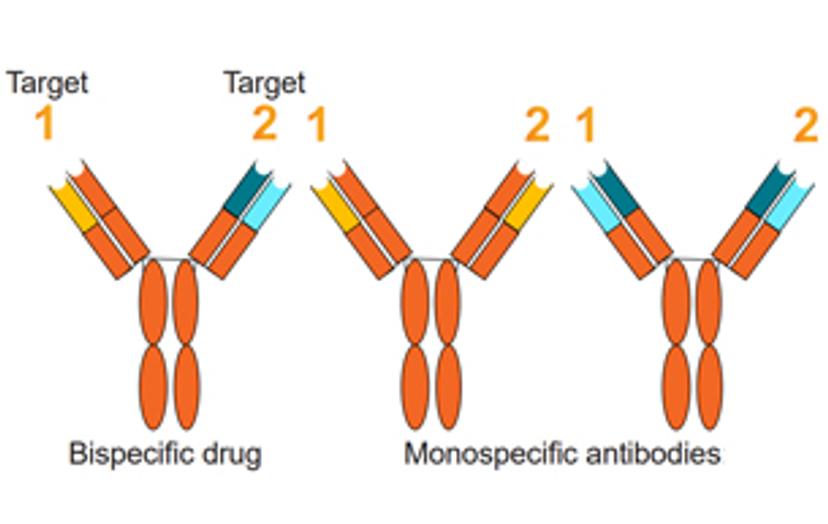
BISPECIFICS: Meet the challenges of anti-drug antibody assay development for bispecifics

This study explores the challenges in immunogenicity assay development for bispecific antibodies. Read on to learn how LGC's Drug Development Solutions scientists developed a sensitive, selective, specific, and drug-tolerant assay to meet regulatory requirements.

Download info

How biosimilars are expanding options for patient care

BIOSIMILARS: How biosimilars are expanding options for patient care

Heather Watson, Senior Manager in the Immunochemistry Department at Labcorp, explores the opportunities and challenges in biosimilar development as more biologics are going off-patent. Watson also describes why a mechanism of action (MOA)-reflective and biologically relevant assay is important in biosimilar characterization.
Read article

Method and tips to improve separation of biomolecules

(U)HPLC: Method and tips to improve separation of biomolecules

In this application eBook, Tosoh Bioscience presents 20+ methods for biotherapeutic analysis, including protein aggregation, charge isoforms, and glycosylation, as well as the determination of the drug-to-antibody ratio of antibody-drug conjugates.

Download info

Deep characterization of a CAR T-cell product

SINGLE-CELL ANALYSIS: Deep characterization of a CAR T-cell product

In this application note, explore how targeted single-cell transcriptomic profiling can help accelerate CAR T-cell therapy development by comprehensively characterizing infusion products, cell by cell.

Download info

Biopharmaceuticals Webinar Series

In this series of webinars, learn about the latest techniques and technologies streamlining biopharmaceutical discovery and development.
Overcome oligonucleotide analysis challenges with 2D-LC/MS

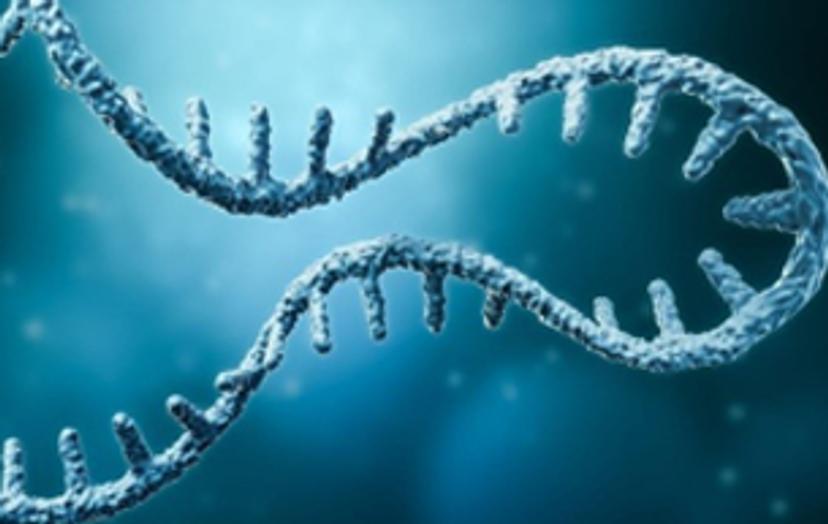
LC/MS: Overcome oligonucleotide analysis challenges with 2D-LC/MS

In this webinar on April 7, experts will discuss the common challenges associated with oligonucleotide analysis and purification and how to overcome them through 2D-LC/MS and method optimization.
Register now

Accelerating drug discovery and development with single-cell and spatial profiling

SINGLE-CELL: Accelerating drug discovery and development with single-cell and spatial profiling

Join this webinar on April 20 to learn how researchers from pharma, biotech, and translational labs are leveraging 10x Genomics technologies throughout the drug discovery process to accelerate mechanistic understanding and reduce risk.

Register now

Additional biopharmaceutical resources:

Why functional assays are crucial for biopharmaceutical development success: In this webinar, learn how reporter-gene assays, in combination with complement system assays, can be used to determine drug mechanisms of action and the expected immune response. Register now>>

Robust analytical characterization: Accurate, reliable quantitation for biotherapeutics: In this interactive guide, explore some of the chromatographic applications for critical quality attribute monitoring within the most common bioanalysis workflows. Visit interactive hub>>

Trending in biopharma: From developing vaccines for pandemics to overcoming omic workflow bottlenecks: In this top list, explore a playlist of top interviews from The Scientists’ Channel. Watch exclusive interviews with industry experts on the key to vaccine development success, the role of biomaterials in creating drug models, and more. Read article>>

How to buy microplate readers: Microplate readers/detectors are the key workhorses in many laboratories and are used extensively for applications in drug discovery and assay development. In this free eBook download, we guide you through buying a new microplate reader by providing expert insight and the information you should consider when selecting the best technology for your lab. Download eBook>>

How to buy biophysical characterization technology: In this free eBook download, we take an in-depth look at the most common techniques used to quantify and characterize biophysical interactions. Plus, explore top tips from experts for choosing the best technologies to meet your characterization needs. Download eBook>>

Your recommendations:

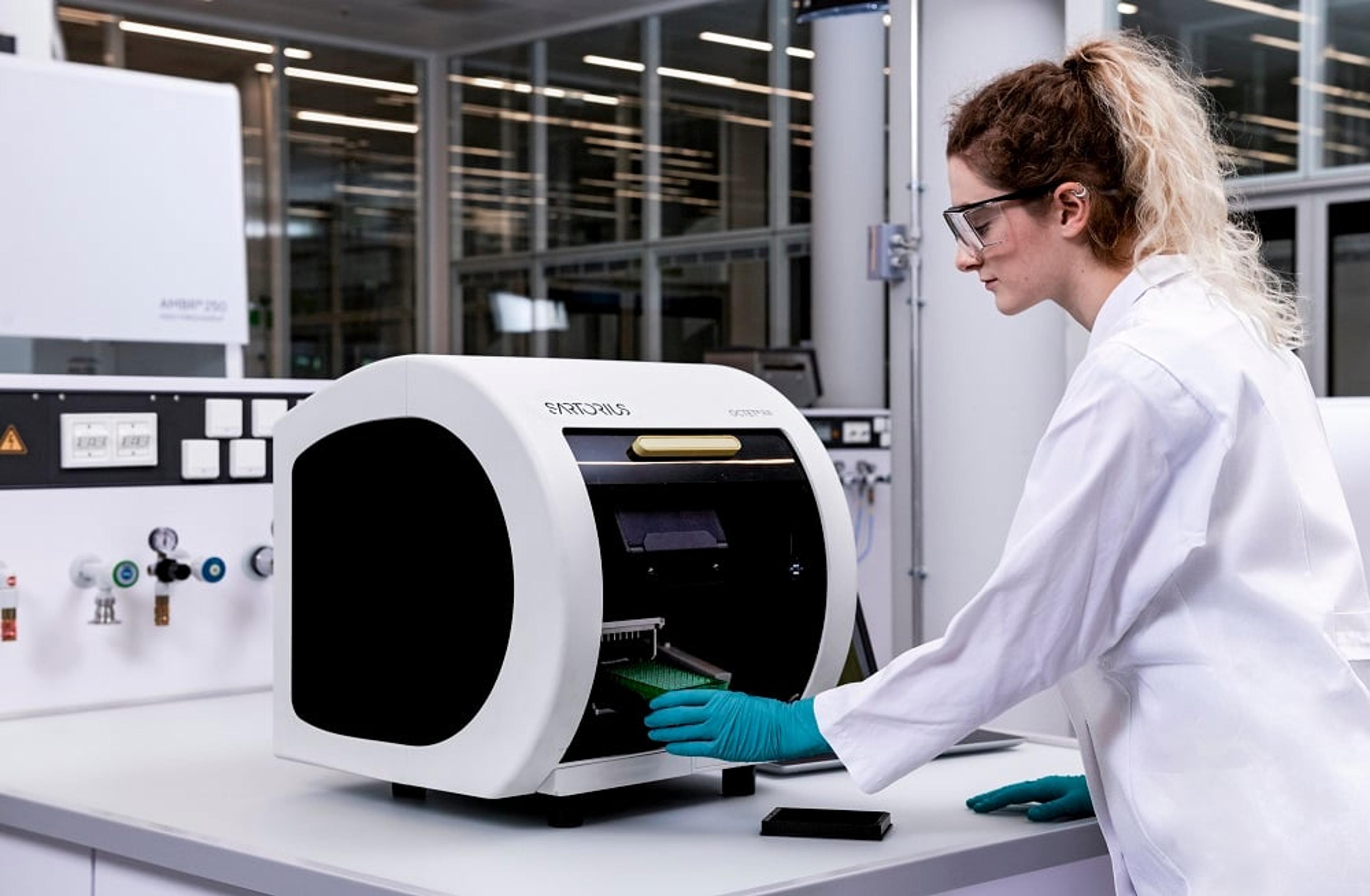
Take a look at what other researchers all over the world are saying about the latest equipment and technologies helping scientists. Here, Luke Miles, Florey Institute of Neuroscience, shares his opinion on the Octet® R8 by Sartorius.

Octet R8 by Sartorius review

Find more news and resources in our Biopharmaceuticals Special Feature>>

Chromium Single Cell Immune Profiling

10x Genomics

Chromium Single Cell Immune Profiling provides a multiomic solution to your immunology questions. Analyze full-length, paired B-cell or T-cell receptors, surface protein expression, antigen specificity, and gene expression, all from a single cell.
(0)

Links

Tags

UHPLC and HPLCHigh performance liquid chromatography (HPLC) and ultra high performance liquid chromatography (UHPLC), also known as UPLC, are analytical techniques used to separate, identify and quantitate components of complex mixtures including biological samples such as proteins and lipids as well as chemical mixtures of pesticides, drugs and oils. Both techniques are liquid chromatographic methods but differ by operating pressures (HPLC < 6000 psi < UHPLC ). Components of HPLC and UHPLC systems include columns, detectors, pumps, autosamplers and column heaters. Explore a range of UHPLC and HPLC columns for your specific sample needs including reverse phase, normal phase, ion exchange, HILIC, ion exclusion and size exclusion columns. For more specialized HPLC, explore FPLC, countercurrent LC and simulated moving bed systems. Find the best UHPLC and HPLC equipment in our peer reviewed product directory: compare products, check customer reviews and receive pricing direct from manufacturers.LC-MSLC-MS (liquid chromatography-mass spectrometry) systems and equipment are used for separation and quantitative analysis of complex mixtures, combining liquid chromatography and mass spectrometry. Quantify proteins, contaminants, pesticides or screen for drug metabolites with a high level of sensitivity. LC-MS systems and equipment include reverse phase, normal phase and specialized columns integrated with various MS detectors such as time-of-flight (TOF), quadrupole, orbitrap or ion trap mass analyzers. LC-MS/MS instruments equipped with a qTOF or triple quadrupole analyzer give greater sensitivity and resolving power to your analysis. Find the best LC-MS equipment in our peer-reviewed product directory: compare products, check customer reviews and receive pricing direct from manufacturers.Combinatorial ChemistryCombinatorial chemistry, also known as combichem, is a technique used in drug discovery to create libraries of structurally related compounds. A library is generated by synthesis with a chemical reactor system or by computer-based modeling of compound combinations. When undertaking combinatorial chemistry consider reagents, buffers, resins and standards.ProteomicsProteomics is the systemic bioinformatics study of proteins and amino acids, including their structure, size, function and identification. Tools used in proteomics include chromatography, blotting and gels, protein arrays, mass spectrometry and ELISA and associated analysis software. Analyzers and proteomic systems should be sensitive, high resolution, fast and may be automated for high-throughput.Microplate Readers / DetectorsMicroplate readers are used to automate the detection and analysis of labeled or label-free components in microplates during assays or live-cell monitoring. Microplate readers are generally distinguished by their mode of detection. Types include absorbance, luminescence, fluorescence intensity, fluorescence polarization, TRF / FRET and multimode microplate readers. Microplate readers deliver a high throughput of samples by reading multiple wells simultaneously, with the 96-well format the most commonly used. As a result, microplate readers are often used in the drug discovery, bioassays, research and pharmaceutical industries for screening applications. Microplate loading can also be automated, with robotic microplate stackers to increase throughput. Find the best microplate readers in our peer-reviewed product directory: compare products, check customer reviews and receive pricing direct from manufacturers.High-Content ScreeningHigh-content screening (HCS), also known as high-content analysis (HCA), is a high-throughput technique used in drug discovery to identify substances that alter the phenotype of cells. HCS uses fluorescent microscopic imaging and automated image analysis to investigate cellular events such as apoptosis, cell viability, GPCR activation, oxide production, neurite outgrowth, and cell signaling. Find the best fluorescent labeling reagents, cellular assays, and high-content imaging systems in our peer-reviewed product directory: compare products, check customer reviews and receive pricing direct from manufacturers.Biopharmaceutical AdvancesBiopharmaceutical advances follow the development of pharmaceuticals derived from biotechnology, also known as biotechnology medicines. Biopharmaceuticals may be produced from cell lines, plants, or microbial cells. Important considerations of biopharmaceutical use include application, cost, production process and purification.Automated Liquid HandlingAutomated liquid handling equipment is used to mix, dilute and dispense allotted volumes of liquid into microplates and other vessels automatically. The robotic, liquid handling arms can dispense from single channel to 3456 multichannel as well as operate nanoliter dispensing, enabling high throughput of samples. Find the best automated liquid handlers in our peer-reviewed product directory: compare products, check customer reviews and receive pricing direct from manufacturers.Drug DeliveryDrug Delivery refers to dosage form, route of administration, formulations, technologies, and systems for transporting a pharmaceutical compound in the body as needed to safely achieve its desired therapeutic effect. Drug delivery is often approached via the biopharmaceutical or small molecule drug's formulation, but it may also involve medical devices or drug-device combination products. Considerations include instrumentation, software and services. RegulatoryPharmaceutical regulations impact on all areas of drug development, manufacture and control and supply. Services are provided from the early stages of drug development and clinical trials through to dossier submission, approval and marketing. Regulatory also includes submission of analytical studies from the pharmaceutical product and safety. OligosBiopharmaceuticalsBiopharmaceuticals are proteins and other compounds (such as nucleic acids) produced by living organisms that have uses as therapeutics or for in vivo diagnostics. The most well known example of a biopharmaceutical product, and the first to be approved for therapeutic use, was recombinant human insulin.Single Cell AnalysisSingle-cell analysis involves studying individual cells to gain insights into their behavior, gene expression, and function. This approach is valuable in cancer research, stem cell biology, and immunology. Explore single-cell analysis products in our peer-reviewed product directory; compare products, check reviews, and get pricing directly from manufacturers.BiosimilarsBiosimilars are very similar versions of approved and authorized medicines. Clinically inactive components will have minor differences, but there are no significant differences between the biosimilar and the original product in terms of potency, purity and safety.BiotherapeuticsBiotherapeutics are proteins and other compounds (such as nucleic acids) produced by living organisms that have uses as therapeutics or in <i>in vivo</i> diagnostics. The most well-known example of a biotherapeutic product, and the first to be approved for therapeutic use, was recombinant human insulin.