
Better Understanding of Scaffold Proteins and Their Therapeutic Potential
Modulation of cell signaling pathways offers an exciting avenue in the treatment of disease but first we need to learn the basics
6 Apr 2017
Editorial article

Researchers at the Eindhoven University of Technology using the Tecan Spark® Multimode Microplate Reader. Image courtesy of Anniek den Hamer

Anniek den Hamer, graduate student of Professor Luc Brunsveld, Eindhoven University of Technology
...you can perform measurements in one hour compared to other assays that can take one day, so that’s a big difference.
Anniek den Hamer The Eindhoven University of Technology
The Eindhoven University of Technology is the stage for a host of groundbreaking research into synthetic biology and the use of scaffold proteins in protein signaling networks. Here, Anniek den Hamer, graduate student of Professor Luc Brunsveld, Faculty of Biomedical Engineering and part of the chemical biology group, is attempting to engineer small synthetic signaling networks using 14-3-3 scaffold proteins as a small molecule-controlled binding platform. SelectScience® spoke to Anniek to discover how these scaffold proteins can be used for therapeutic applications and to learn about the technology enabling her research.
This research is a focus point for the group, which is collectively working to gain a better understanding of protein-protein interactions and how they can be harnessed for therapeutic or diagnostic purposes, Anniek explained. 14-3-3 scaffold proteins are part of a family of natural dimeric proteins, which are found commonly in humans and eukaryotes. Able to regulate the amplitude, speed, sensitivity and specificity of signal transduction, scaffold proteins can allow engineering of new protein signaling pathway behaviors by mediating pathway regulation and feedback1. Cell signaling is a vital communication mechanism that governs the activities of a cell and it is errors in these pathways that are responsible for a variety of diseases, such as autoimmunity and cancer. Therefore, it is believed that engineering of scaffold proteins influential to these pathways may offer a promising tool for bottom-up synthetic biology to treat disease.
Anniek continued by explaining that their ability to modulate cell signaling pathways with therapeutic effect had been demonstrated by other members of the group, who have shown that 14-3-3 proteins could be useful in the treatment of cystic fibrosis. Interactions between 14-3-3 proteins and cystic fibrosis transmembrane conductance regulator (CFTR) have been found to increase chloride transport across cell membranes, which is significant as cystic fibrosis results in the dysfunctional transport of anions such as chloride. This modulation of chloride transport may offer a therapeutic approach to the treatment of cystic fibrosis2.
The collective focus of the group facilitates a lot of collaboration, Anniek commented, enabling the sharing of findings to further everyone’s research efforts. Anniek’s work aims to gain a better understanding of scaffold protein functioning. With better understanding, it may be possible to reengineer proteins that can permit remote ON/OFF switching of signaling pathways, when induced by a small molecule. This ability has a wide range of applications, spanning from environmental sensing and disease diagnosis to chemical bioproduction3.

The chemical biology group at the Eindhoven University of Technology. Image courtesy of Anniek den Hamer
A typical day’s work for Anniek revolves around the expression and purification of scaffold proteins and then performing assays to see if the 14-3-3 proteins are able to be used in reaction networks/signaling networks. To facilitate this analysis, Anniek relies on the Tecan Spark® Multimode Microplate Reader - “I use the Tecan Microplate Reader a LOT,” she added. Meeting the demands of a multidisciplinary lab requires a versatile instrument and Anniek explained that the Spark Microplate Reader is used mainly for fluorescence intensity measurements and bioluminescence measurements, but also for absorbance or fluorescent polarization. A key benefit of this technology is the speed. “The plate reader is much faster as, with 96-well plates, you can perform measurements in one hour compared to other assays that can take one day, so that’s a big difference,” she explained.
The work of Anniek and the group is the first ever example of small molecule-induced pathway inhibition for the 14-3-3 scaffold, demonstrating its significant potential for modulating synthetic signaling systems. So far, the work has been performed on a small scale, however, Anniek concluded that the future goal is “to make a synthetic signaling network with proteins”. This would be a big step forward as a large-scale synthetic signaling network would serve as an invaluable model to design and develop new treatments for numerous diseases.
1. den Hamer A, Lemmens L, Nijenhuis M et al. Small-Molecule-Induced and Cooperative Enzyme Assembly on a 14-3-3 Scaffold. ChemBioChem. 2016;18(3):331-335. doi:10.1002/cbic.201600631.
2. Stevers L, Lam C, Leysen S et al. Characterization and small-molecule stabilization of the multisite tandem binding between 14-3-3 and the R domain of CFTR. Proceedings of the National Academy of Sciences. 2016;113(9):E1152-E1161. doi:10.1073/pnas.1516631113.
3. Bradley R, Wang B. Designer cell signal processing circuits for biotechnology. New Biotechnology. 2015;32(6):635-643. doi:10.1016/j.nbt.2014.12.009.
Related products
Request Quote for All Products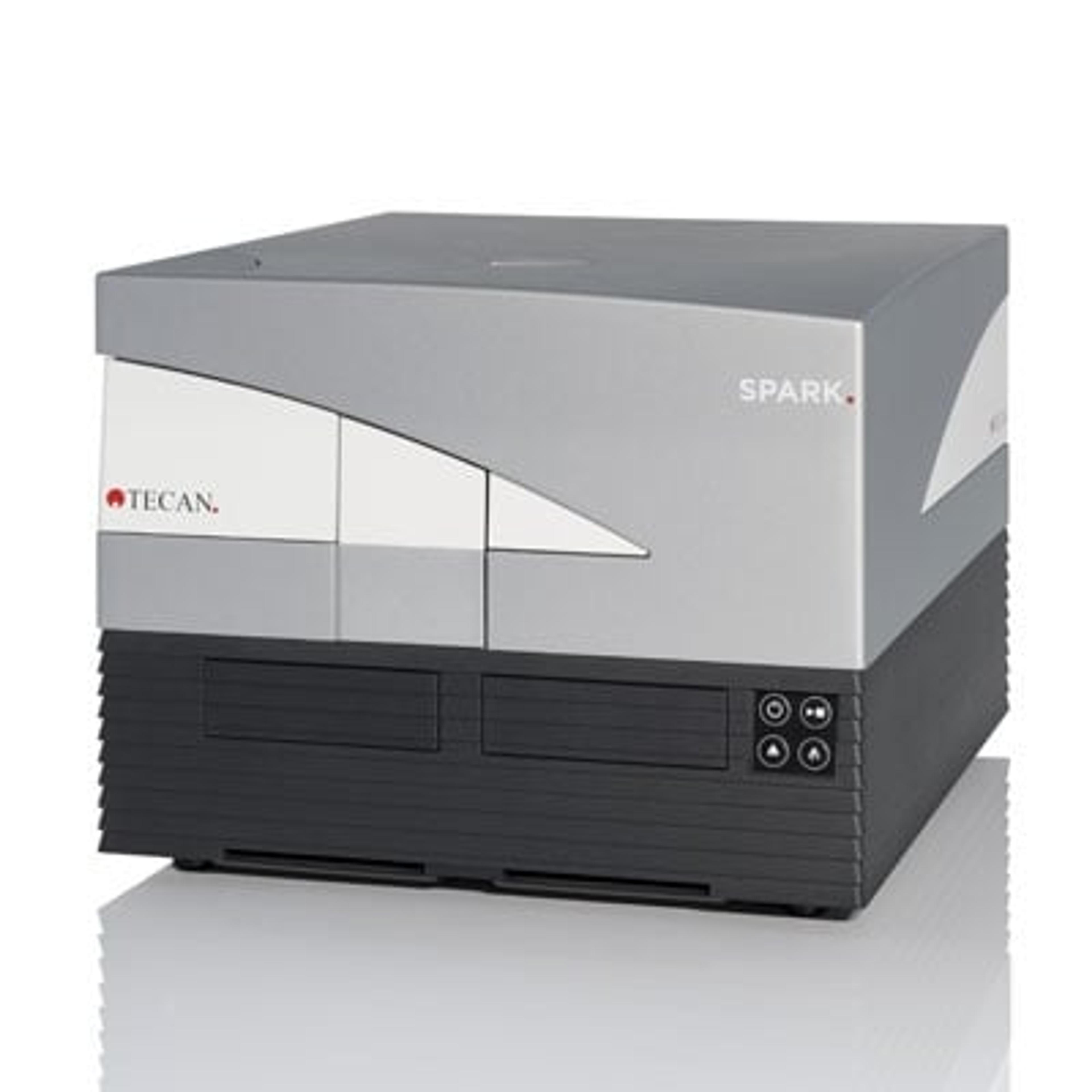
Spark® Multimode Microplate Reader
TecanIncrease your productivity for advanced research and drug discovery with Spark, the first multimode microplate reader with integrated cooling.