Attending LabAutomation 2009 in Palm Springs?

16 Jan 2009
Samantha Rosoman
Campaign Coordinator

Product news

Automating AlphaLISA with JANUS PLUS Two New Detection Platforms from PerkinElmer

Learn about the no-wash, user-friendly AlphaLISA® technology and how easily you can automate your assay with the JANUS® Automated Workstation! JANUS® offers flexible system sizes, configurations and integration capabilities for full walk-away AlphaLISA assay automation to increase your productivity and throughput.

PLUS:
Learn about the capabilities of the newest multilabel detection platform, for AlphaLISA / AlphaScreen technology at an affordable price for any lab budget.
Hear more about the newest assay development tool for flash luminescence based dual luciferase and aequorin assays!

Don’t miss PerkinElmer’s free Industry workshop at LabAutomation 2009 and learn about the latest new detection technologies from PerkinElmer

Tuesday January 27th, 2009, from 12:30 to 2:00 in Mesquite B room at the Convention Center
The workshop is free but space is limited so come early to secure your seat!
No registration is needed for this session. Lunch will be provided.

Be sure to stop by the booth #427 to see all that’s new from PerkinElmer!

AlphaLISA

Revvity

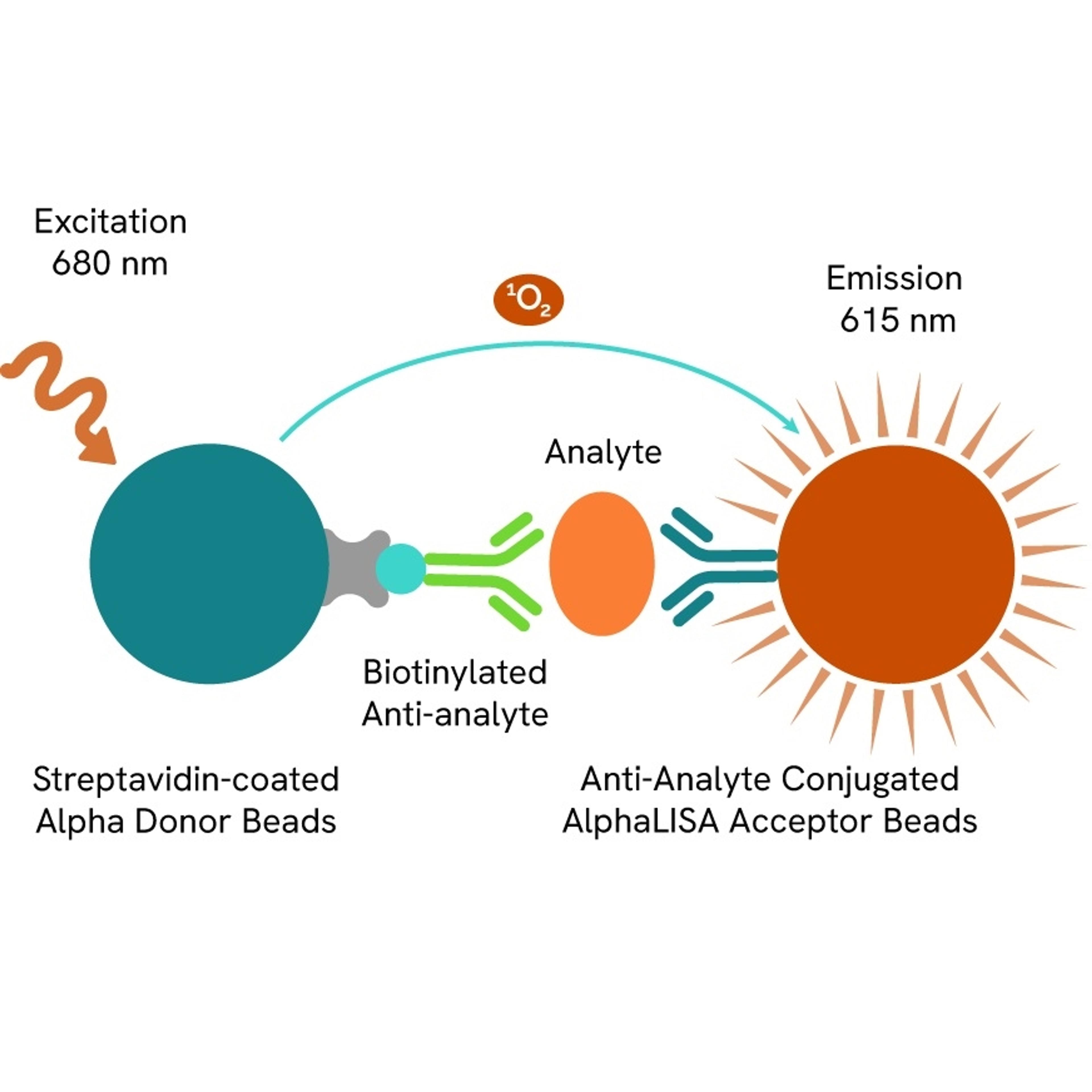
Alpha is a bead-based, no-wash luminescent technology. When Alpha Donor and Acceptor beads are brought together through binding to target, a cascade of chemical reactions is set in motion, creating an amplified signal. These versatile beads are conjugated with various biomolecules that enable detection of unique biological events, offering maximum flexibility.

(1)

Links

Tags

ELISAEnzyme-linked immunosorbent assays (ELISA), also known as enzyme immunoassays (EIA), are used for the detection and quantification of proteins, peptides and antibodies in a sample. ELISA often comes in kit format, with pre-selected antibody pairs to detect specific proteins or biomarkers of diseases such as diabetes and obesity, or cardiovascular and neurological disorders. Detection is made possible with chemiluminescent, fluorescent or colorimetric substrates and detection instruments such as microplate / ELISA readers. Other kits available include: Enzyme-linked immunospot (ELISPOT) assays for the quantification of protein-producing cells and chemiluminescent immunoassays (CLIA) kits. Find the best ELISA kits and products in our peer-reviewed product directory: compare products, check customer reviews and receive pricing direct from manufacturers.MicroplatesMicroplates are multi-well plates used to increase the throughput of biological investigations. The number of wells microplates contain can range from 6 to 3243 wells, with the 96-well format being the most commonly used. Microplates can come tailored for a range of applications including cell culture, PCR, filtration, storage, non-binding surface, protein crystallization, as well as pre-coated, deep well and normal Standard microplates. Additionally, options for microplate colors include clear , black, white or black with clear bottom and white with clear bottom for absorbance microplate reader applications. Find the best microplates for your lab in our peer-reviewed product directory: compare products, check customer reviews and receive pricing direct from manufacturers.Gel Doc / Image AnalysisGel documentation (gel doc) or gel imaging systems are used for the analysis of proteins, antibodies and nucleic acid immobilized in polyacrylamide or agarose gels, membranes or microarrays. Explore a range of a gel imaging systems, densitometers, scanners, transilluminators or UV lamp + CCD cameras for your image analysis solutions. Colorimetric, fluorescent and/or radioisotopic samples can be visualized and documented for further analysis. See gel doc / Image analysis software for quantitative 1D and 2D analysis of your samples. Find the best gel doc / image analysis products in our peer-reviewed product directory: compare products, check customer reviews and receive pricing direct from manufacturers.Microplate Readers / DetectorsMicroplate readers are used to automate the detection and analysis of labeled or label-free components in microplates during assays or live-cell monitoring. Microplate readers are generally distinguished by their mode of detection. Types include absorbance, luminescence, fluorescence intensity, fluorescence polarization, TRF / FRET and multimode microplate readers. Microplate readers deliver a high throughput of samples by reading multiple wells simultaneously, with the 96-well format the most commonly used. As a result, microplate readers are often used in the drug discovery, bioassays, research and pharmaceutical industries for screening applications. Microplate loading can also be automated, with robotic microplate stackers to increase throughput. Find the best microplate readers in our peer-reviewed product directory: compare products, check customer reviews and receive pricing direct from manufacturers.Sample ManagementSample management systems include sample storage devices such as freezers and plate storers, sample environment enclosures and sample organization, retrieval and sorter systems. Useful system features include high-throughput, automation, robotic arms, automated liquid handling and associated database systems. Accessories in sample management include barcode scanners, heat sealers and tubes.Cell-Based AssaysCell-based assays are used to monitor the presence, quantity and activities of a desired cellular analyte including drug molecules or biomarkers. This can reveal information on cell health (apoptosis, cytotoxicity, viability and proliferation assays), cell metabolism, cell migration and cell signaling mechanisms. Find the best cell-based assay products, kits and equipment with our peer reviewed product directory: compare products, check customer reviews and receiving pricing direct from manufacturers.BiomarkersBiomarkers are biological markers which can be measured and evaluated to indicate a biological state. The use of biomarkers in research and diagnosis can indicate a normal or disease state or drug response of cells / tissues. Biomarkers include genetic markers, cell surface markers such as antigens, antibodies or receptors and secreted molecules such as cytokines. An assay system is required for identification of biomarkers. :Robotic InstrumentsRobotic instruments can be used for high-throughput automation of many lab processes. Such processes use instruments for assays like cell based assays and ELISA, for sample preparation like shakers, centrifuges and incubators, and for analysis such as sequencing and western blot analyzers. Useful features of robotic instruments include speed, reproducibility, barcode readers, software and automation.Plate ProcessingAutomated plate processing is used in microplate technologies for high-throughput, speed and efficiency. Plate processing systems include microplate handlers for moving plates, heat sealers, stackers and carousels for storage, retrieval and delivery, microplate washers and piercers. Useful features of plate processors include walk-away automation, compatibility and easy integration with microplate systems.Automated Liquid HandlingAutomated liquid handling equipment is used to mix, dilute and dispense allotted volumes of liquid into microplates and other vessels automatically. The robotic, liquid handling arms can dispense from single channel to 3456 multichannel as well as operate nanoliter dispensing, enabling high throughput of samples. Find the best automated liquid handlers in our peer-reviewed product directory: compare products, check customer reviews and receive pricing direct from manufacturers.