
AB SCIEX Improves Food Safety with New Method to Identify Markers for Horse Meat and the Banned Veterinary Drug Residue Phenylbutazone
23 May 2013Product news
AB SCIEX, a global leader in analytical technology, today announced that its scientists have developed a new method for detecting horse tissue present in meat samples. This is in response to recent reports, including the Food Standards Agency’s announcement earlier this year, that horse and pig DNA had been identified in beef products sold in several supermarket chains in Europe.
The new AB SCIEX method, which is based on LC/MS/MS (liquid chromatography / tandem mass spectrometry), represents a novel, more accurate approach to meat speciation. It detects the protein markers distinct to specific meat species and confirming the presence of a particular species in a sample by direct detection. The method also enables laboratories to detect veterinary drug residues in the same analysis.
While the method was optimized to identify horse tissue contamination in beef samples, it may also be adapted to detect peptide markers of numerous different animal types simultaneously. Ultimately, the method has the power to identify horse meat that may be present in other tissue samples (such as pork, beef or lamb) by its unique protein markers.
“Our new method shows a clear role for LC/MS/MS in meat speciation, giving scientists the most reliable results for identification of horse meat in food,” said Vincent Paez, Sr. Director for Food and Environmental at AB SCIEX. “It further demonstrates our commitment to helping companies and governments improve food safety and verify food authenticity.”
The horse meat markers that AB SCIEX scientists identified have been independently verified by research scientists at the University of Münster (Prof. Dr. Hans-Ulrich Humpf, Dr. Jens Brockmeyer and Christoph von Bargen). In addition, AB SCIEX scientists used the method in a recent LGC Standards proficiency testing scheme, confirming that the method can easily detect horse meat in beef at levels of 10% with no false positives. The method was then adapted to detect horse meat at levels as low as 1% in beef samples, making the method detection limits comparable to those achieved with existing methodologies such as polymerase chain reaction (PCR) and enzyme-linked immunosorbent assay (ELISA) techniques.
The AB SCIEX mass spectrometry-based method offers a more accurate and reliable approach to meat speciation than PCR, which must detect the animal’s DNA, or ELISA, which must detect the intact animal proteins ‒ both of which have limitations. Additionally, this method is an improvement over other indirect LC/MS/MS-based methods, which target veterinary drug residues rather than the targeted animal proteins themselves. This new approach, however, does allow for the detection of veterinary drug residues in the same analysis, which is not possible by ELISA or PCR.
The new method was developed on an AB SCIEX LC/MS/MS platform, consisting of an AB SCIEX QTRAP® 5500 LC/MS/MS system coupled with an Eksigent ekspert™ micro LC system. The QTRAP® 5500 system uses multiple reaction monitoring (MRM) to detect each peptide and is then capable of providing sequence information by acquiring a product ion scan for each triggered MRM, which can be used to confirm the peptide’s identity. This gives greater confidence for food testing when distinguishing between species. This is especially significant because, for example, horse and beef proteins may differ by as little as one or two amino acids.
“LC/MS/MS will allow laboratory scientists to analyze a single meat sample for 15-20 different animal species in a single run, with very little chance of false positives,” said Stephen Lock, PhD, Technical Market Applications Manager, Food & Environmental, AB SCIEX. “Future work is planned to add more markers to the method and further increase the number of species detected with this approach.”
As a leader in next-generation food testing technologies, AB SCIEX has previously developed similar methods for protein screening in food, including new techniques for detecting allergens such as eggs, milk, sesame seeds, nuts, and mustard simultaneously in food samples, as well as more recent work investigating casein detection in wine.
To download the technical note with the horse meat detection method, click here.
Related products
Request Quote for All Products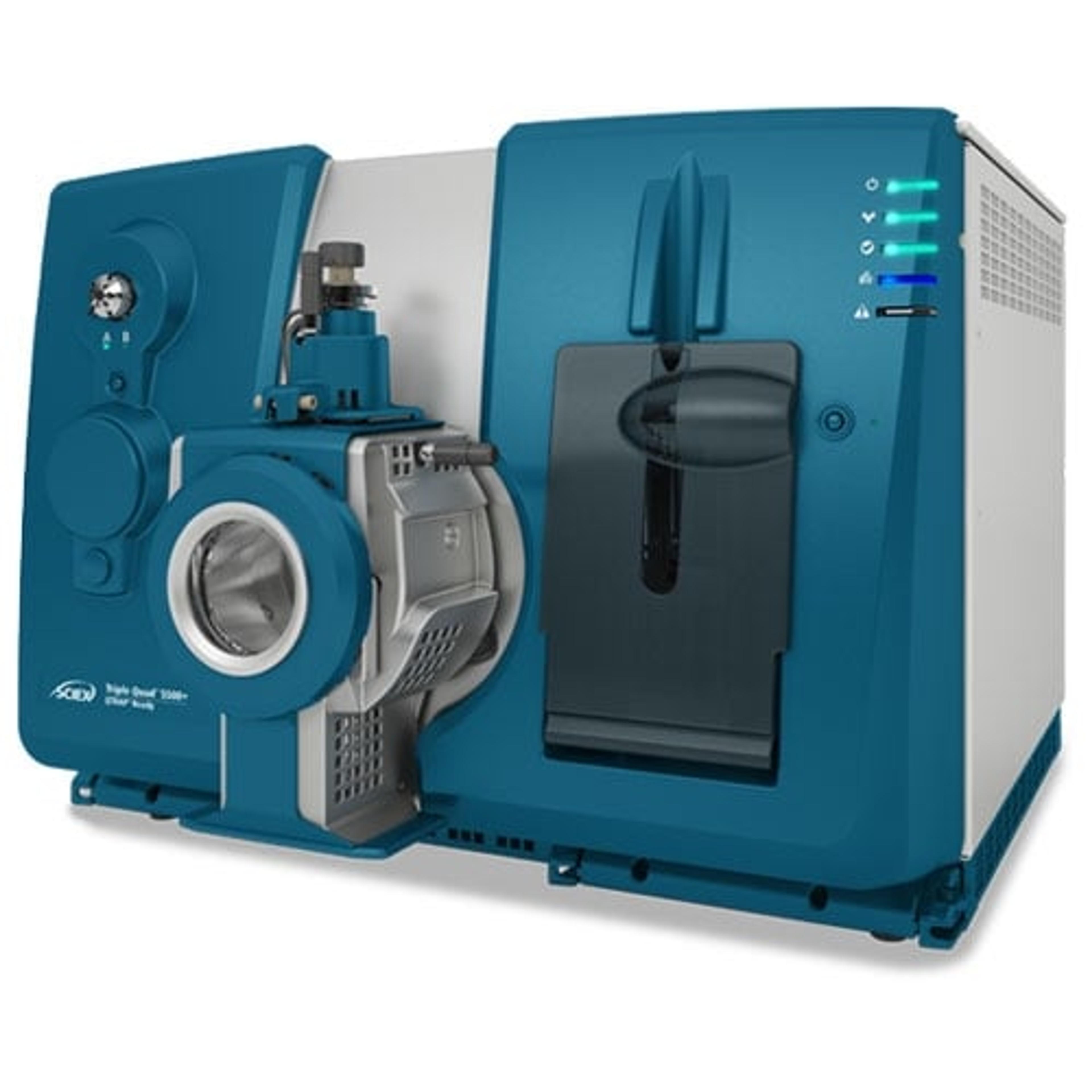
Triple Quad 5500+ system
SCIEXThe Triple Quad 5500+ system is designed to conquer your laboratory’s most complex workflows and opportunities. This LC-MS/MS system promises to provide the sensitivity and performance to meet analytical and regulatory demands for low-level trace detection with ease.