AACR 2019: 7 New Technologies to Combat Cancer

SelectScience reports on the top technologies launched at the American Association for Cancer Research (AACR) annual meeting, in Atlanta, USA

4 Apr 2019
Frankie MacDonald
Administrator / Office Personnel

Editorial article

One of the largest events in cancer science, the AACR annual meeting 2019 fosters global collaboration and education. This year, the scientific program established a focus on population prevention and individualized patient care, alongside a sensational display of the world’s most innovative technologies. Here, SelectScience editors report on the top new tech showcased on the show floor – enabling scientists to push beyond the boundaries of modern-day cancer medicine.

Matt McArdle, SelectScience Associate Editor, at AACR 2019
SelectScience associate editor, Dr. Matt McArdle reports from AACR 2019 and gets the latest on upcoming science and technology set to impact cancer research

1. Single-Stranded DNA Service by GenScript

With immunotherapy the most emergent and exciting therapeutic tool in oncology, the potential for gene therapy is quickly becoming realized. Debuted in Atlanta, the new ssDNA service by GenScript has potential to lift gene editing, such as CRISPR, to more precise and efficient levels. By replacing more conventional double stranded DNA repair systems, fewer off-target or incorrect insertions are reported. This hold great promise for more effective T cell manipulation, for example.

2. exoRNeasy Midi and Maxi Kits by QIAGEN

Liquid biopsies have potential to transform patient therapeutic and monitoring regimens – enabling clinicians to tackle tumor plasticity before it’s had a chance to take control. QIAGEN announced at AACR the launch of two novel non-invasive kits that utilize membrane-affinity technology to isolate extracellular vesicles. With ability to access RNA from common biofluids, and in just one hour, this technology could vastly improve patient experience and accelerate clinical decision making.

3. Maxpar® Direct™ Immune Profiling System by Fluidigm

With increasing pressures to accelerate the drug discovery pipeline, scientists require more results, from less sample. Introducing possibly one of the most advanced immune profiling solutions yet, Fluidigm have certainly addressed this need. This new technology, used in concert with the cyTOF® platform, enables quantification of 37 different types of immune cells from human peripheral blood cells in single-tube workflow.

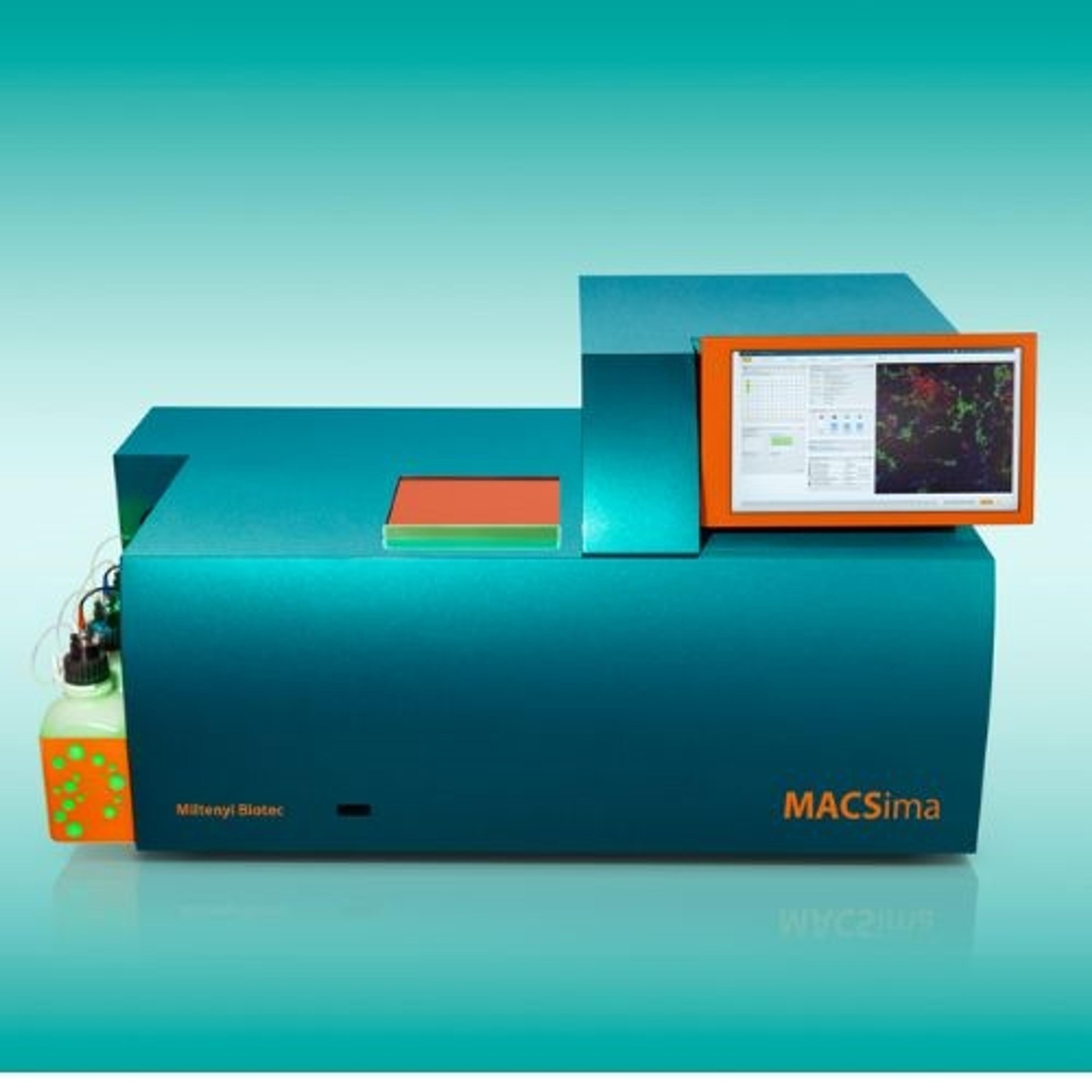
4. MACSima™ Imaging Platform by Miltenyi Biotec

The arrival of high-content imaging technology to the market has considerably advanced the fields’ understanding of cancer cell behavior and interactions in 3D. Now, we’ve entered an era of ‘ultra-high content imaging’ with the next level of automated, iterative fluorescence analysis that facilitates deep phenotypic analysis. With the MACSima™ Platform, researchers can now simultaneously analyze hundreds of markers in one run.

5. OrganoPlate by MIMETAS

Presenting the power of miniaturization, MIMETAS showcased its pioneering technologies making 3D culture on a chip, a reality. The company wowed exhibition attendees with the first-of-its kind 3D chip to vascularize tissues from spheroids, organoids and patient-derived material with microfluidics

6. Arcturus Cellect Laser Capture Microdissection (LCM) System by Thermo Fisher Scientific

Among a suite of new products, Thermo Fisher Scientific demonstrated their new LCM system, capable of isolating specific cells of interest with a unique combination of infrared and ultraviolet lasers. Assessing heterogenous cell populations in tumors is integral to development of novel therapeutics, and this new technology could significantly improve the accuracy of downstream proteomic and genomic analysis – leading to a better understanding of the way cancer works.

7. LC-MS and DESI Technologies by Waters Corporation

As leaders in mass spectrometry technology, Waters Corporation showcased its innovative solutions for uncovering the deeper biomolecular mechanisms of cancer, which certainly caught the attention of exhibitor attendees. From DESI imaging, to pan tumor omics, Waters illustrated how its mass spec platforms have the power to quantify central pathways in cancer progression and map tumors in 3D.

Visit the SelectScience AACR 2019 page for more news, video interviews, and downloadable content >>
Links

Tags

Cell Adhesion AssaysCell adhesion assays are used to quantitate attachment and analyze the molecular mechanisms for extracellular matrix adhesion, cell migration and sensitivity to inhibitors. Find the best cell adhesion assay equipment in our peer-reviewed product directory: compare products, check customer reviews and receive pricing direct from manufacturers.Cell / Tissue CultureCell culture or tissue culture is used to study the biology of cells or tissues and to isolate cellular products in an environment which can be manipulated and well defined. Accurately control your culture environment with bioreactors or culture incubators, bind your cells to a surface or together with an extracellular matrix. Distinguish cell types with differential media or proliferate cells with certain characteristics using selective media. Enrich your media with supplements such as growth factors, sera and vitamins. Find the best cell and tissue culture products, kits and equipment in our peer-reviewed product directory: compare products, check customer reviews and receive pricing direct from manufacturers.Cell-Based AssaysCell-based assays are used to monitor the presence, quantity and activities of a desired cellular analyte including drug molecules or biomarkers. This can reveal information on cell health (apoptosis, cytotoxicity, viability and proliferation assays), cell metabolism, cell migration and cell signaling mechanisms. Find the best cell-based assay products, kits and equipment with our peer reviewed product directory: compare products, check customer reviews and receiving pricing direct from manufacturers.ImmunologyImmunological techniques measure and characterize immune responses. Immunology kits and analysis systems often use techniques such as ELISA, radioimmunoassay (RIA) and immunodiffusion assays, Immunohistochemistry, and flow cytometry. Immunologists use equipment such as flow Cytometers, plate readers, plate washers and fluorescent microscopes.Cancer CellsCancer cells are abnormal cells that divide uncontrollably, leading to the formation of tumors and the spread of cancer. Studying cancer cells is crucial for developing new treatments and understanding tumor biology. Explore cancer cell research products in our peer-reviewed product directory; compare products, check reviews, and get pricing directly from manufacturers.Cancer DiagnosticsThere are a wide variety of diagnostic tests for cancer available, and this range continues to expand as our knowledge of cancer improves. Current diagnostic methods include biopsy, imaging and blood tests for known biomarkers. New methods in research development include liquid biopsies and cancer breathalyzers.MicrofluidicsMicrofluidics is the science of manipulating small volumes of fluids in micro-sized channels. It is widely used in diagnostics, drug development, and lab-on-a-chip technologies. Microfluidic devices can enable rapid, cost-effective, and high-throughput analysis of biological samples. Browse our peer-reviewed product directory to find the best microfluidic devices, compare products, check reviews, and get pricing directly from manufacturers.Gene EditingGene editing is the precise alteration to an organism's DNA, with CRISPR being the most well-known technique. It is used in a wide range of applications, including the development of disease models and gene therapy, and crop improvement. Browse our peer-reviewed product directory to find the best gene editing solutions, compare products, check reviews, and get pricing directly from manufacturers.ImmunophenotypingAACRThe American Association for Cancer Research (AACR) is a leading organization focused on cancer research and treatment. It provides a platform for scientists, healthcare professionals, and industry leaders to share knowledge and collaborate in the fight against cancer.Cancer ResearchAlthough cancer is often referred to as a single condition, it actually consists of more than 100 different diseases. Microscopy, mass spectrometry, high throughput sequencing and flow cytometry are some of the most common techniques employed in cancer research labs.