A Big Win for Small Particles: A SPECTROstar Nano awarded to the University of Helsinki for Nanoparticle Research

28 Jun 2011
bridget bridget
Laboratory Director

Product news

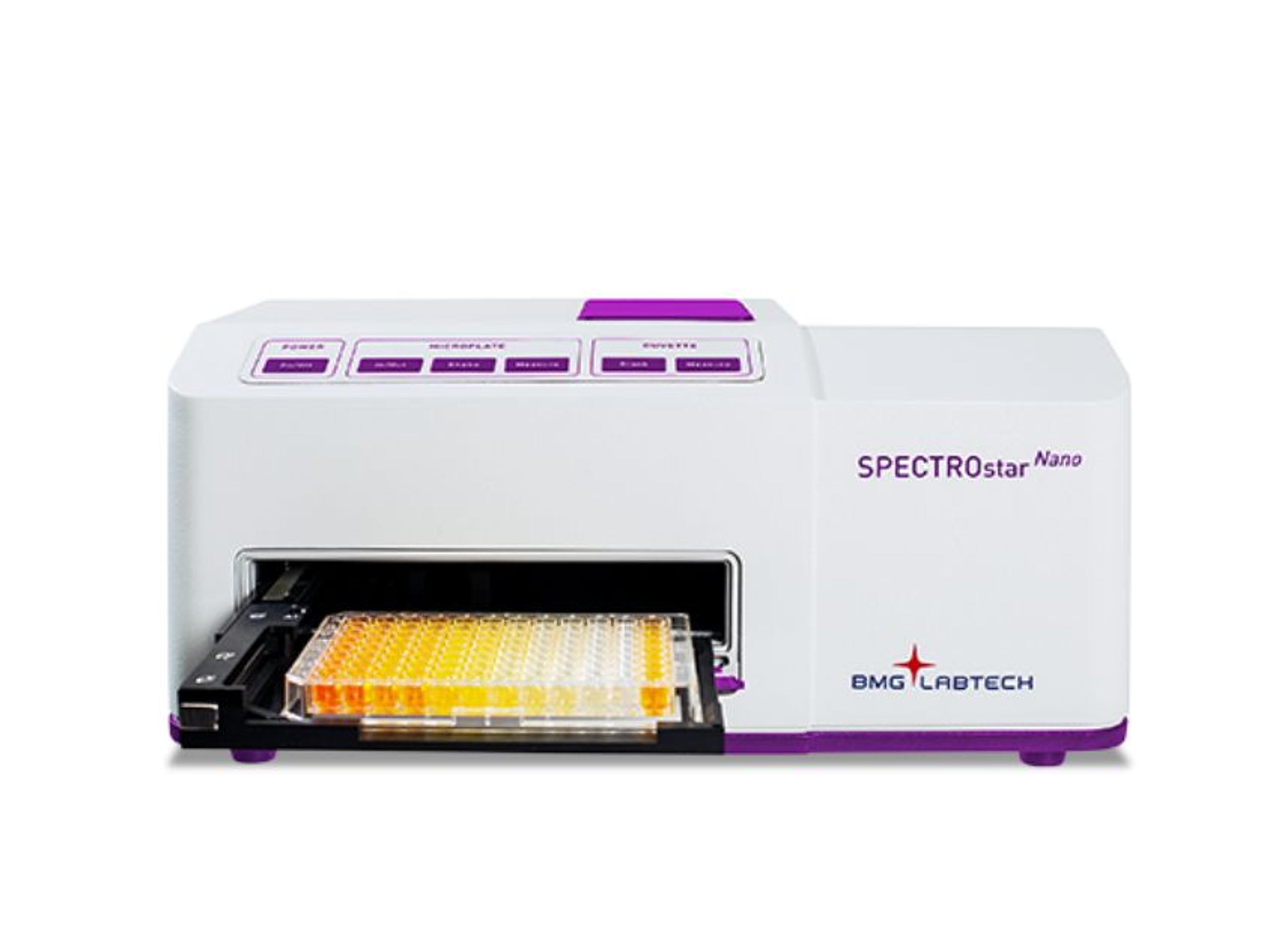
BMG LABTECH is proud to announce that the fourth SPECTROstar Nano will be going to Finland to aid indeveloping a discovery platform for pharmaceutical nanoparticles at the University of Helsinki. “The discovery platform for pharmaceutical nanoparticles relies on an unconventional combination of modern methods. It will open important new horizons and it is expected to fundamentally renew the field of drug delivery.”

Dr. Marco Casteleijn further explains: “Specific experiments could benefit greatly by the use to the SPECTROstar Nano due to its fast reading times, robotic interface mode, low volume measurements, plate reading capabilities, shaking and incubating capabilities, and full spectrum readout. In addition, gas vent for atmospheric control could be useful for other applications in the future, in case of automated growth and control of mammalian cell lines. In addition, model drug concentrations such as calcein, small lipophilic molecules (e.g.rhodamine B), siRNA and pDNA can be evaluated by the SPECTROstar Nano (i.e. full spectrum, small volumes of 2 μL) during the formulation process. ”

To read his unique proposal visit the company article page.

BMG LABTECH will be awarding the last of five SPECTROstar Nanos on July 30, 2011. Just submit a short 2-4 page proposal explaining how your lab would benefit from this new and innovative absorbance microplate, cuvette and low-volume readers before the final deadline, July 15, 2011. If you would like to be the final winner, tell BMG LABTECH how you propose to use the SPECTROstar Nano in a unique fashion or proposing to use one of the instrument’s many unique features such as: full UV/Vis spectrum per well, gas vent for atmospheric control, 1536-well plate reading capability, incubation and shaking, reference corrections to improve data, cuvette and plate kinetics, BMG LATECH’s low volume LVis Plate, or robotic interface mode.

For more information go to BMG's website or ask your local BMG LABTECH representative.
Links

Tags

Fluorescence SpectroscopyFluorometers and spectrofluorometers (also called fluorescence spectrometers) are used to measure the intensity and wavelength of fluorescent light emitted from a sample after excitation by illumination. Spectrofluorometers utilize monochromators to select the desired wavelengths, whereas filter fluorometers employ a set of filters. Spectrofluorometers for measuring steady-state fluorescence and lifetime fluorescence (or time-resolved fluorescence) are available, as well as fluorescence microscopes and microplate readers. Find the best fluorescence spectroscopy products in our peer-reviewed product directory: compare products, check customer reviews and receive pricing direct from manufacturers.UV-Visible SpectroscopyUltraviolet-visible (UV-Vis) spectrophotometers are used to measure the interaction of UV and visible light with a sample, including transmission, reflectance & absorbance. The two major instrument classes are single-beam or double-beam spectrophotometers. More specialized equipment includes colorimeters, spectroradiometers and refractometers. Portable and microvolume spectrophotometers are also available. For the modular spectroscopy lab, explore a range of light sources for combination with a spectrograph/spectrometer and optics. Find the best UV-Vis spectroscopy products in our peer-reviewed product directory: compare products, check customer reviews and receive pricing direct from manufacturers.Cell / Tissue CultureCell culture or tissue culture is used to study the biology of cells or tissues and to isolate cellular products in an environment which can be manipulated and well defined. Accurately control your culture environment with bioreactors or culture incubators, bind your cells to a surface or together with an extracellular matrix. Distinguish cell types with differential media or proliferate cells with certain characteristics using selective media. Enrich your media with supplements such as growth factors, sera and vitamins. Find the best cell and tissue culture products, kits and equipment in our peer-reviewed product directory: compare products, check customer reviews and receive pricing direct from manufacturers.Assay AssemblyAssay Assembly is technique used in drug discovery to develop assays to test the cytotoxicity, genotoxicity, or other activities of a compound on a cell. Assay assembly requires chip assembly, a delivery system and a detection and analysis method. Beneficial features of assay kits or automated systems include high-throughput, high speed and sensitivity and low signal to noise ratio.Medicinal ChemistryMedicinal chemistry is a broad discipline encompassing the design, identification, synthesis and development of chemicals in drug discovery. It includes a number of techniques covering structural biology, synthetic chemistry and molecular biology. Technologies used in medicinal chemistry include ADME, lab-on-a-chip, high content screening and assay assembly.Cell-Based AssaysCell-based assays are used to monitor the presence, quantity and activities of a desired cellular analyte including drug molecules or biomarkers. This can reveal information on cell health (apoptosis, cytotoxicity, viability and proliferation assays), cell metabolism, cell migration and cell signaling mechanisms. Find the best cell-based assay products, kits and equipment with our peer reviewed product directory: compare products, check customer reviews and receiving pricing direct from manufacturers.Protein PurificationProtein purification is a vital step in drug discovery, therapeutics, biotech and life science research. The purification process typically involves subcellular or membrane protein extraction with cell lysis kits, separation of proteins from cell debris by filtration or spin columns, and the isolation of proteins of interest from other proteins and impurities with affinity purification (including fusion protein tags and antibody binding proteins A, G and L), immunoprecipitation or chromatographic methods, such as ion exchange, size exclusion and immobilized metal affinity chromatography. All purification methods come in multiple formats for your laboratory needs, including agarose or magnetic beads, resins, columns and filter plates. Find the best protein purification equipment in our peer-reviewed product directory: compare products, check customer reviews and receive pricing direct from manufacturers.NanotechnologyNanotechnology, or nanotech, is an engineering technique using molecular scale functional systems. Applications of nanotechnology include medicine and medical devices, electronics, air and water purification, food science and energy production.BiomarkersBiomarkers are biological markers which can be measured and evaluated to indicate a biological state. The use of biomarkers in research and diagnosis can indicate a normal or disease state or drug response of cells / tissues. Biomarkers include genetic markers, cell surface markers such as antigens, antibodies or receptors and secreted molecules such as cytokines. An assay system is required for identification of biomarkers. :Non-Destructive TechniquesNon-destructive techniques (NDT) describes a variety of analytical techniques used to evaluate the properties of a material. Common methods include ultrasonic, magnetic-particle, liquid penetrant, radiographic, remote visual inspection (RVI), and eddy-current testing. NDT is regularly used in forensic engineering, civil engineering, mechanical engineering, electrical engineering, systems engineering, aeronautical engineering, and medicine.
A Big Win for Small Particles: A SPECTROstar Nano awarded to the University of Helsinki for Nanoparticle Research