8 Big Life Sciences Stories That Got Scientists Talking Last Month

From cancer biosimilars to AI PCR & the technologies making gene therapy a reality, discover the top trending content that caught the attention of SelectScience readers in April 2019

6 May 2019
Frankie MacDonald
Administrator / Office Personnel

Editorial article

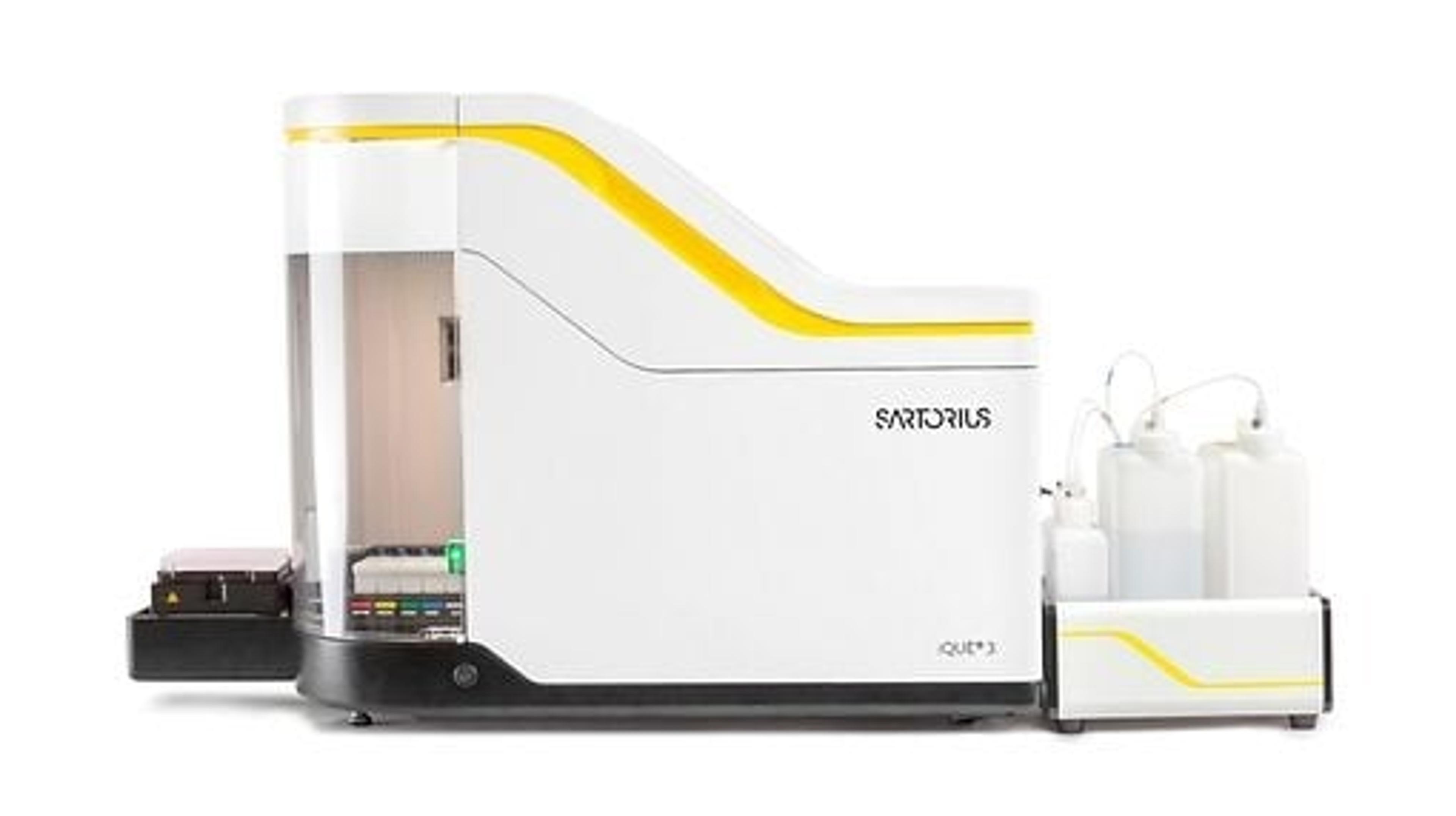
1. Cancer biosimilars are one of the most rapidly expanding fields in pharma, and these scientists in Glasgow are working to accelerate their discovery with advanced flow cytometry.
2. Researchers at Oslo University have identified a novel target for glioblastoma therapy, which could prevent cancer cell invasion into the surrounding brain tissue.

3. The world’s first AI-powered PCR platform has been launched by Thermo Fisher Scientific. The RFID-enabled technology can respond to voice commands and conduct facial authentication.

4. Gene therapy could be quickly becoming a reality with a new, dissolvable microcarrier platform for large-scale AAV manufacture. In a fascinating panel discussion, three scientists explain how and why this technology is potentially paradigm-changing.

5. A collaborative effort between scientists in Korea and Tomocube has achieved 4D analysis of immune-cancer cell interactions during immunotherapy, providing new insight into single-cell dynamics at the junction between immunology and cancer biology.

6. Dr. Benjamin Freedman was the first scientist in the western hemisphere to generate a kidney organoid from pluripotent stem cells and, in an exclusive interview, he reports on how this eureka moment has since shaped the face of kidney research.
7. Nanomaterials are set to revolutionize medicine, among other scientific fields, but the nano-inflammation group at the University of Manchester is investigating how graphene oxide and other 2D materials could potentially cause harm to human health.

8. MIMETAS, a leading organ-on-a-chip company, has unveiled the first platform to enable vascularization of complex 3D tissues in vitro – providing even greater physiological relevance to pre-clinical models of disease.

Stay up to date with the latest news and resources in the Life Science community, by becoming a SelectScience member for free today >>

Links

Tags

Cell / Tissue CultureCell culture or tissue culture is used to study the biology of cells or tissues and to isolate cellular products in an environment which can be manipulated and well defined. Accurately control your culture environment with bioreactors or culture incubators, bind your cells to a surface or together with an extracellular matrix. Distinguish cell types with differential media or proliferate cells with certain characteristics using selective media. Enrich your media with supplements such as growth factors, sera and vitamins. Find the best cell and tissue culture products, kits and equipment in our peer-reviewed product directory: compare products, check customer reviews and receive pricing direct from manufacturers.BiomarkersBiomarkers are biological markers which can be measured and evaluated to indicate a biological state. The use of biomarkers in research and diagnosis can indicate a normal or disease state or drug response of cells / tissues. Biomarkers include genetic markers, cell surface markers such as antigens, antibodies or receptors and secreted molecules such as cytokines. An assay system is required for identification of biomarkers. :qPCRQuantitative PCR (qPCR) is a molecular biology technique used to amplify and measure the amount of a specific DNA or RNA target. It plays a crucial role in gene expression analysis, pathogen detection, and quantifying DNA or RNA in various applications. Real-time PCR provides precise, quantitative results and is widely used in research, diagnostics, and clinical studies. Browse our peer-reviewed product directory to find the best qPCR solutions; compare products, check reviews, and get pricing directly from manufacturers.High ThroughputHigh throughput experiments allow the simultaneous processing of several samples. This parallelization reduces the cost per experiment and increases reproducibility and output volume of data.ImmunotherapyImmunotherapy is a treatment approach that utilizes the body�s immune system to fight diseases, especially cancer. It includes therapies such as monoclonal antibodies, checkpoint inhibitors, and CAR-T cell therapy. Immunotherapy is a rapidly growing area of research in oncology and autoimmune diseases. Browse our peer-reviewed product directory to find the best immunotherapy tools, compare products, check reviews, and get pricing directly from manufacturers.Gene TherapyGene therapy is a technique that modifies or replaces genes within an individual's cells to treat or prevent diseases. This approach holds potential for curing genetic disorders, cancers, and certain viral infections. Advances in gene editing technologies like CRISPR are driving the growth of gene therapy. Explore gene therapy tools and technologies in our peer-reviewed product directory; compare products, check reviews, and get pricing directly from manufacturers.Cancer ResearchAlthough cancer is often referred to as a single condition, it actually consists of more than 100 different diseases. Microscopy, mass spectrometry, high throughput sequencing and flow cytometry are some of the most common techniques employed in cancer research labs.