5 upcoming webinars to support your research
Discover insights on topics from COVID-19 testing, chemical analysis, SARS-CoV-2 variants, and preparative HPLC
5 Nov 2021
Expert insights

SelectScience® hosts dozens of informative and insightful free webinars for scientists every month, featuring world-class speakers at the very forefront of their respective fields. In this regular feature, we highlight the events you won't want to miss over the next week or so, as well as some of our top on-demand webinars.
Don’t miss out on these expert-led webinars discussing the latest research and cutting-edge techniques and technologies, from the future of COVID-19 testing and consequences of SARS-CoV-2 variants to laser-induced breakdown spectroscopy quantification and an automation purification workflow for unsafe drinking water.
COVID-19 TESTING: Staying ahead, scaling up, and monitoring for the future
In this SelectScience webinar, discover how Laboratory Healthcare Medical (LHM) has prepared itself for the future of COVID-19 testing by successfully implementing a high-throughput automated workflow. Register now to learn how LHM has used this new workflow to incorporate non-invasive monitoring with diagnostic assays covering key respiratory pathogens, including SARS-CoV-2, influenza A/B, and RSV.
Monday, November 8, at 15:00 GMT / 16:00 CET / 10:00 EST / 07:00 PST
SARS-CoV-2 VARIANTS: Impact on vaccines and laboratory testing
This webinar provides insights into the potential consequences of SARS-CoV-2 mutations and variants on vaccination status and laboratory testing. Join Dr. Katherine Soreng, Global Director of Clinical Education for Laboratory Diagnostics, Siemens Healthineers, to explore viral genetic evolution, and discover the role of antibody testing with variants.
Tuesday, November 9, at 16:00 GMT / 17:00 CET / 11:00 EST / 08:00 PST
STREAMLINE WORKFLOWS: An automated purification workflow to ensure drinking water purity and safety
Don't miss the second installment in a series of three webinars on best practices to help you overcome the key challenges and setbacks associated with preparative HPLC. Hear Dr. Paul Zimba, CEO of PVZimba LLC, discuss how he used workflow automation to discover four microcystins, cyanotoxins known to impact health and water quality.
Wednesday, November 10, at 16:00 GMT/ 17:00 CET / 11:00 EST / 08:00 PST
CHEMICAL ANALYSIS: Laser-induced breakdown spectroscopy quantification: From fundamental understanding to data processing
In this webinar, Dr. Zhe Wang will summarize the generation mechanisms of measurement uncertainty and explain how signal uncertainty and matrix effects impact quantification performance. Register now to discover a framework for a quantification improvement strategy for future development, and more.
Thursday, November 11, at 16:00 GMT / 17:00 CET / 11:00 EST / 08:00 PST
ENSURING ACCURACY: An expert guide to selecting fit-for-purpose reference materials
In this webinar, Derrell Johnson, innovation manager for reference materials, Merck, will discuss important concepts such as metrological traceability, certificates of analysis, and stability, along with the different quality grades of reference materials. Plus, hear how selection of the proper quality grade can ensure optimal fit-for-purpose and testing accuracy.
Friday, November 12, at 16:00 GMT / 17:00 CET / 11:00 EST / 08:00 PST
Catch up on these 8 on-demand webinars:
- Taking your first steps towards automation: Simple, intuitive, and affordable liquid handling: Dr. Anne Hammerstein, product manager at SPT Labtech, discusses applications and liquid handling tasks that benefit from automation, how to select a liquid handler for your application or research area, the benefits of automation beyond throughput, and why automation is no longer the reserve of high throughput screening alone.Watch here»
- Gut microbiome: Basics, opportunities, and establishing new pipeline conditions: Dr. Philipp Lemal, deputy laboratory manager at Ortho-Analytic, covers a basic introduction to the gut microbiome and the development of an improved diagnostic pipeline, and discusses how to reduce analysis costs and increase throughput.Watch here»
- Volumetric titration: A step-by-step guide to correct results: Dr. Christian Haider, Head of Competence Center Titration at Metrohm AG, and Angela Schwehn, chemical laboratory technician at Merck, explore the basics of volumetric titration, and provide tips and advice to help you make sure that your titration results are always precise and reproducible. Watch here»
- Dissecting the tumor microenvironment with multiplex immunohistochemistry: Researchers Dr. Yvonne Reiss and Prof. Andreas Weigert, from the Goethe University, Frankfurt, show how they are using Phenoptics™ technology, which integrates multiplexed immunohistochemistry and imaging with advanced tissue analysis software, to interrogate the tumor microenvironment for investigator-initiated (translational) trials and preclinical studies. Watch here»
- Achieving turnkey purification workflows on complicated drug modalities: The first of three webinars on best practices to help you overcome the key challenges and setbacks associated with preparative HPLC. Ed Ha, principal scientist at Angiex, showcases a collection of optimized workflows for small and large molecule quantification, and post-prep workflows.Watch here»
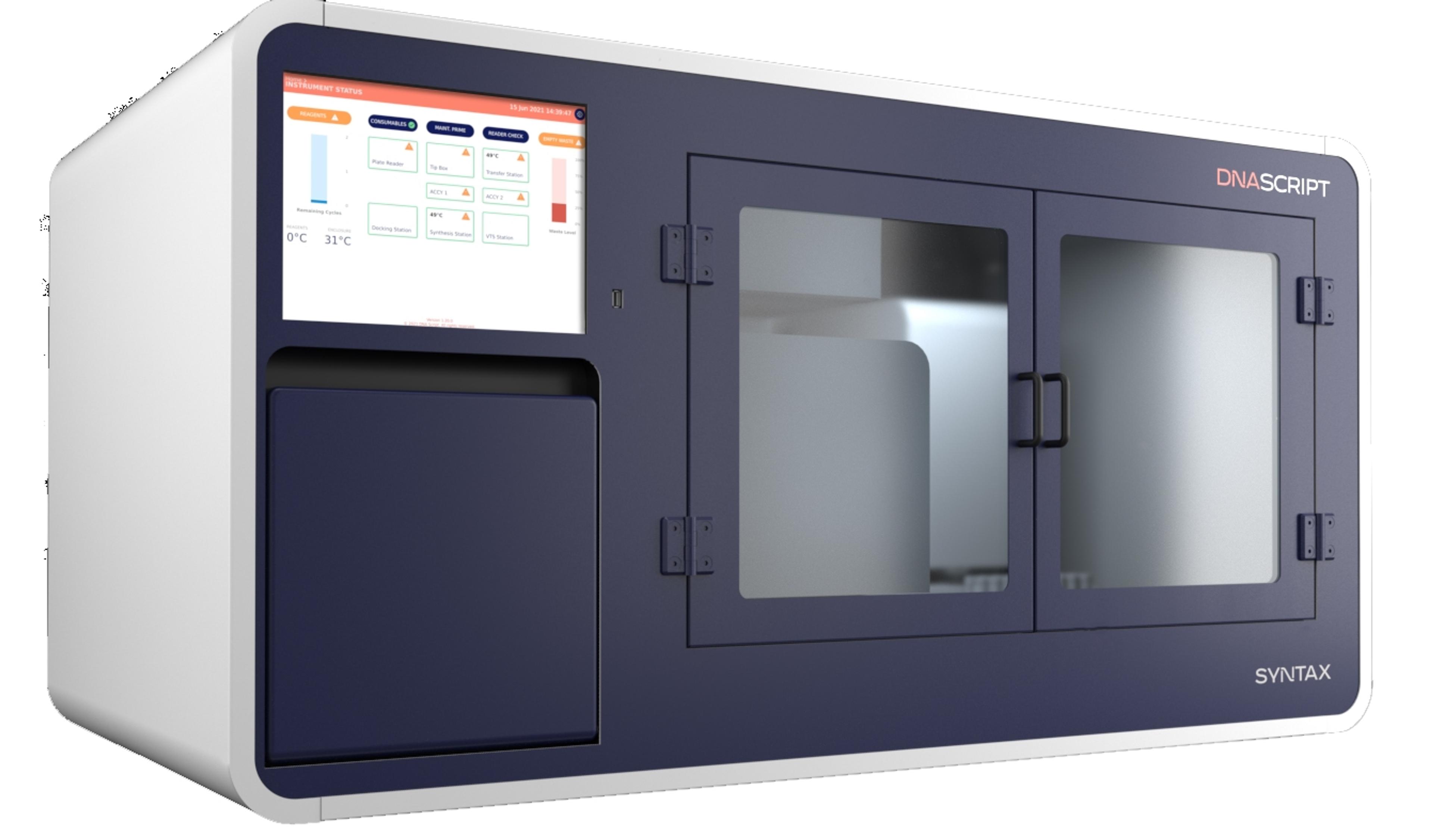
- Oligos on demand: How the world's first benchtop enzymatic DNA printer is driving innovation: Join this webinar with Dr. Colin Clairet, postdoc at the Pasteur Institute, and Dr. Steven Quistad, application scientist at DNA Script, for an overview of enzymatic DNA synthesis (EDS) and the core technology behind the SYNTAX System, the world’s first benchtop enzymatic DNA printer.Watch here»
- Become a drug testing wiz with MS ß-glucuronidases: Simplify your urinalysis workflow: Hear from Mark Pawlicki, product manager of biomolecular discovery reagents, and Lindsey Hess Rickershauser, advanced analytical technology specialist at MilliporeSigma, for an insight into a simplified LC/MS urinalysis workflow using a stable ß-glucuronidase mix designed for robust urine drug testing. Watch here»
- Harness the power of 3D models in the research of cancer: In this first installment of the Thermo Scientific 2021 High-Content Screening Technology Expert Seminar Series, hear from Nicholas Radio, global product manager, high-content screening. Watch now for insights into 3D models in cancer research, and discover how to advance your assay development and high-throughput screening workflows. Watch here»
Have a conflicting schedule? Don't worry all SelectScience webinars are made available on-demand, find out more here>>
Related products
Request Quote for All Products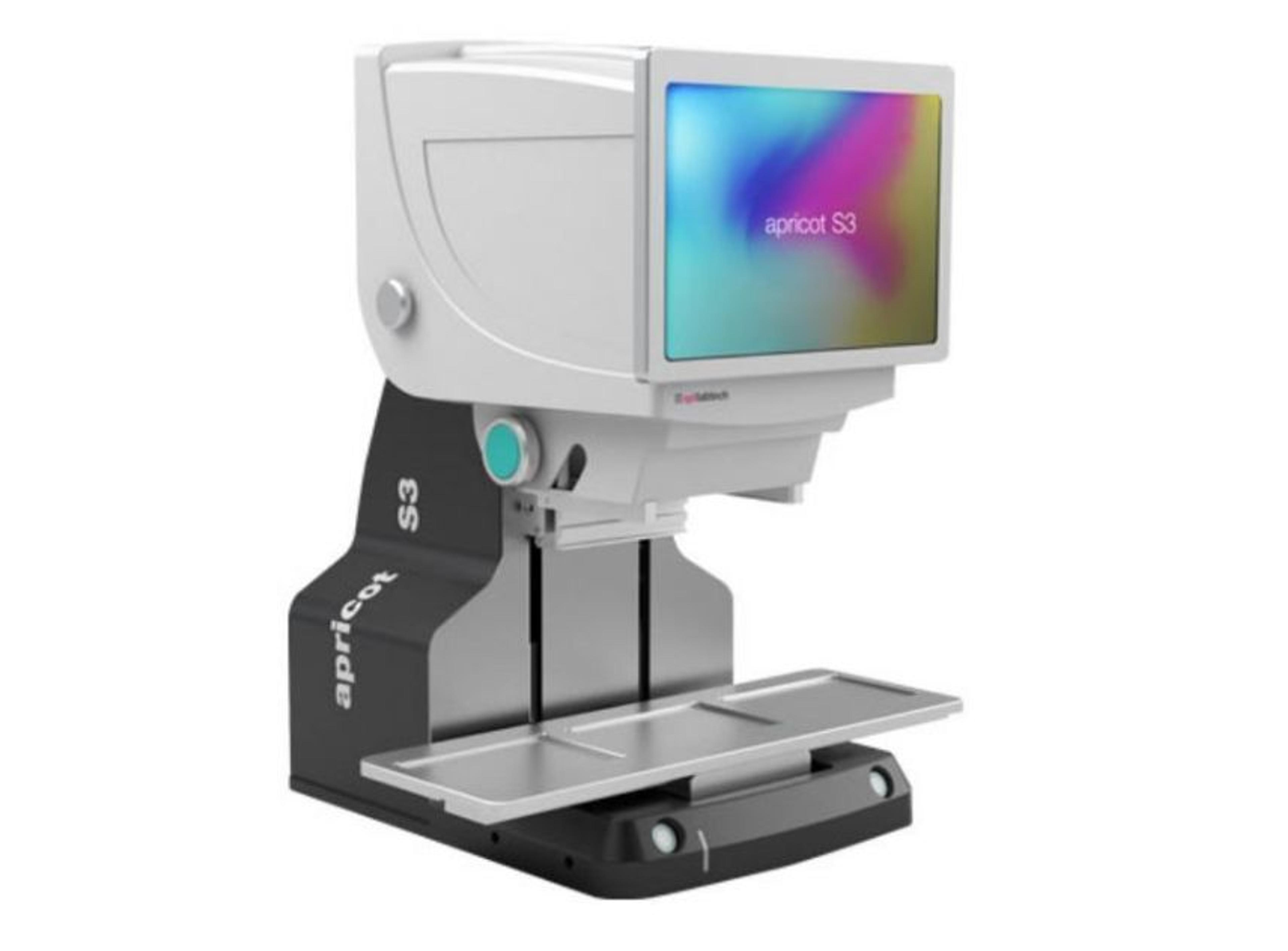
apricot S range
SPT LabtechThis accessible range of liquid handling instruments delivers high-performance, intuitive and compact automated solutions that adapt well across applications.