
5 top resources for mycotoxin quantitation in cannabis samples
A compilation of useful materials for quantifying mycotoxins in cannabis products, necessary to meet industry standards and reduce potential health risks from contamination
10 Jan 2020
Editorial article
Whilst the cultivation conditions for cannabis are tailored to support the growth of the plant, they often provide an ideal environment for the production of potentially pathogenic molds and fungi such as Aspergillus. Storage, transportation and processing are also conducive to contamination and, in combination, can lead to sufficiently concerning levels of chemical mycotoxin production.
Many mycotoxins, such as the aflatoxins G1, G2, B1, B2, or ochratoxin A, have been highlighted as immunosuppressive, carcinogenic, neurologically toxic, and hepatotoxic. Even the Aspergillus mold itself can cause lung infections such as aspergillosis. Therefore, considering the great risk to consumer health, the development of accurate testing methods is of utmost importance to the industry.
Here, we’ve collated some of the latest content and innovations in this field to aid scientists in the quantification of these harmful molds and their secondary metabolites, including liquid chromatography, real-time PCR, UPLC-MS/MS and GC-MS/MS.
Application note: Quantitation of aflatoxins in cannabis by liquid chromatography
Shimadzu presents a study that focuses on developing a powerful detection method, using the Prominence-i and the RF-20Axs Fluorescence Detector, that allows cannabis testing labs to confidently report concentrations below regulatory limits, including aflatoxins B1, B2, G1 and G2 combined to 20 ppb and 20 ppb for ochratoxin A alone.
Industry news: Bio-Rad launches kit for detection of hazardous molds in cannabis products
Bio-Rad Laboratories, Inc. has announced the launch of the iQ-Check Aspergillus Real-Time PCR Kit, a fast and accurate method for detecting four potentially hazardous molds — Aspergillus flavus, A. fumigatus, A. niger, and A. terreus — in cannabis and cannabis-infused products.
The Scientists' Channel: Essential quality control assessments for cannabis
In this video, Dr. Jonathan Speare explains how White Buffalo Laboratories tests cannabis for pesticides and mycotoxins to provide a safe product and discusses quality assurance requirements and how quantifying marijuana testing is changing the cannabis industry.
Application note: Analysis of residual pesticides and mycotoxins in cannabis to meet Californian regulations

In this application note, Waters presents the use of a simple sample extraction and dispersive solid phase extraction (dSPE) clean-up where the extract is analyzed by UPLC-MS/MS and/or GC-MS/MS for rapidly monitoring pesticides and mycotoxins in cannabis matrix.
Editorial article: Cannabis testing: The need for robust methods and true transparency
In this exclusive interview, we hear from Petra Erlandson of Alkemist Labs about the need for transparent and universal protocols in botanical testing. Erlandson also reveals the key technologies that enable the team at Alkemist to test different material types and product matrixes reliably and accurately — and the importance of finding a manufacturer you can partner with effectively.
Other notable content from our cannabis testing community:
- Interview: Secrets to success at a new cannabis testing facility
- The Scientists’ Channel: Dr. Ethan Russo on current challenges and future hopes for cannabis as an “extremely versatile medicine”
Previous cannabis testing Top 5 articles:
- Top resources for cannabis potency testing
- 5 top resources for pesticide analysis in cannabis testing
Want more cannabis testing news straight to your inbox? Become a SelectScience member for free today>>
Related products
Request Quote for All Products
Mycotoxins PCDL
Agilent TechnologiesPerform truly comprehensive mycotoxin screening applications with the Mycotoxins and Related Metabolites Personal Compound Database and Library (PCDL) for TOF and Q-TOF LC/MS systems. Detailed acquisition method setup information allows fast ramp-up to full productivity.

Bond Elut Mycotoxin
Agilent TechnologiesBond Elut Mycotoxin is a novel sorbent which cleans up food extracts for improved trichothecene and zearalenon analysis. Results are comparable or superior to competing methods, including immunoaffinity columns (IAC) and charcoal/alumina column. The sorbent is a proprietary silica-based ion exchange material.
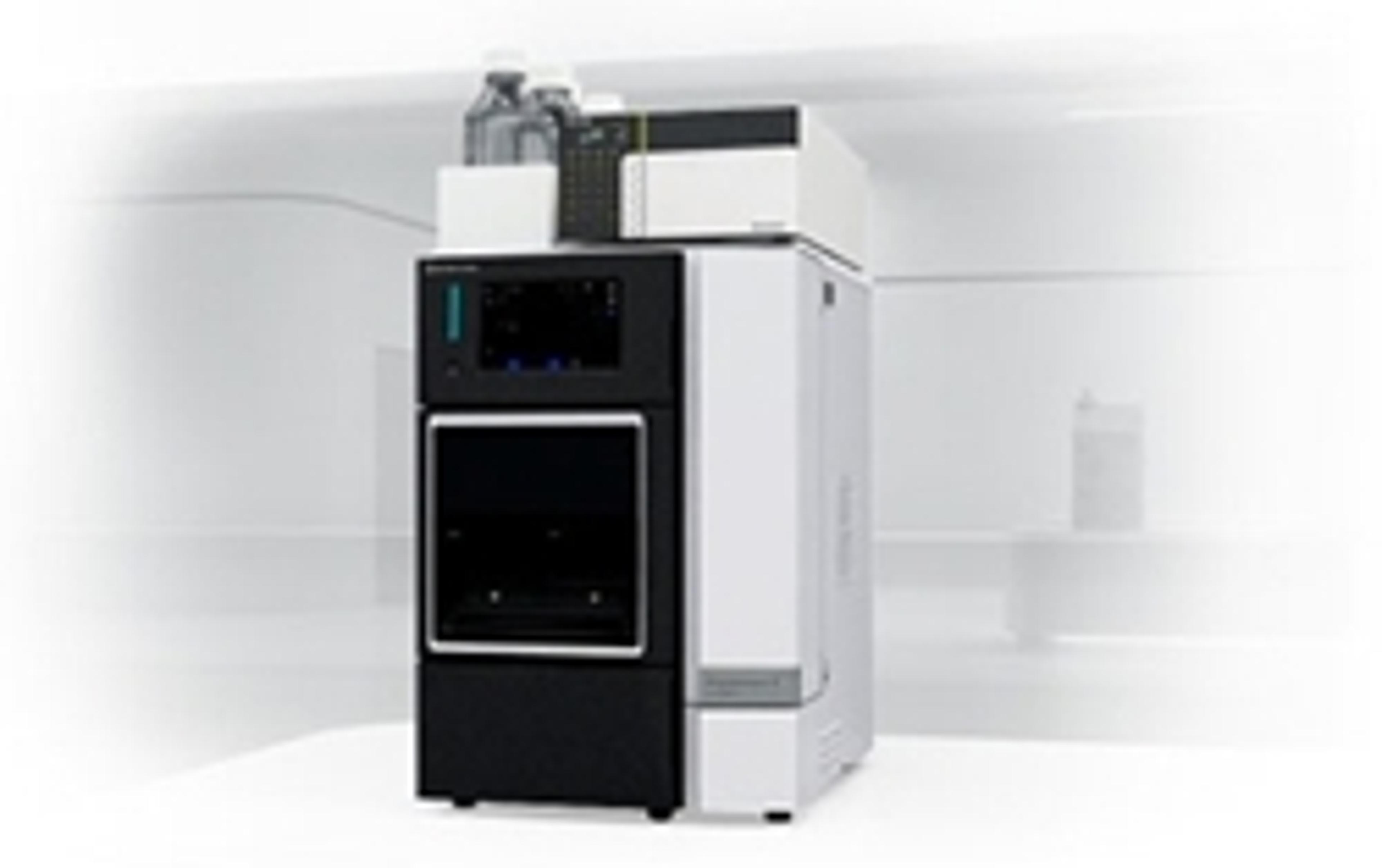
Prominence-i GPC System
World-class Small Multi Detection GPC System. A refractive index detector is generally used for GPC analysis of hydrophobic polymers. When trace-level additives that have UV absorption are contained in a polymer, both a UV detector and a photodiode array detector, which offers high-sensitivity detection, are used complementarily.By using the Prominence-i (PDA model), LabSolutions workstation, and LabSolutions GPC software (option), it is possible to simultaneously perform measurement of molecular weight distribution of a main component polymer using analysis results from the refractive index detector, and quantitative and qualitative analysis of trace-level additives using analysis results from the photodiode array detector.By incorporating a dual-temperature control function, which suppresses the effects of room temperature fluctuations, the RID-20A achieves excellent baseline stability and reproducibility. Moreover, the RID-20A significantly reduces stabilization time after being powered on. The stable baseline enables accurate analysis of molecular weight distribution. Shown below are a chromatogram and reproducibility of elution time results, over the course of five days, for an analysis of polystyrene containing additives.