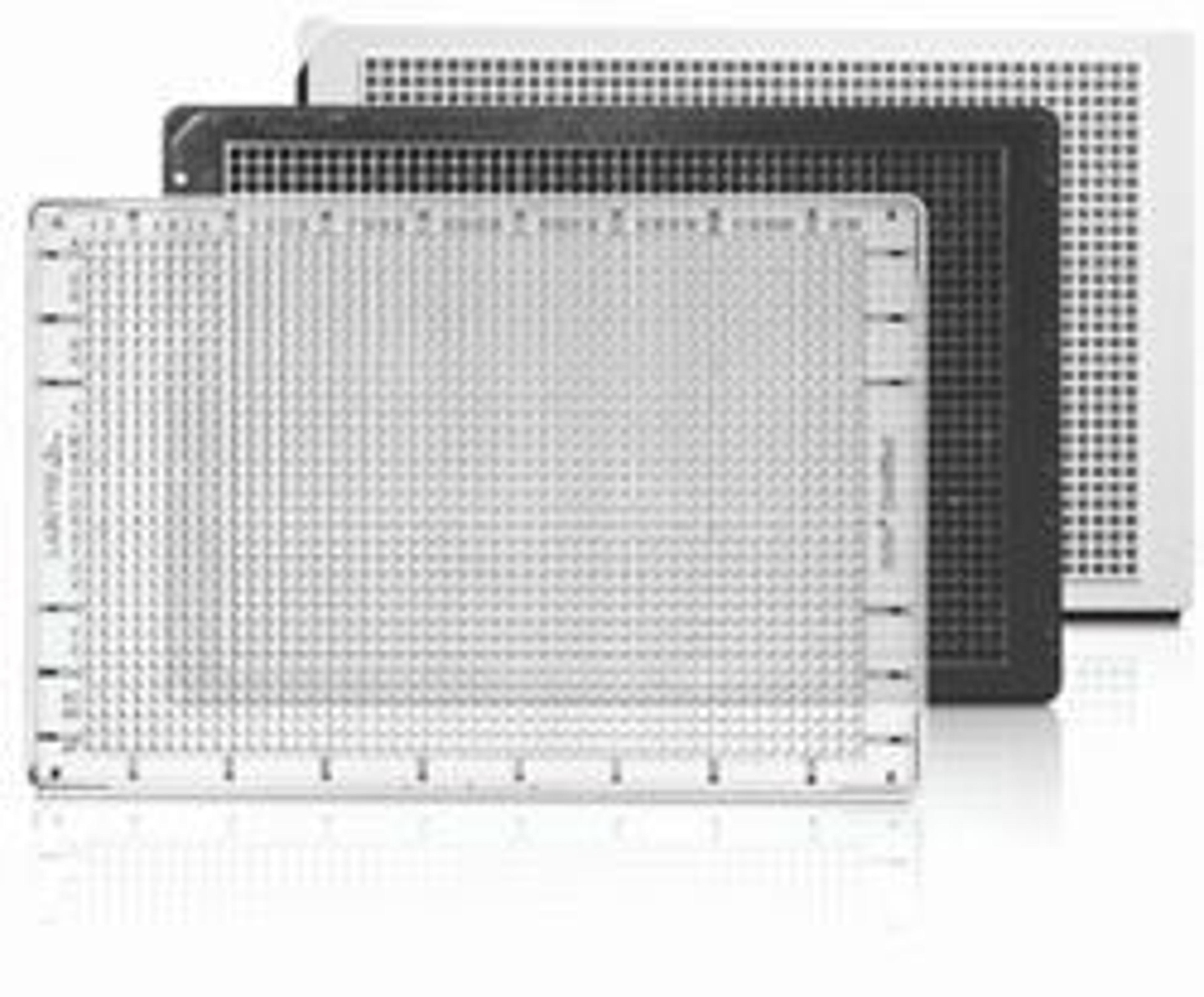
Z’ Comparison of Two Different 1536 Microplates in an HTRF Assay

27 Aug 2012

In this application note, Labcyte describes how the 1536-Well LDV Black COC microplate can improve the assay window for HTRF-based assays. The Adrenoceptor Beta 2 receptor ligand binding assay from Cisbio was used to conduct a comparison of Z’ values in black 1536 microplates.

Echo® Qualified 1536-Well Low Dead Volume Microplate

The 1536-Well Low Dead Volume (LDV) plate improves assay results through increased signal to noise ratios. The exceptional flatness of this microplate reduces assay noise by providing a consistent measurement position for detection instrumentation using photomultiplier tubes or CCD devices. This microplate is constructed of Cyclic Olefin Copolymer (COC) which provides optical clarity and improved signal levels for luminescence and fluorescence based assays. Each lot of plates is tested and certified to meet stringent performance specifications to ensure lot to lot consistency. Additional benefits of the 1536-Well LDV plate include: compatibility with heat sealing devices, designed for barcode customization and optimized for robotic handling. Features of the 1536-Well Low Dead Volume (LDV) plate: Working range: 1 – 5.5 µL Barcode labeling available Sterile and non-sterile plates available RNase/DNase free  Heat seal compatible 50 plates/case 10 plates/pack

(1)

Tags

MicroplatesMicroplates are multi-well plates used to increase the throughput of biological investigations. The number of wells microplates contain can range from 6 to 3243 wells, with the 96-well format being the most commonly used. Microplates can come tailored for a range of applications including cell culture, PCR, filtration, storage, non-binding surface, protein crystallization, as well as pre-coated, deep well and normal Standard microplates. Additionally, options for microplate colors include clear , black, white or black with clear bottom and white with clear bottom for absorbance microplate reader applications. Find the best microplates for your lab in our peer-reviewed product directory: compare products, check customer reviews and receive pricing direct from manufacturers.High-Throughput ScreeningHigh-throughput screening (HTS) is an automated drug discovery technique for identification of active compounds against a compound library. Use HTS readers and integrated assay preparation / analysis workstations to screen your compounds. Identify active compounds against various HTS libraries, including membranes, proteins and peptides and HTS cell lines. Find the best high-throughput screening products in our peer-reviewed product directory: compare products, check customer reviews and receive pricing direct from manufacturers.Assay AssemblyAssay Assembly is technique used in drug discovery to develop assays to test the cytotoxicity, genotoxicity, or other activities of a compound on a cell. Assay assembly requires chip assembly, a delivery system and a detection and analysis method. Beneficial features of assay kits or automated systems include high-throughput, high speed and sensitivity and low signal to noise ratio.HTRF
Z’ Comparison of Two Different 1536 Microplates in an HTRF Assay