
Your Partner from Sample to Result— For a Complete LC-MS Workflow in the Clinical Laboratory
23 Aug 2017This infographic introduces the range of LC-MS/MS medical devices from Waters®. As a leading clinical LC-MS/MS solutions partner, Waters® is a trusted provider of IVD medical devices, consumables, informatics, and support services for high performance LC-MS/MS systems. The Waters® range covers all of the analytical needs in the clinical laboratory and provides access to increased selectivity, sensitivity, and versatility for your analysis.
Related products
Request Quote for All Products
ACQUITY UPLC I-Class/Xevo TQ-S micro IVD System
WatersHigh performance from a compact design with rapid, reliable, and reproducible quantitative data for the clinical laboratory.

Waters® Exact Mass LC/MS Systems
WatersWhether you are performing high throughput compound confirmation, identifying natural products or metabolites, or analyzing peptides and proteins, Waters® Exact Mass LC/MS Systems that incorporate the LCT PremierÔ Mass Spectrometer provide a total solution that maximizes performance for your application. The fully integrated systems are controlled from a single data system, maximizing the efficiency of your analysis while enabling advanced experiments to be easily performed.
MassLynx MS Software
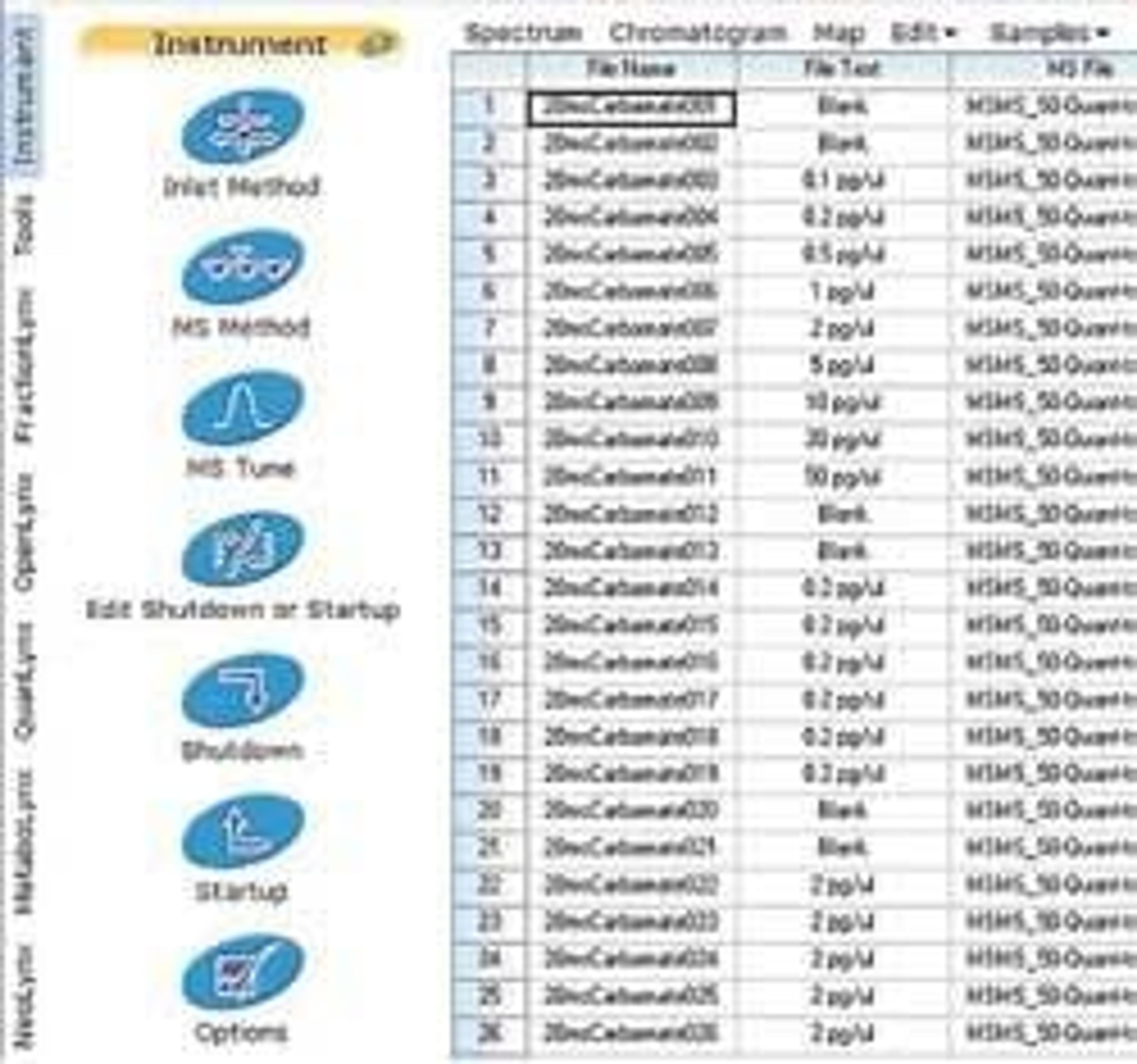
WatersAcquire, Analyze, Manage, and Share Mass Spectrometry Information MassLynx™ Software increases the speed at which you can convert your sample data into valuable knowledge. It provides you with the fundamental platform to acquire, analyze, manage, and share your mass spectrometry information. MassLynx intelligently controls any Waters mass spectrometry system, from sample and solvent management components to mass spectrometer and auxiliary detectors. MassLynx Software may acquire nominal mass, exact mass, MS/MS and exact mass MS/MS data. MassLynx’s Sample List is the core of the system. It maintains and consolidates the data on all of your samples. You also initiate any activities related to your sample from the Sample List. This "sample centric" approach simplifies the interaction with your LC/MS or GC/MS system, acquired data and processed results. Process Application-specific Data MassLynx Software features general purpose and specialized Application Managers that provide information for your specific MS analyses and data. Two come standard with MassLynx: QuanLynx™ for automated quantification included as standard with MassLynx OpenLynx™ for qualitative screening and identification Optional Application Managers can perform: Targeted quantitative analysis Mass-directed purification Metabolite identification Deconvolution of complex chromatograms Metabonomics & metabolomics Protein identification and protein characterization