
Visualizing the Architecture of Cells and Tissues
17 Nov 2017Laser scanning microscopes (LSMs) have proven extremely flexible in 3D imaging in a non-destructive manner. Most difficulties encountered in biological imaging are caused by intrinsic sample characteristics that compromise 3D imaging by limiting penetration depth and cause image distortions. Discriminating fluorescent labels from autofluorescence is another common challenge in plant and animal tissue samples. this application note describes how these problems can be overcome using Zeiss' LSM technology.
Related products
Request Quote for All Products
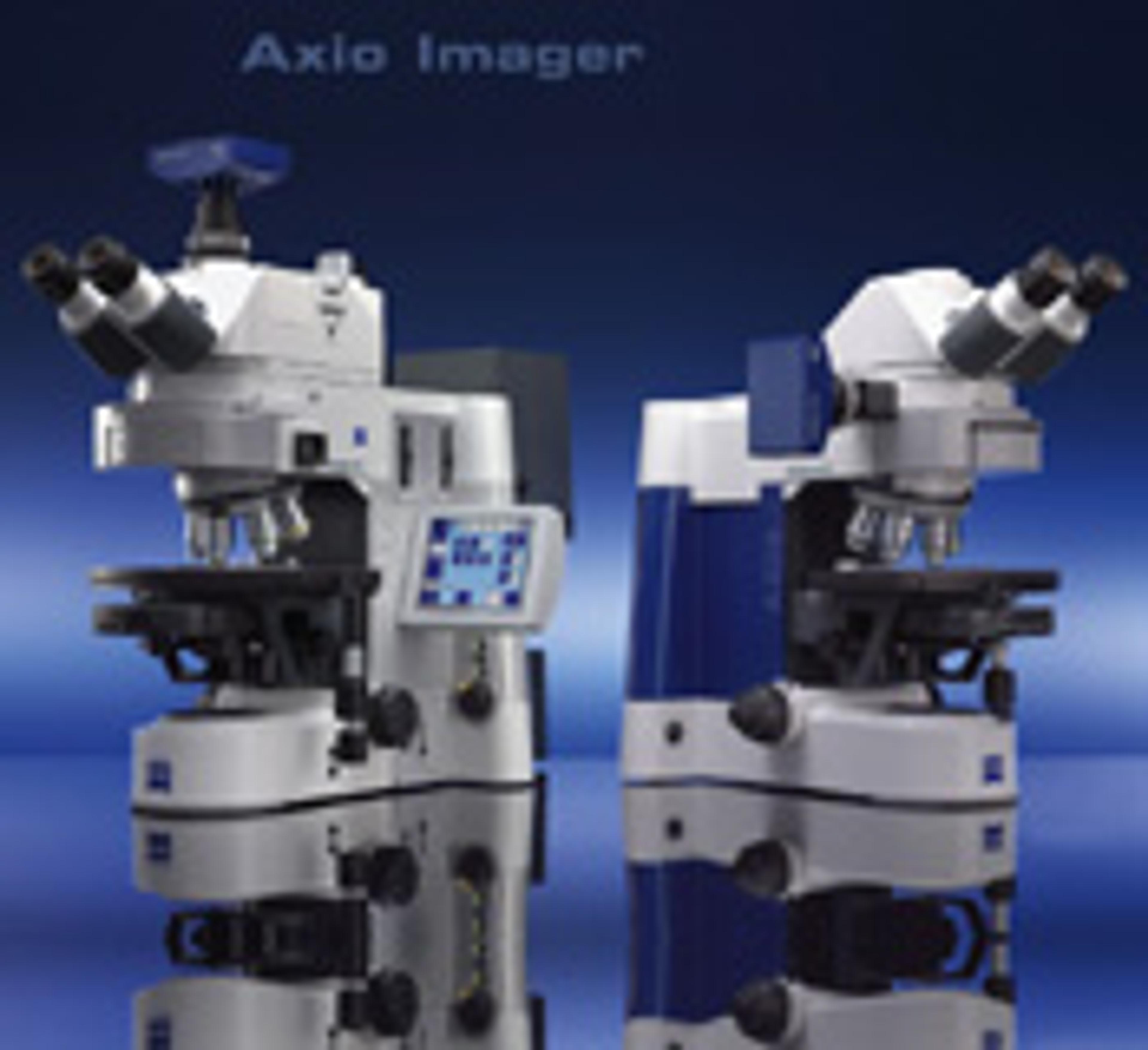
ZEISS Axio Imager - Modular System for Digital Fluorescence Microscopy
ZEISS Research Microscopy SolutionsAxio ImagerAn innovative modular system for digital fluorescence microscopy, featuring advanced flexibility and application versatility. Featuring: New IC2S objectives (Infinity Contrast & Colour Corrected System) - optimise image quality and maximise contrast Special fluorescence filters - reduce exposure and image acquisition time for superior 3D imaging. 'Intelligent Stand' - automatically recognises added components. "Contrast manager" ensures simple changes between contrasting techniques. Integration: standard interfaces permit communication via USB and TCP/IP Vibration-free Imaging Cell - isolated within the stand for stable observation and unparalleled precision. Apochromatic fluorescence beam path - ensures optimum colour correction Active stray light elimination - significantly higher contrast Fast, motorised reflector turrets - hold either six or ten filter modules. HBO lamp: convenient, self-aligning homogeneous illumination LCI Plan-Neofluar objectives - live cell imaging Flexibility - two freely configurable stand variants: Z1 (motorized) and D1(manual) or preconfigured stands M1 (motorized) and A1 (manual). Rapid image acquisition with outstanding quality in up to 6 dimensions means more signal in less time.
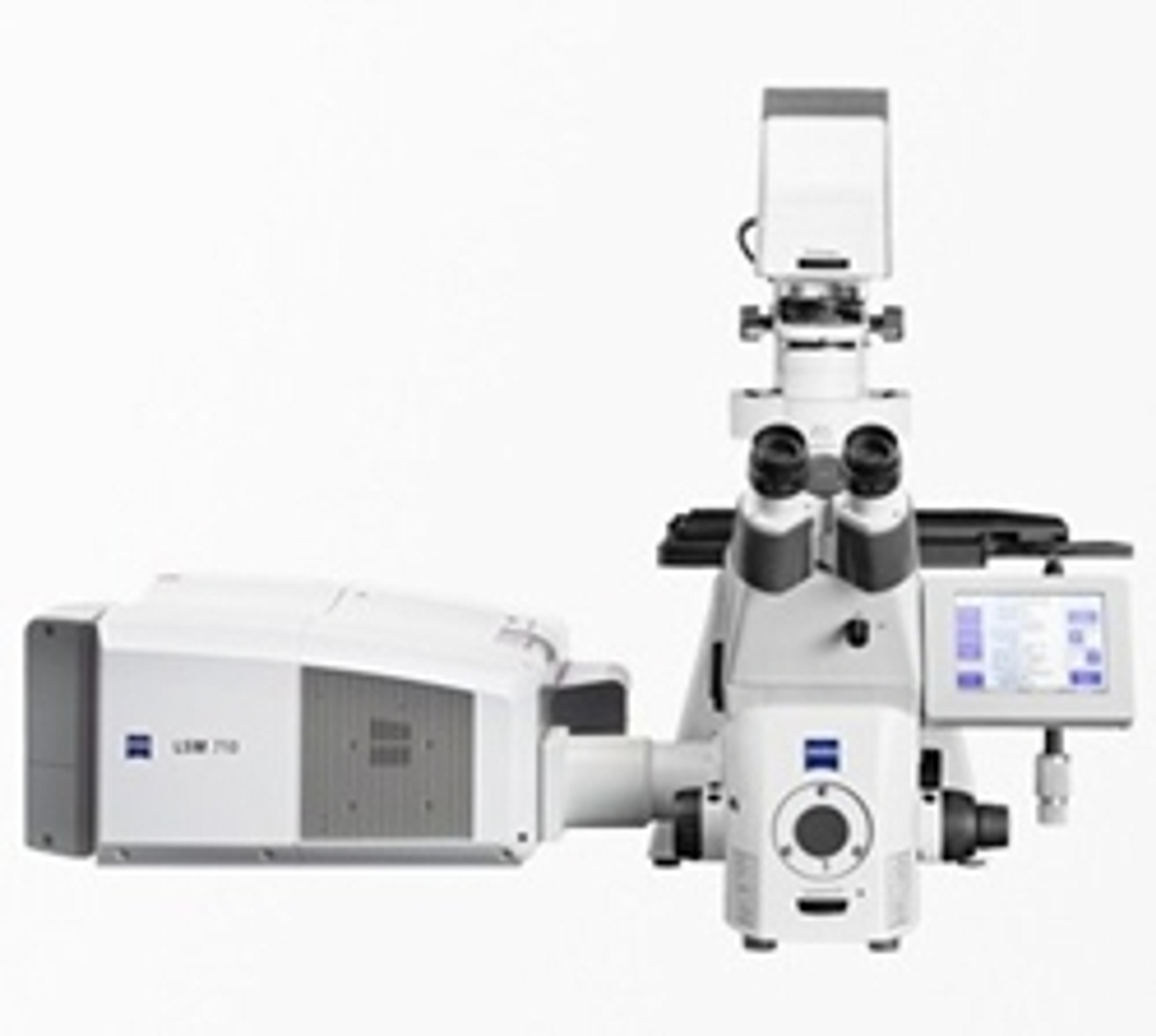
ZEISS LSM 710 for Fluorescence Imaging
ZEISS Research Microscopy SolutionsExperience freedom with your dyes and applications The new illumination and detection design of LSM 710 brings complete freedom to your fluorescence microscopy. You work with up to ten dyes and use continuous spectral detection across the complete wavelength range. LSM 710 enables confocal microscopy for a wide variety of applications. With the inverse Axio Observer from Carl Zeiss, LSM 710 offers you unrivalled confocal microscopy in cell and developmental biology. Upright stands such as Axio Imager or Axio Examiner offer you have all the equipment you need to record neurobiological, physiological and developmental relationships to an exceptional standard. LSM 710 gives you flexibility, allowing you to perform confocal microscopy in exactly the way you need. Features: Oversampling with 30 percent longer sampling time per pixel for low noise Excellent contrast characteristics, even with strongly reflective samples – thanks to laser suppression that has been improved by 100-1000x A huge range of QUASAR detector configuration options – to meet your requirements The innovative grid and spectral recycling loop design ensures that not even a single valuable photon will be lost from your sample. Up to 80 percent dark noise reduction – thanks to the QUASAR array detector by Carl Zeiss 34-channel parallel imaging – across the complete wavelength range APD imaging with photon counting Low noise electronics and lasers