
Validation of the Method for Determination of Pesticide Residues by Gas Chromatography – Triple-Stage Quadrupole Mass Spectrometry
20 Nov 2015This application note reports on in-house validation results and assessment of performance parameters of a complete multi-residue pesticide analysis method employing QuEChERS sample preparation kits, sample measurement by the newly developed Thermo Scientific™ TSQ™ 8000 Pesticide Analyzer system and rapid data analysis by Thermo Scientific™ TraceFinder™ software.
Related products
Request Quote for All Products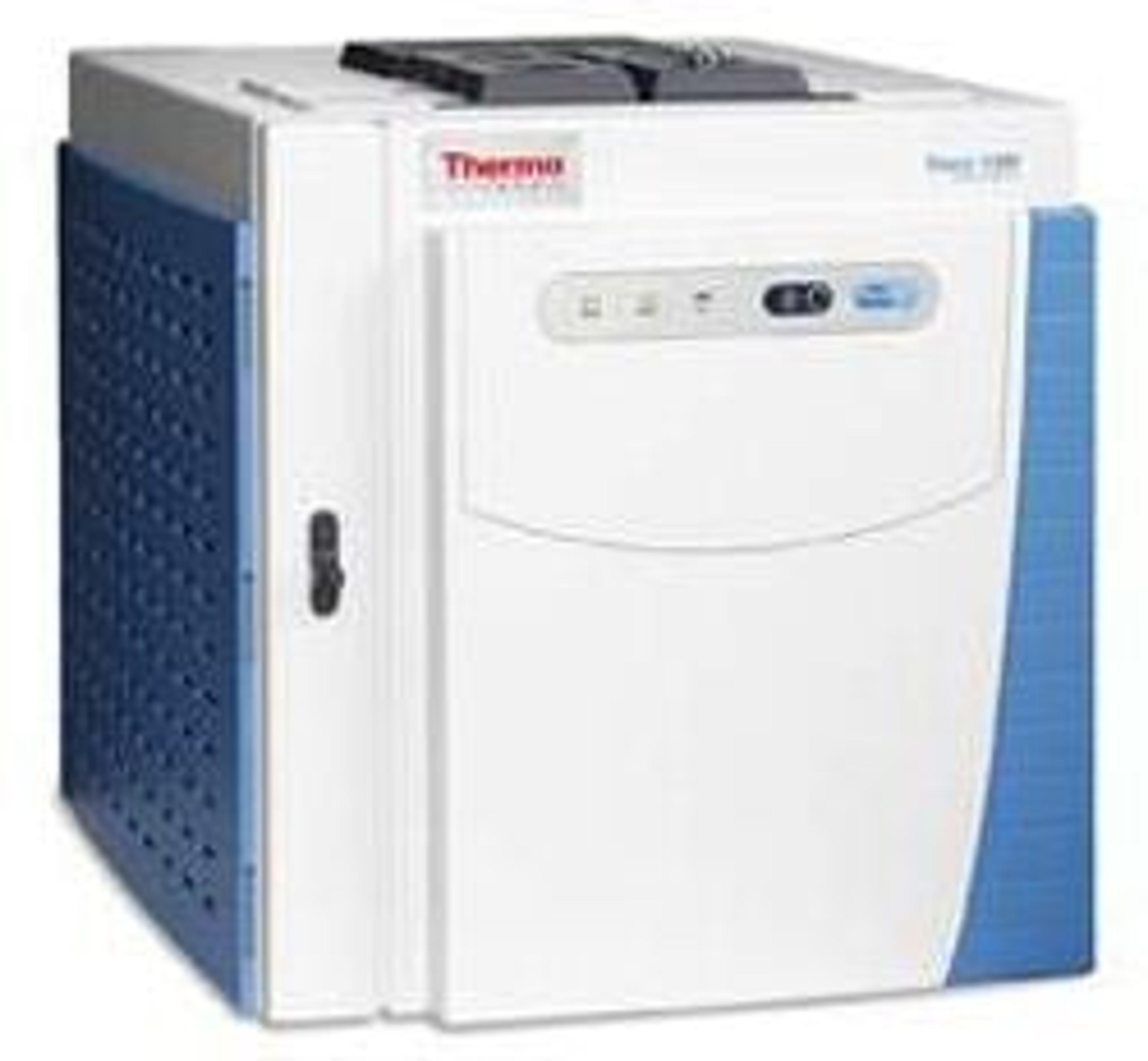
Thermo Scientific™ TRACE™ 1300 Series GC System
Thermo Fisher ScientificThe Thermo Scientific TRACE 1300 Series GC offers the most versatile gas chromatograph platform in the market, with unique "instant connect" modularity for ground-breaking ease of use and performance, setting a new era in GC technology.The Thermo Scientific TRACE 1300 Series GC is the ideal budget-conscious investment for the basic routine laboratory when lower operator expertise requires ease of use with minimal instrument interaction. Its simplified user-interface is also ideal for 24/7 operations that require single-button start/stop/maintenance local interactions while maintaining full programmability through the networked control software.Interchangeable modules free your laboratory from the challenges and constraints of the past. Remove the complexity and eliminate the need for specialized service assistance or new system requirements with modular injectors and detectors.Thermo Scientific Trace 1300 Series GC Features: Analyze dirtier matrices with minimum cleanup using the system's robust injector technology Analyze trace concentrations with smaller injection amounts and minimum preconcentration results using enhanced detector sensitivity and micro-volume technology Protect system components and reduce run time and maintenance using optional backflush capabilities Shorten sample cycle times using low thermal mass injectors and detectors and fast oven technology Automate your entire workflow—from pipetting to injection—using a full range of sample handling options Streamline and speed up data analysis using Thermo Scientific™ Dionex™ Chromeleon™ Chromatography Data System (CDS) software Expands easily from single-channel to multi-injector/detector GC configurations Reduces training and startup time with simplified installation, plug-in components, minimal local control and intuitive Chromeleon software Minimizes downtime with easy-access, tool-free modules Reduces operational costs by allowing use of standard consumables Saves energy with low thermal mass and quick start-up Minimizes sample and solvent consumption with micro-volume sample capability Modular design lets you easily reconfigure to meet changing requirements