
Validation of a New Rapid Free-Light-Chain Test (Seralite®) for the Diagnosis and Monitoring of Plasma Cell Dyscrasias
10 Mar 2014Monoclonal kappa (κ) or lambda (λ) immunoglobulin free light chains (FLC), produced from malignant plasma cell clones, are important biomarkers for the diagnosis and monitoring of plasma cell dyscrasias, including multiple myeloma. This poster shows that the rapid assay, Seralite®, has superior diagnostic sensitivity compared to immunofixation electrophoresis, and can provide clinically valid quantitation of κ and λ FLC in serum and urine within 10 minutes.
Related products
Request Quote for All Products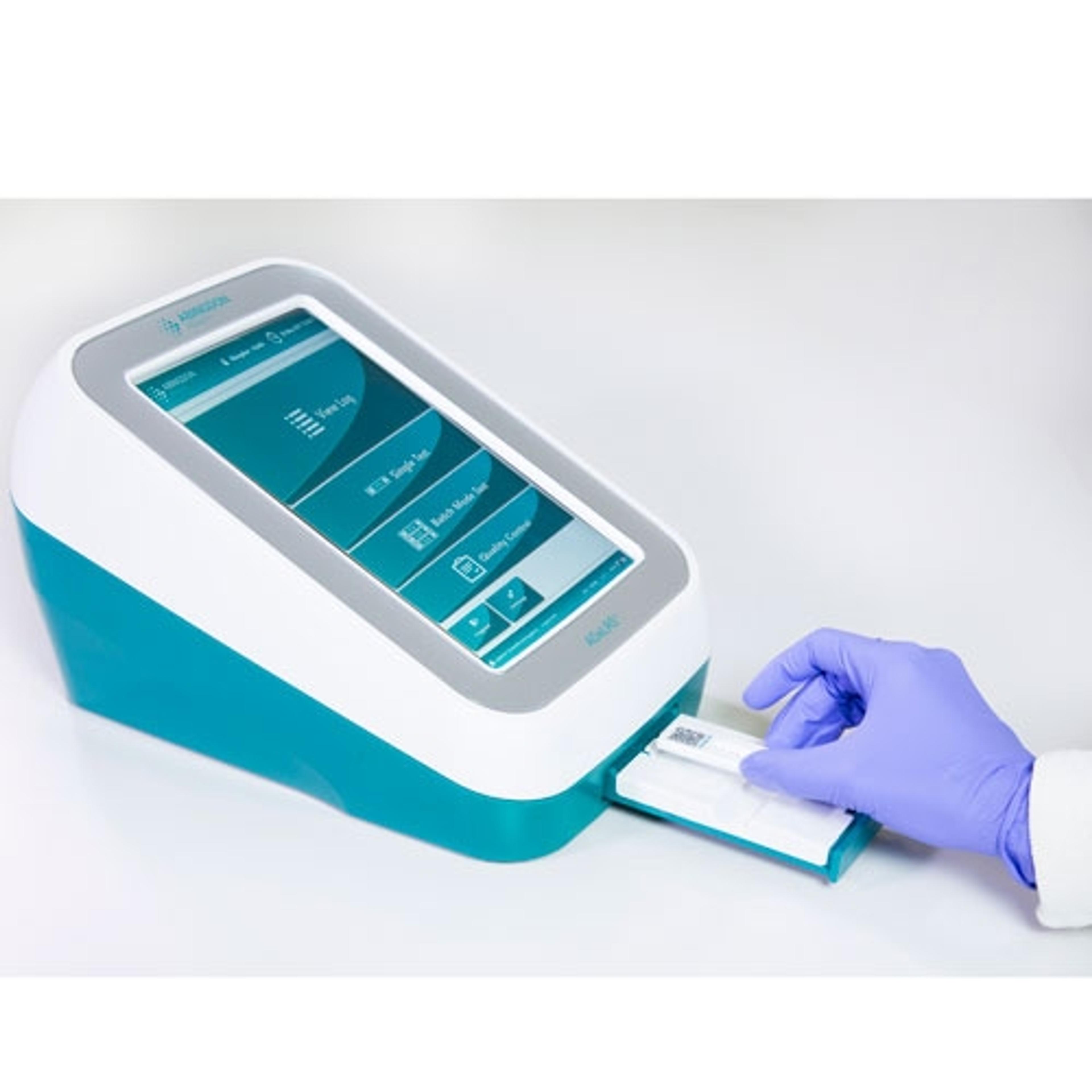
Seralite
Abingdon HealthSeralite® is a rapid diagnostic device for the quantitative measurement of kappa (K) and lambda (λ) immunoglobulin free light chains (FLCs) in serum. The assay utilises highly specific, anti-K and anti-λ monoclonal antibodies which are conjugated to gold particles and incorporated into a simple to use lateral flow device. Utilising a portable reader the results are presented on screen in mg/L along with the calculated K/λ ratio. Seralite® provides an accurate picture of disease status in 10 minutes. With this simple to use, portable, rapid test, clinicians are able to monitor patients in “real time” supporting faster decision making. The measurement of FLCs for diagnosis and monitoring of myeloma and related disorders has been widely published. As a result of these many years of research, UK, European and International guidelines recommend the measurement of serum FLCs. As FLCs have a short half-life of a few hours, changes to tumour load and the response to chemotherapy can be observed more rapidly by measuring FLCs. This rapid test provides the clinician with an accurate picture of disease status within minutes rather than days, supporting faster decision making. FLCs are also recommended as prognostic indicators in Monoclonal Gammopathy of Undetermined Significance (MGUS). In MGUS the FLC ratio is helpful in identifying individuals who are at an increased risk of progression to Multiple Myeloma and related disorders. Using Seralite in a clinic setting can allow improved management of patients with MGUS.