Understanding toxicity and formation of chlorinated products of 1,3 diphenylguanidine (DPG) in water

1 Nov 2023

In this application note, Agilent Technologies presents the evaluation of 1,3-diphenylguanidine (DPG) and five of its chlorinated derivatives’ effects on cell heath and bioenergetics using the Agilent xCELLigence RTCA eSight and Agilent Seahorse XF96 extracellular flux analyzer. 1-(2,4-dichlorophenyl)-3-phenylguanidine (CC15) and 1-(4-chlorophenyl)-3-(2,4-dichlorophenyl) guanidine (CC11) were the least and most cytotoxic compounds, respectively, except for DPG, which was the most cytotoxic. Real time cell analysis (RTCA) results were similar to traditional alamarBlue cell viability assay results. The Seahorse XF96 analyzer results indicated that, except for 1,3-bis-(2-chlorophenyl) guanidine (CC04), all of the DPG compounds tested had adverse effects on cell bioenergetics. While the compounds’ limited effects on mitochondrial basal respiration and ATP production might be short lived, the significant effect on proton leakage suggested irreversible mitochondrial damage.

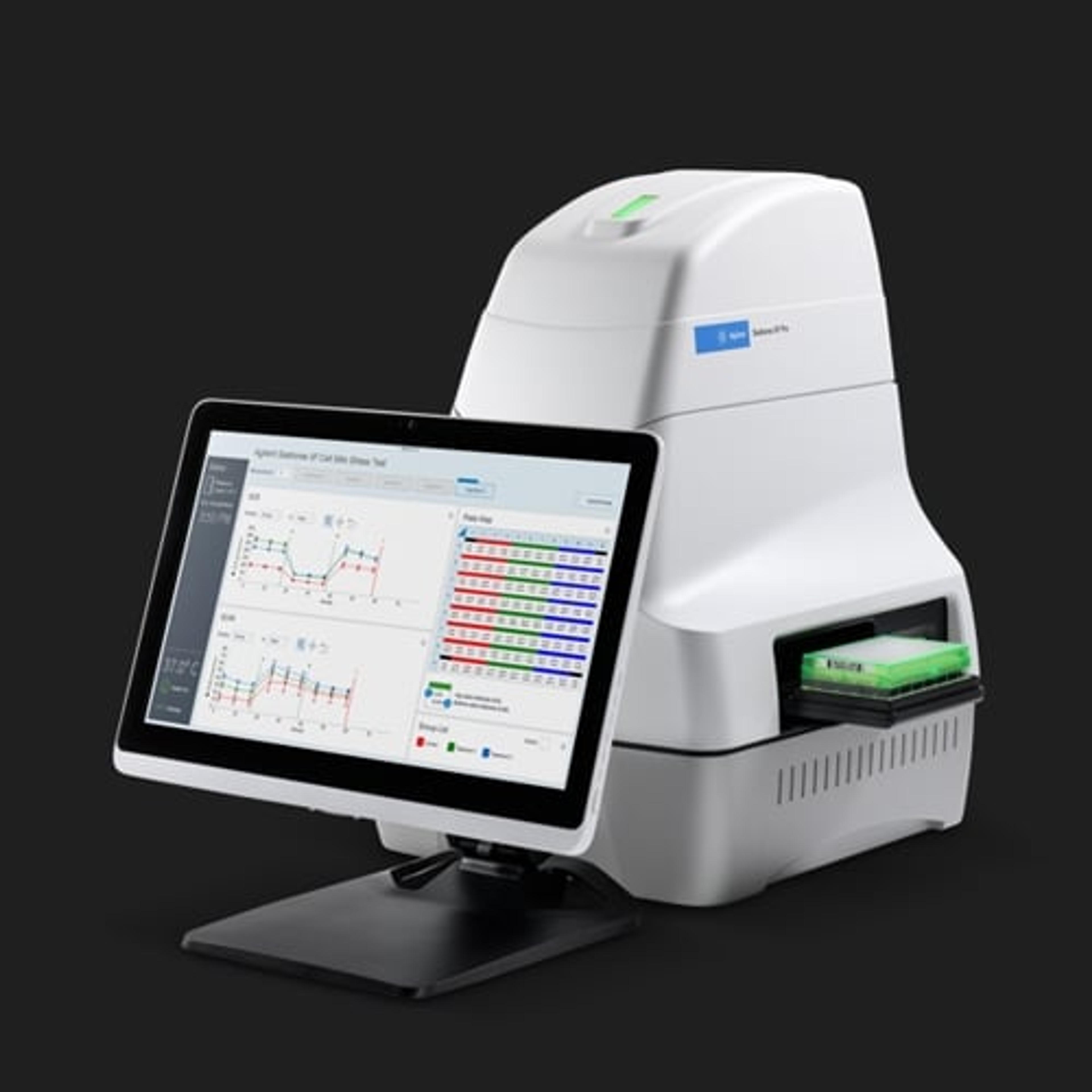
Seahorse XF Pro Analyzer

Agilent Technologies

Measure mitochondrial respiration, glycolysis, and ATP production rates in live cells in a 96-well forma t, providing a system-level view of cellular energy metabolism and mitochondrial health. It combines enhanced sensitivity and data consistency with intuitive software and advanced data analytics, enabling users to streamline assay workflow from start to finish and generate and interpret metabolic data easily. 

(9)

Links

Tags

Mass SpectrometryMass spectrometry (MS) is a powerful analytical technique used to identify and quantify molecules based on the mass-to-charge ratio of gas-phase ions. It provides detailed information about the structure, composition, and properties of compounds and is widely used across fields such as environmental monitoring, materials science, drug discovery and development, food and beverage testing, and wider chemical research. Key MS techniques include tandem mass spectrometry (MS/MS), liquid chromatography–mass spectrometry (LS-MS) and inductively coupled plasma (ICP-MS). Choosing from these wide range of techniques and technologies can be a daunting task, so keep up to date with scientific applications, performance expectations, and customer reviews here all in one place. Visit our product directory to receive quotes direct from the manufacturer. ELISAEnzyme-linked immunosorbent assays (ELISA), also known as enzyme immunoassays (EIA), are used for the detection and quantification of proteins, peptides and antibodies in a sample. ELISA often comes in kit format, with pre-selected antibody pairs to detect specific proteins or biomarkers of diseases such as diabetes and obesity, or cardiovascular and neurological disorders. Detection is made possible with chemiluminescent, fluorescent or colorimetric substrates and detection instruments such as microplate / ELISA readers. Other kits available include: Enzyme-linked immunospot (ELISPOT) assays for the quantification of protein-producing cells and chemiluminescent immunoassays (CLIA) kits. Find the best ELISA kits and products in our peer-reviewed product directory: compare products, check customer reviews and receive pricing direct from manufacturers.Cellular BioenergeticsCell AnalysisThe analysis of cells allows researchers to understand the factors which contribute to cell health and function. These influencing processes can then be predicted and altered, leading to the development of medication and disease treatments.ToxicityToxicity is defined as the degree to which a substance can harm humans or animals. It is essential to study the toxicity of pharmaceutical products during the development process so that optimum dosage can be established for the administration of the drug.