ResourceGeneral Lab

Understanding Filter Efficiency – Virus Removal in Depth Filtration

Understanding Filter Efficiency – Virus Removal in Depth Filtration

13 Jun 2016

Potable water production requires an efficient and cost-effective technology of drinking water treatment. Depth filters based on diatomaceous earth (DE) are widely used for bacteria removal. Bacteria are unable to penetrate the pores of a microporous DE filter, whereas the 10 times smaller viruses can easily pass the filter and harm the consumer. These contaminants can only be completely removed by electrostatic attraction of the virus on the filter pore surface. This application note demonstrates efficient virus removal using the SurPASS 3 system from Anton Paar.

SurPASS™ 3: A New Level of Surface Charge Analysis

Anton Paar

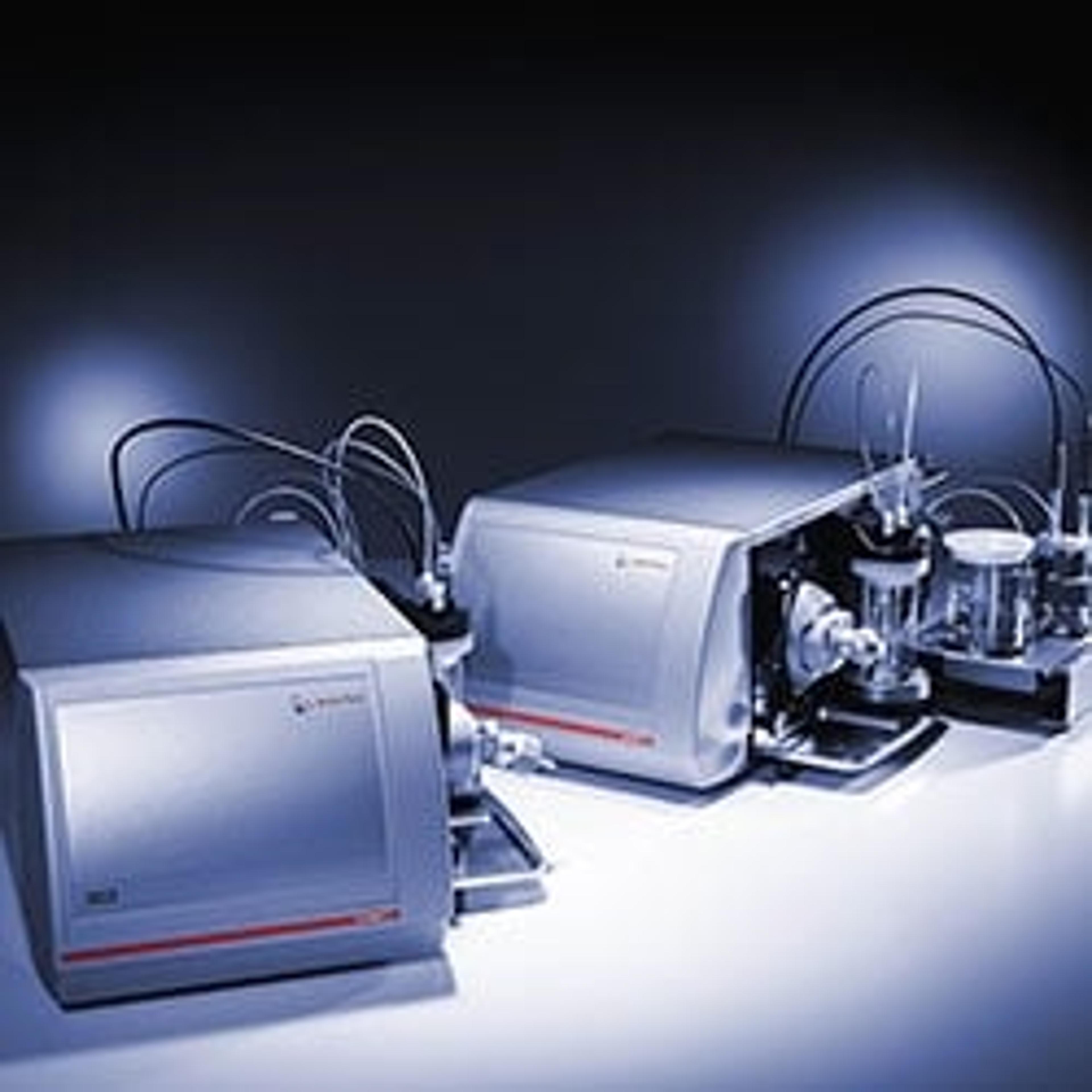
The SurPASS 3 series features fully automated zeta potential analysis of macroscopic solids under real-life conditions. As electrokinetic analyzers, they employ the classic streaming potential and streaming current method for a direct analysis of the surface zeta potential. The zeta potential is related to the surface charge at a solid/liquid interface and is a key parameter for understanding surface properties and developing new specialized materials.  High-end electrokinetic analyzer for solid surface analysis Fully automated zeta potential analysis on macroscopic solids Automated detection of the isoelectric point Time-dependent recording of liquid-on-solid adsorption kinetics

(2)

Links

Tags

FiltrationFiltration and microfiltration are used to separate solids, particulates or large molecules from fluids (liquid or gases) in order to purify the filtrate. Explore a range of filter formats, including filter paper, plates and membranes for your separation needs. While larger particulates may be separated by gravity filtration, smaller particulates may require additional force for timely separation. Microfiltration equipment includes vacuum filters, as well as positive pressure, crossflow and centrifugal filtration devices. Find the best filtration products in our peer-reviewed product directory: compare products, check customer reviews and receive pricing direct from manufacturers.Environmental Monitoring and TestingEnvironmental monitoring and testing uses handheld portable analyzers, kits, spectrometers or chromatography systems for air, water, soil, food and other sample testing. Useful features of analyzers such as BOD and COD include portability, easy calibration, automation and sensitivity.  Environmental test kits for pH, water, moisture, etc, should be accurate, sensitive, reliable, fast and easy to use.Particle CharacterizationParticle characterization instruments are used to determine particle size distribution, shape, surface area, zeta potential, density and porosity of particles and materials. Multiple tecchniques are available for determining particle size, shape and count including dynamic light scattering (DLS), laser diffraction, electrozone (Coulter technique), imaging particle analysis and single particle optical sensing. Determine the density of your material with a gas pycnometer or examine its surface area and porosity with gas adsorption analyzers and mercury porosimeters. Find the best particle characterization instruments in our peer-reviewed product directory: compare products, check customer reviews and receive pricing direct from manufacturers.Non-Destructive TechniquesNon-destructive techniques (NDT) describes a variety of analytical techniques used to evaluate the properties of a material. Common methods include ultrasonic, magnetic-particle, liquid penetrant, radiographic, remote visual inspection (RVI), and eddy-current testing. NDT is regularly used in forensic engineering, civil engineering, mechanical engineering, electrical engineering, systems engineering, aeronautical engineering, and medicine.Water PurificationThere are a number of water purification methods available to remove contamination from laboratory water. These systems include demineralization, reverse osmosis, filtration and ultrafiltration. A combination of methods is sometimes necessary to achieve purified water suitable for use in experiments.Zeta PotentialUltrafiltrationPolymer FilmsVirusesViruses are microscopic pathogens that require a host cell to replicate. Understanding their structure, replication cycle, and impact on the immune system is crucial in developing effective treatments, vaccines, and diagnostic methods. Research continues to focus on emerging viral diseases and antiviral drug discovery. Explore solutions for virus research, detection, and treatment in our peer-reviewed product directory; compare products, check customer reviews, and get pricing directly from manufacturers.Drinking Water AnalysisAnalytical methods used to test the purity of drinking water include determining the level of contaminants abides to the level set by the Environmental Protection Agency (EPA).
Understanding Filter Efficiency – Virus Removal in Depth Filtration