
ResourceSeparations
Ultra-Fast UV/Vis Spectrum Analysis Optimizes Chemical Reactions on a Microplate Reader
21 Sept 2014This application note demonstrates that a carousel reactor could be used in conjunction with the FLUOstar Omega to conveniently monitor the kinetics of twelve reactions in parallel.
Related products
Request Quote for All Products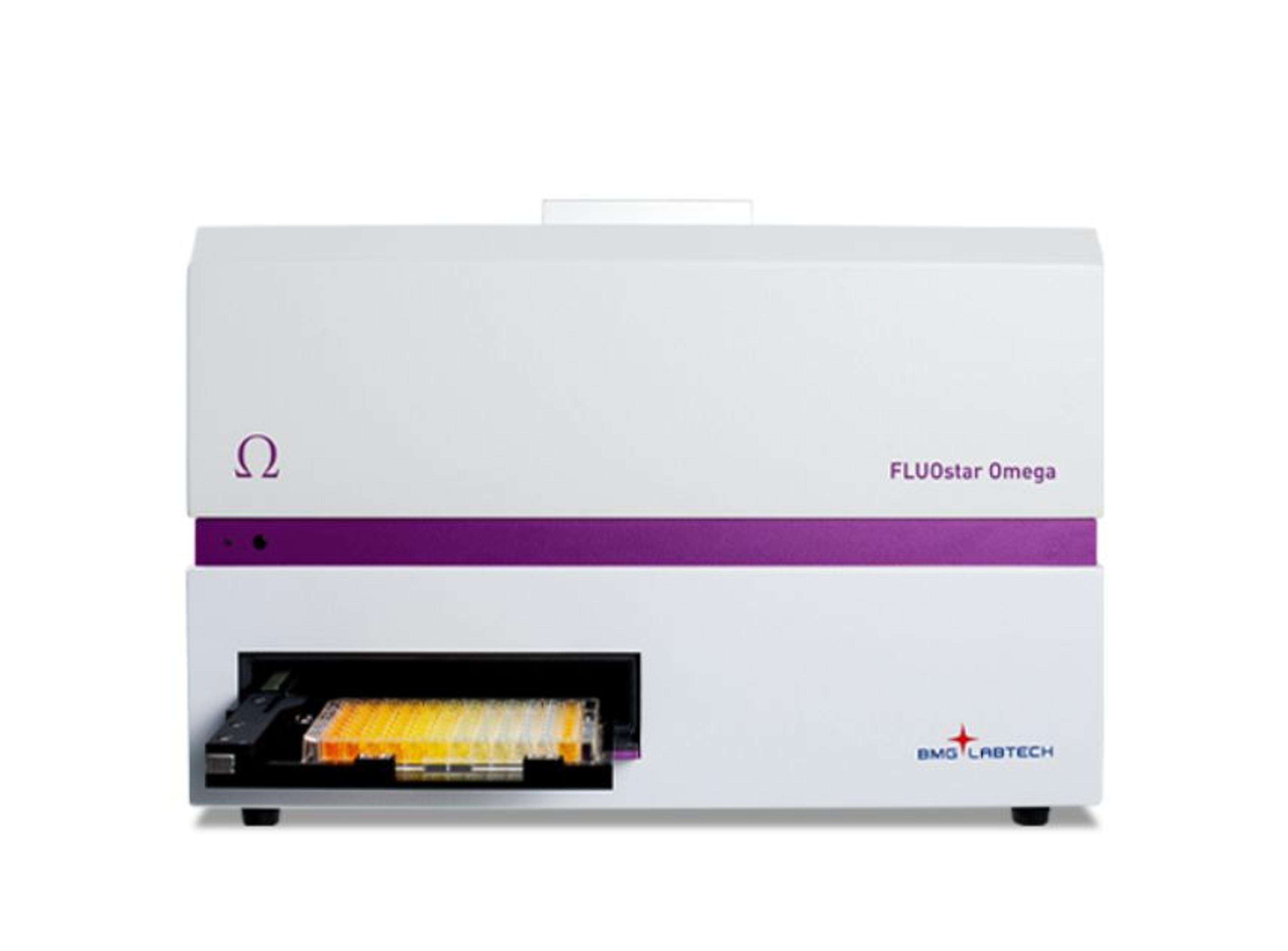
FLUOstar® Omega Plate Reader
BMG LABTECHThe FLUOstar Omega is a multimode microplate reader perfect for life science research laboratories.
Links
Tags
LC-MSLC-MS (liquid chromatography-mass spectrometry) systems and equipment are used for separation and quantitative analysis of complex mixtures, combining liquid chromatography and mass spectrometry. Quantify proteins, contaminants, pesticides or screen for drug metabolites with a high level of sensitivity. LC-MS systems and equipment include reverse phase, normal phase and specialized columns integrated with various MS detectors such as time-of-flight (TOF), quadrupole, orbitrap or ion trap mass analyzers. LC-MS/MS instruments equipped with a qTOF or triple quadrupole analyzer give greater sensitivity and resolving power to your analysis. Find the best LC-MS equipment in our peer-reviewed product directory: compare products, check customer reviews and receive pricing direct from manufacturers.UV-Visible SpectroscopyUltraviolet-visible (UV-Vis) spectrophotometers are used to measure the interaction of UV and visible light with a sample, including transmission, reflectance & absorbance. The two major instrument classes are single-beam or double-beam spectrophotometers. More specialized equipment includes colorimeters, spectroradiometers and refractometers. Portable and microvolume spectrophotometers are also available. For the modular spectroscopy lab, explore a range of light sources for combination with a spectrograph/spectrometer and optics. Find the best UV-Vis spectroscopy products in our peer-reviewed product directory: compare products, check customer reviews and receive pricing direct from manufacturers.Microplate Readers / DetectorsMicroplate readers are used to automate the detection and analysis of labeled or label-free components in microplates during assays or live-cell monitoring. Microplate readers are generally distinguished by their mode of detection. Types include absorbance, luminescence, fluorescence intensity, fluorescence polarization, TRF / FRET and multimode microplate readers. Microplate readers deliver a high throughput of samples by reading multiple wells simultaneously, with the 96-well format the most commonly used. As a result, microplate readers are often used in the drug discovery, bioassays, research and pharmaceutical industries for screening applications. Microplate loading can also be automated, with robotic microplate stackers to increase throughput. Find the best microplate readers in our peer-reviewed product directory: compare products, check customer reviews and receive pricing direct from manufacturers.Thin Layer ChromatographyThin-layer chromatography (TLC), also called planar chromatography, is an inexpensive and simple liquid chromatographic technique used to separate and identify small amounts of compound in a mixture, monitor progress of a reaction or determine purity of substance. TLC plates come in multiple sizes with common adsorbent layers being silica, aluminum oxide or cellulose and high-performance (HP-TLC) plates are also available for increased sensitivity. Other equipment needed includes TLC developing chambers, applicators, TLC sprayers and visualizing devices, such as a viewing cabinet and UV lamp. Find the best TLC products in our peer-reviewed product directory: compare products, check customer reviews and receive pricing direct from manufacturers.UV-Visible-NIRUV-Visible-NIR spectroscopy is used to analyze a wide range of samples based on their absorption of ultraviolet, visible, and near-infrared light. It is commonly applied in chemical analysis, material science, and quality control. Browse our peer-reviewed product directory to find the best UV-Visible-NIR spectroscopy systems, compare products, check reviews, and get pricing directly from manufacturers.UVUltraviolet (UV) light is used in a variety of applications, including disinfection, spectrophotometry, and molecular biology. UV light can damage DNA, making it a powerful tool in sterilization and in studies of mutagenesis and gene repair. Explore UV-related products in our peer-reviewed product directory; compare products, check reviews, and get pricing directly from manufacturers.