
Ultra-Fast Analysis of Allergens using Capillary Electrophoresis Coupled to Mass Spectrometry and UVPD
24 Nov 2016The main goal of this work was to develop a simple and fast strategy allowing simultaneously the identification of allergens and the authentication of fish species. The identification of proteins in food matrices that cause sensitization in individuals or allergic reactions in those individuals already sensitized, represent a major concern for the food industry. Here we explore the application of CE/MS/MS as an accurate and sensitive way to rapidly test for protein allergens in food.
Related products
Request Quote for All Products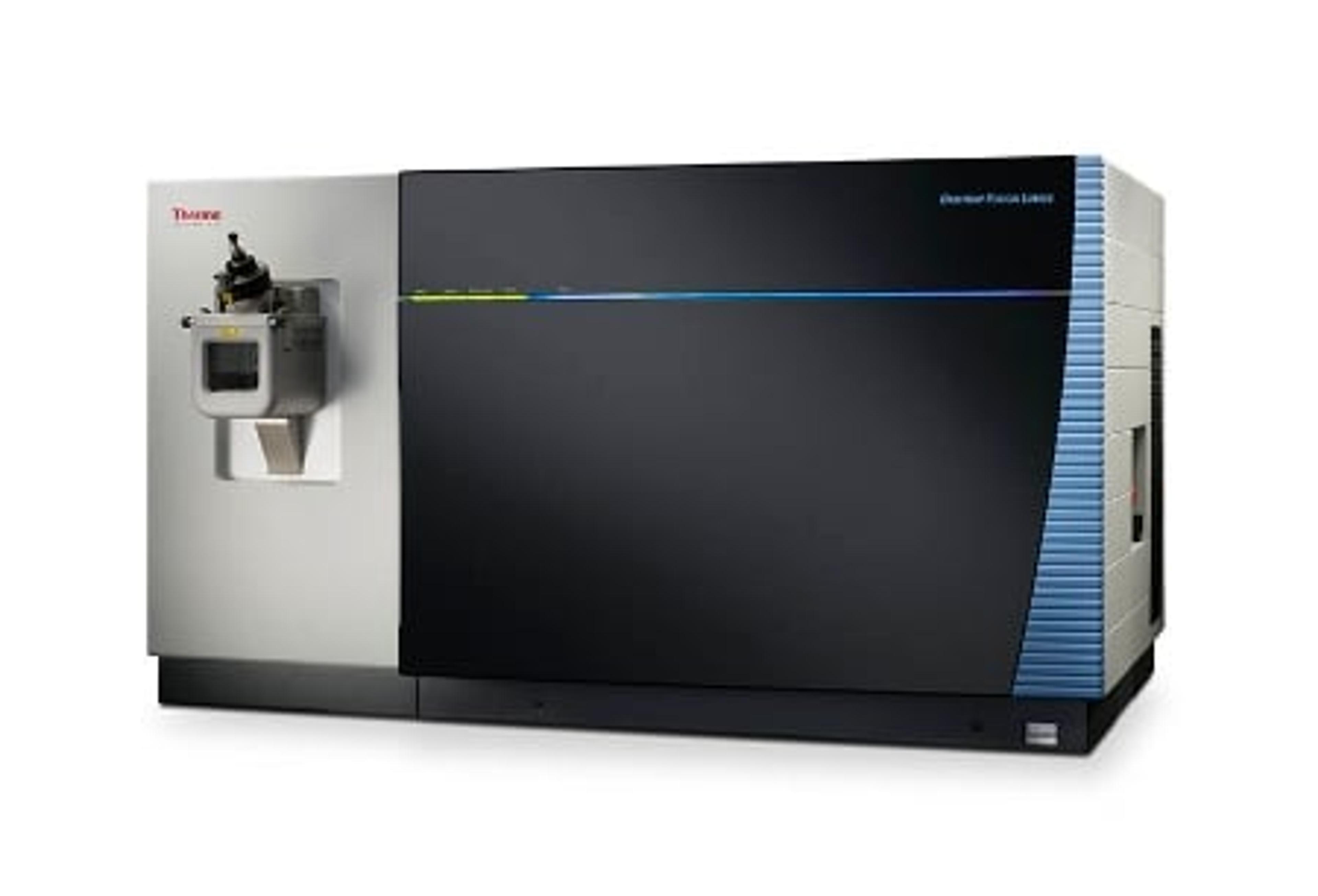
Thermo Scientific™ Orbitrap Fusion™ Lumos™ Tribrid™ Mass Spectrometer
Thermo Fisher ScientificTest new limits of detection, characterization and quantitation with the latest Tribrid™ mass spectrometer. The Thermo Scientific™ Orbitrap Fusion™ Lumos™ Tribrid™ Mass Spectrometer is designed to expand performance in advanced proteomics, biopharma and metabolomics applications, including quantitation using isobaric tags, low level PTM analysis, data independent acquisition (DIA), and top down proteomics. The new instrument features enhanced sensitivity resulting in improved analyte detection, characterization and quantitation, enabling scientists to perform more comprehensive sample analyses faster and with better accuracy than ever before. Novel Orbitrap Fusion Lumos MS Features: Novel high-sensitivity API interface combines a High Capacity Transfer Tube and an Electrodynamic Ion Funnel for increased ion flux and lower limits of detection Advanced Active Beam Guide prevents neutrals and high velocity clusters from entering the resolving quadrupole Advanced Quadrupole Technology combines high selectivity and efficiency of transfer for selected ions symmetrically across the isolation window Advanced Vacuum Technology improves transmission of high molecular weight ions to the Orbitrap analyzer Novel ETD HD—high dynamic range ETD provides significantly increased fragment ion coverage Established Tribrid MS Features: Tribrid architecture — includes quadrupole mass filter, linear ion trap and Orbitrap mass analyzers Ultrahigh resolving power up to 500,000 FWHM, with isotopic fidelity up to 240,000 FWHM at m/z 200 Acquisition rates of up to 20 Hz for both Orbitrap and linear ion trap MSn analyses Full parallelization of MS and MSn analyses with intelligent ADAPT™ (All Dynamically Available Parallelizable Time) technology Synchronous Precursor Selection (SPS) for MS and MSn experiments significantly increases the number of peptides and proteins identified and improves quantitative accuracy when using isobaric mass tags Flexibility of fragmentation — CID, HCD and optional ETD and EThcD available at any stage of MSn with detection in either the Orbitrap or linear ion trap detector enables detailed structure determination of metabolites, glycans and other small molecules Universal Method provides maximal peptide identifications without method optimization for samples of unknown concentration, reducing sample and instrument time requirements for routine peptide identifi cation experiments Intuitive and flexible drag-and-drop user interface simplifies method development and enables unique and complex workflows