ResourceSeparations

Trends and Challenges: Dried Blood Spot Analysis

20 Oct 2011

This poster describes the criteria required for best practice dried blood spot analysis. It leads the reader through the process of dried blood spot analysis from how to choose the correct card to monitoring matrix effects and background of the samples and finally how to ensure the assay is sensitive, reliable and robust. It then presents the subsequent UPLC/MS results.

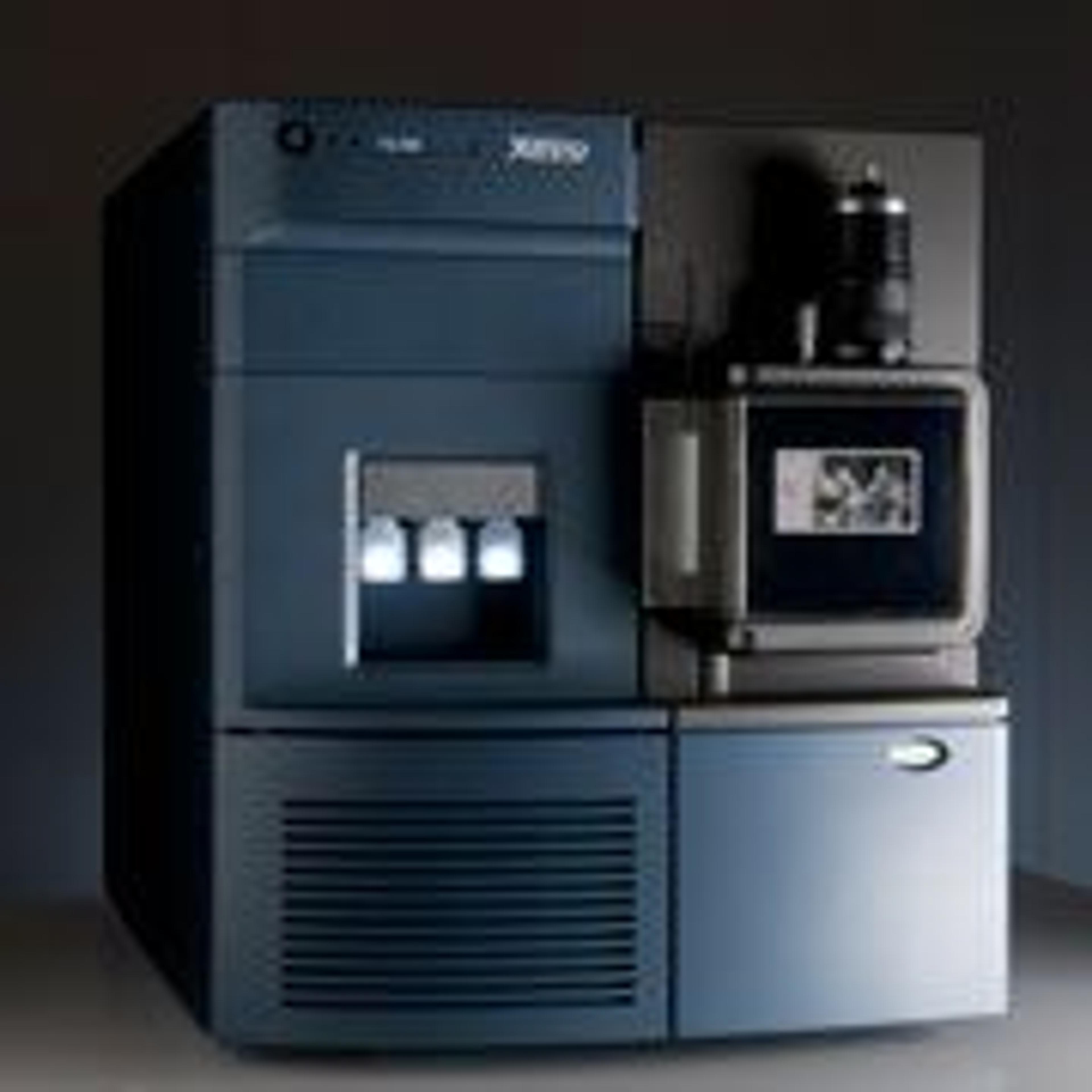
Xevo TQ MS

Waters

Waters Xevo™ TQ MS provides the ultimate in quantitative capabilities for your most demanding applications and your most complex sample matrices. It is a highly advanced tandem quadrupole mass spectrometer designed to enable uncomplicated access to superior HPLC and UPLC®/MS/MS performance, delivering the highest levels of sensitivity, selectivity, robustness, speed, and accuracy. Waters Xevo TQ MS is equipped with unique collision cell technology (ScanWave™) to provide new enhanced spectral LC/MS/MS data acquisition capabilities. Unlike conventional tandem quadrupole mass spectrometers, the Xevo TQ MS is designed not only to provide the very best quantitative data, but also to provide you with superior spectral MS/MS information. Xevo TQ MS offers you much more versatility in a single instrument platform that is adaptable to a variety of different UPLC/MS/MS applications both quantitative and qualitative: bioanalysis, ADME screening, food safety, environmental monitoring, forensic, and more. Features: Automated system set up and system checks for simple access Automated instrument optimization and quantitative method development tools for ease-of-use The latest innovations in high efficiency, robust, easy-to-use ZSpray™ atmospheric pressure ion source technology Versatile range of ionization options, including multi-mode ionization capability in a single run Unique, innovative T-Wave™ and ScanWave enabled collision cell technology Footprint that sits easily on your laboratory benchtop Dedicated application managers for your specialized analytical requirements

(14)

Links

Tags

UHPLC and HPLCHigh performance liquid chromatography (HPLC) and ultra high performance liquid chromatography (UHPLC), also known as UPLC, are analytical techniques used to separate, identify and quantitate components of complex mixtures including biological samples such as proteins and lipids as well as chemical mixtures of pesticides, drugs and oils. Both techniques are liquid chromatographic methods but differ by operating pressures (HPLC < 6000 psi < UHPLC ). Components of HPLC and UHPLC systems include columns, detectors, pumps, autosamplers and column heaters. Explore a range of UHPLC and HPLC columns for your specific sample needs including reverse phase, normal phase, ion exchange, HILIC, ion exclusion and size exclusion columns. For more specialized HPLC, explore FPLC, countercurrent LC and simulated moving bed systems. Find the best UHPLC and HPLC equipment in our peer reviewed product directory: compare products, check customer reviews and receive pricing direct from manufacturers.LC-MSLC-MS (liquid chromatography-mass spectrometry) systems and equipment are used for separation and quantitative analysis of complex mixtures, combining liquid chromatography and mass spectrometry. Quantify proteins, contaminants, pesticides or screen for drug metabolites with a high level of sensitivity. LC-MS systems and equipment include reverse phase, normal phase and specialized columns integrated with various MS detectors such as time-of-flight (TOF), quadrupole, orbitrap or ion trap mass analyzers. LC-MS/MS instruments equipped with a qTOF or triple quadrupole analyzer give greater sensitivity and resolving power to your analysis. Find the best LC-MS equipment in our peer-reviewed product directory: compare products, check customer reviews and receive pricing direct from manufacturers.Mass SpectrometryMass spectrometry (MS) is a powerful analytical technique used to identify and quantify molecules based on the mass-to-charge ratio of gas-phase ions. It provides detailed information about the structure, composition, and properties of compounds and is widely used across fields such as environmental monitoring, materials science, drug discovery and development, food and beverage testing, and wider chemical research. Key MS techniques include tandem mass spectrometry (MS/MS), liquid chromatography–mass spectrometry (LS-MS) and inductively coupled plasma (ICP-MS). Choosing from these wide range of techniques and technologies can be a daunting task, so keep up to date with scientific applications, performance expectations, and customer reviews here all in one place. Visit our product directory to receive quotes direct from the manufacturer. Blood SpotDried Blood Spots
Trends and Challenges: Dried Blood Spot Analysis