Transcreener® High Throughput Screening Assays for Glycosyltransferases

7 Jan 2015

Identifying glycosyltransferase inhibitors remains a challenging task in drug discovery, because for many enzymes in this diverse class, screening methods have been limited to expensive and cumbersome radiolabeled assays or HPLC/MS analyses. As shown here, over the last few years Transcreener® glyscosyltransferase assays have been developed based on the simple and direct immunodetection of nucleotides, which are easily adaptable to automation and systemized high throughput screening protocols.

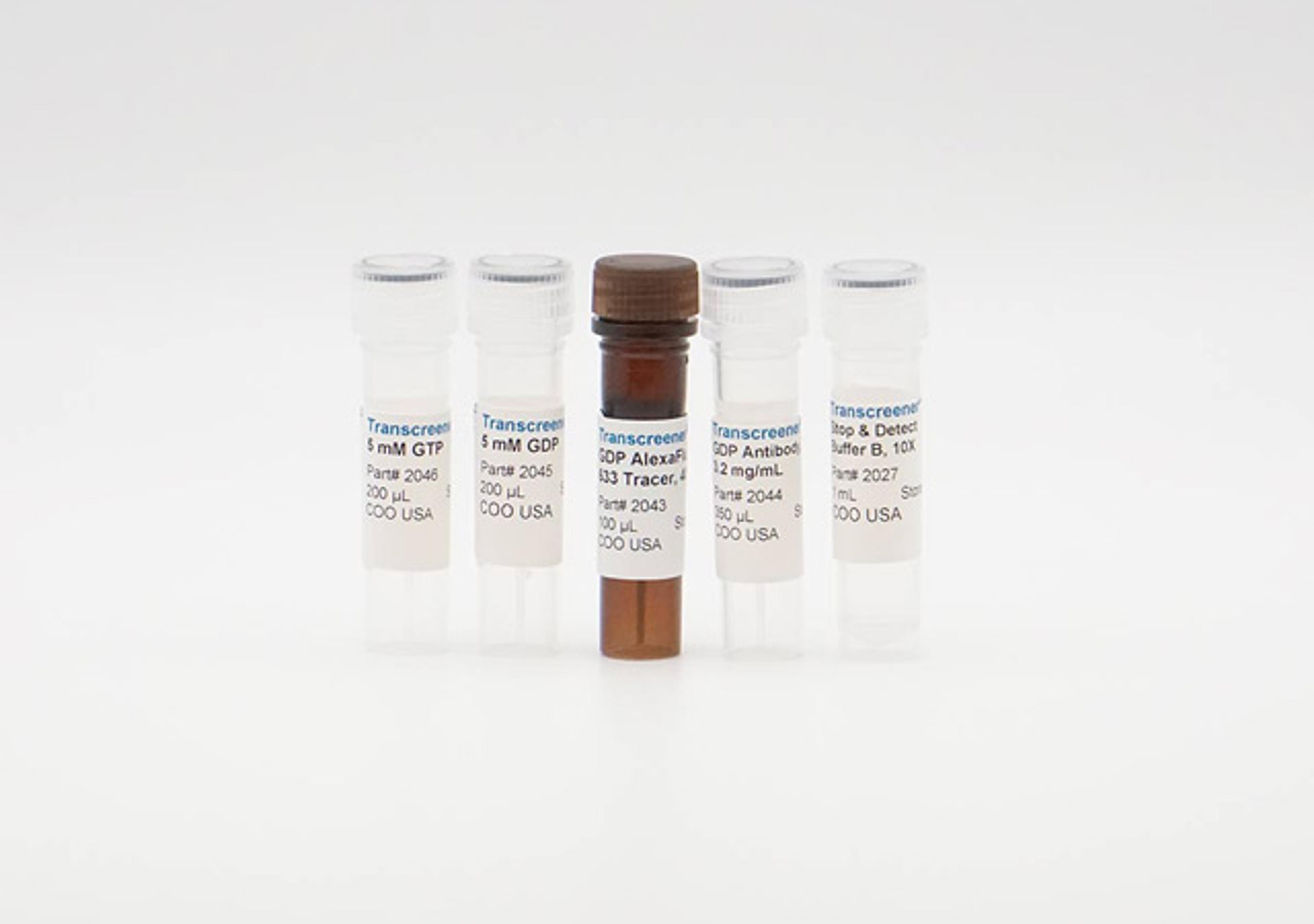
Transcreener® GDP GTPase Assays

BellBrook Labs

The Transcreener® GDP GTPase Assay Kit directly measures GDP produced during GTP hydrolysis in a homogeneous mix‑and‑read format—no coupling enzymes needed. Compatible with GTPases, GAPs, and GEFs, it supports FP, FI, and TR‑FRET readouts using far‑red tracers to reduce interference. HTS‑ready with excellent sensitivity (Z′ ≥ 0.7), it streamlines screening and profiling workflows.
(0)

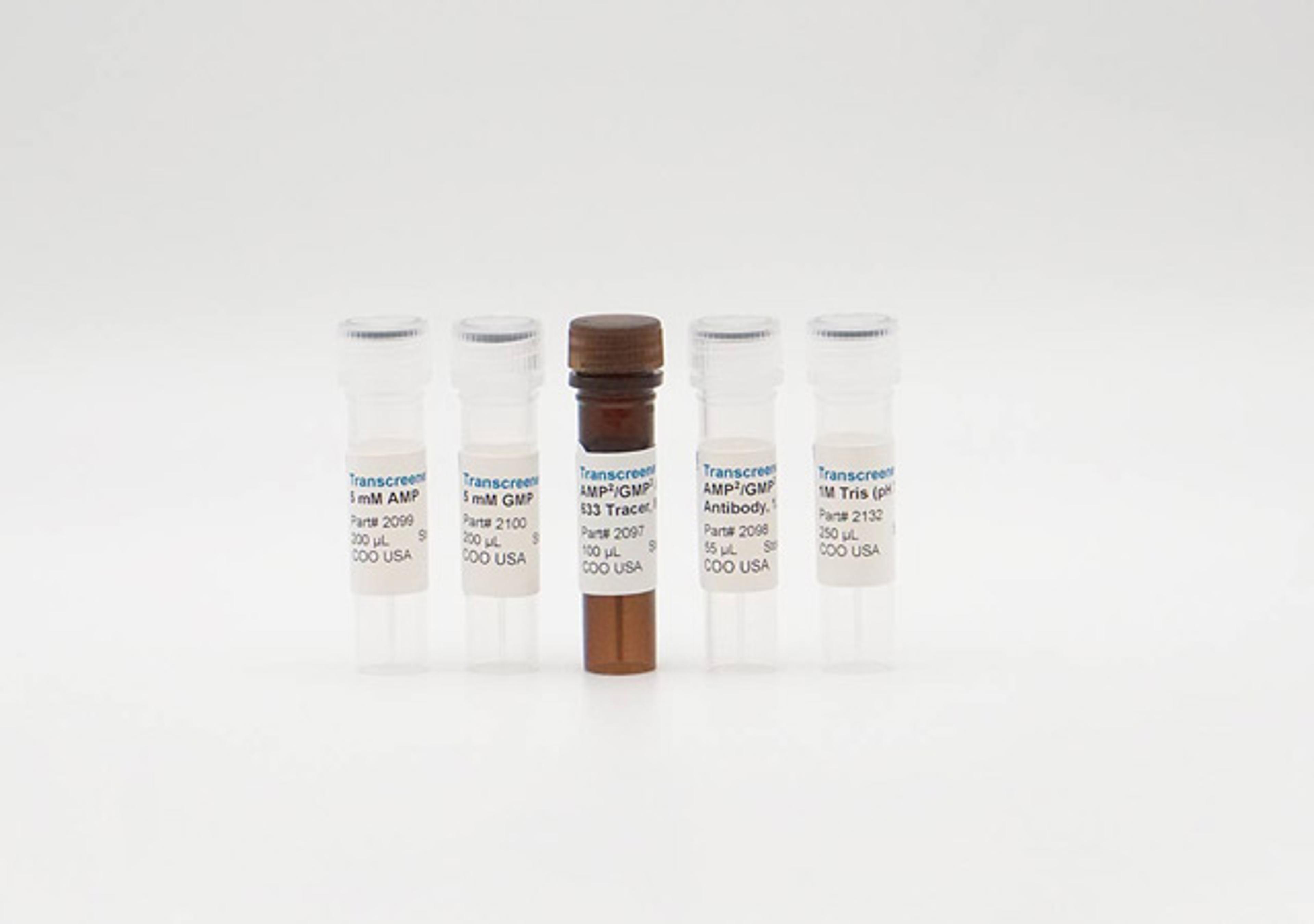
Transcreener® AMP²/GMP² Phosphodiesterase Assays

BellBrook Labs

The Transcreener® AMP²/GMP² Phosphodiesterase Assay Kit directly detects AMP or GMP produced by PDEs, ligases, synthetases, ENPP1, and related enzymes using a mix‑and‑read FP or TR‑FRET format—no coupling steps needed. Compatible with 1–1000 µM native substrates, it delivers excellent HTS performance (Z’ ≥ 0.7, ≥100 mP shift) in a one-step, far‑red fluorescence assay.

(2)

Transcreener® UDP² Glycosyltransferase Assays

BellBrook Labs

The Transcreener® UDP² Glycosyltransferase Assay Kit directly detects UDP—the conserved product of glycosyltransferase reactions—in a homogeneous mix-and-read format. Compatible with FP, FI, and TR‑FRET readouts, it supports UDP concentrations from 1–250 µM and delivers exceptional HTS performance (Z’ ≥ 0.7) across 96-, 384-, and 1536‑well formats.

(1)

Links

Tags

Microplate Readers / DetectorsMicroplate readers are used to automate the detection and analysis of labeled or label-free components in microplates during assays or live-cell monitoring. Microplate readers are generally distinguished by their mode of detection. Types include absorbance, luminescence, fluorescence intensity, fluorescence polarization, TRF / FRET and multimode microplate readers. Microplate readers deliver a high throughput of samples by reading multiple wells simultaneously, with the 96-well format the most commonly used. As a result, microplate readers are often used in the drug discovery, bioassays, research and pharmaceutical industries for screening applications. Microplate loading can also be automated, with robotic microplate stackers to increase throughput. Find the best microplate readers in our peer-reviewed product directory: compare products, check customer reviews and receive pricing direct from manufacturers.Cell-Based AssaysCell-based assays are used to monitor the presence, quantity and activities of a desired cellular analyte including drug molecules or biomarkers. This can reveal information on cell health (apoptosis, cytotoxicity, viability and proliferation assays), cell metabolism, cell migration and cell signaling mechanisms. Find the best cell-based assay products, kits and equipment with our peer reviewed product directory: compare products, check customer reviews and receiving pricing direct from manufacturers.Protein PurificationProtein purification is a vital step in drug discovery, therapeutics, biotech and life science research. The purification process typically involves subcellular or membrane protein extraction with cell lysis kits, separation of proteins from cell debris by filtration or spin columns, and the isolation of proteins of interest from other proteins and impurities with affinity purification (including fusion protein tags and antibody binding proteins A, G and L), immunoprecipitation or chromatographic methods, such as ion exchange, size exclusion and immobilized metal affinity chromatography. All purification methods come in multiple formats for your laboratory needs, including agarose or magnetic beads, resins, columns and filter plates. Find the best protein purification equipment in our peer-reviewed product directory: compare products, check customer reviews and receive pricing direct from manufacturers.AutomationAutomation in laboratories and manufacturing processes enhances efficiency, precision, and scalability by reducing the need for manual intervention. It plays a critical role in improving productivity, minimizing human error, and accelerating workflows in fields like diagnostics, drug development, and industrial testing. Automation technologies include robotic systems, automated liquid handlers, and process control systems that streamline complex tasks and ensure consistent, reproducible results. Explore our peer-reviewed product directory to discover the best automation solutions, compare options, read user reviews, and get prices directly from manufacturers.High ThroughputHigh throughput experiments allow the simultaneous processing of several samples. This parallelization reduces the cost per experiment and increases reproducibility and output volume of data.Assay DevelopmentThe process of proving an assay to be sensitive with respect to the target is known as assay development. The assay should be able to characterize novel compounds and measure the potency of these compounds against a validated biological target.